Sticky/Oily Texture in Homemade Vitamin C Serum (Skinceuticals C E Ferulic Formula)
Question
I made a serum following the formula specified in the Skinceuticals C E Ferulic topic.
After making and using it, I feel it's very sticky on the skin. Is this normal for this formula?
Which ingredient(s) can I remove or reduce to decrease the oiliness + stickiness?
It's really too sticky... Or did I make a mistake?
- I think I mixed according to the exact proportions... though I might have added slightly more (slipped) but not much.
- After mixing, when I rub the serum with my hands, I can feel the oiliness... (I don't really like it).
- Or is this texture normal for the formula? Or did I do something wrong?
Here is the ingredient list for 100 grams:
- Water: 43.7 grams
- Triethanolamine (TEA) (Alkaline, used to adjust pH to around 3.7): 2.5 grams
- Ferulic Acid (Antioxidant, helps stabilize Vitamin C LAA): 0.5 grams
- Panthenol (Vitamin B5, helps moisturize skin): 0.5 grams
- Ethoxydiglycol (Solvent and penetration enhancer): 20 grams
- Propylene glycol (Solvent and lubricant): 10 grams
- Glycerin (Lubricant, humectant, gives a smooth feel on skin): 3 grams
- Laureth-23 (Emulsifier): 3 grams
- d-Alpha Tocopherol (Vitamin E, helps stabilize Vitamin C and acts as skin antioxidant): 1 gram
- L-Ascorbic Acid (Our main ingredient, Vitamin C): 15 grams
- Hyaluronic Acid Standard (Moisturizer): 0.3 grams
- Hyaluronic Acid Nano (Moisturizer): 0.5 grams
Answer
Understanding the Texture of Your Vitamin C Serum
The sticky and oily feeling you're experiencing with your homemade Vitamin C serum based on the Skinceuticals C E Ferulic formula is likely a normal characteristic of this specific formulation, rather than a mistake in your mixing process (assuming you followed the proportions correctly).
The texture is primarily due to the combination and relatively high concentrations of certain ingredients:
- Solvents and Humectants: Ingredients like Ethoxydiglycol (20%), Propylene glycol (10%), and Glycerin (3%) are included to help dissolve the active ingredients and provide hydration. However, at these levels, they can leave a noticeable sticky or tacky residue on the skin.
- Vitamin E (d-Alpha Tocopherol): This is an oil-soluble ingredient (used at 1% in your formula) which contributes to the oily feel you're noticing.
- Laureth-23: While an emulsifier, it can also influence the final texture.
How to Reduce Stickiness and Oiliness
To reduce the sticky/oily feel, you would need to adjust the formula by reducing the percentage of the ingredients contributing to this texture. However, it's important to do this cautiously, as these ingredients also play crucial roles in the serum's stability and efficacy.
Here are some ingredients you could consider reducing:
- Glycerin: This is often the easiest ingredient to reduce first to decrease tackiness, as it primarily functions as a humectant. Reducing it might slightly decrease hydration but is less likely to impact the solubility of the key actives (Vitamin C, Ferulic Acid) compared to reducing the other solvents.
- Ethoxydiglycol and Propylene glycol: Reducing these solvents would definitely help with the sticky feel. However, they are essential for dissolving Ferulic Acid and L-Ascorbic Acid, respectively. Reducing their amounts significantly could lead to the active ingredients not dissolving properly or becoming unstable. Any reduction should be done gradually and carefully, observing the solubility and stability of the final product.
- d-Alpha Tocopherol (Vitamin E): Reducing the percentage of Vitamin E would lessen the oily feel. However, Vitamin E is a critical antioxidant in this formula and works synergistically with Ferulic Acid to stabilize L-Ascorbic Acid. Reducing it might compromise the stability and effectiveness of your Vitamin C serum.
Recommendation: If you want to experiment with reducing the greasy feel, start by slightly lowering the percentage of Glycerin (e.g., from 3% to 1-2%) in a small test batch. Observe if the texture improves without negatively affecting the serum's clarity or stability over time. Reducing other ingredients, especially the solvents and Vitamin E, carries higher risks to the formula's performance.
It's worth noting that achieving a completely non-sticky, non-oily texture with a high concentration (15%) L-Ascorbic Acid serum containing these stabilizing ingredients can be challenging. The texture you're experiencing is a common trade-off for the stability and potency of this type of Vitamin C formula.
Related Products Mentioned
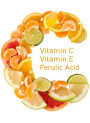
Vitamin C E Ferulic
Pure-Ferulic Acid™
Vitamin C (L-ascorbic acid) (Ultra-Fine)
Vitamin C (L-ascorbic acid) (Fine)
Vitamin E (dl-alpha tocopherol)