Sulfate-Free Shampoo Formulation: Cleaning Performance and Thickening Options
Asked by: nutpaveec
On: November 05, 2017
Product Type:
Cosmetics
Answered
Question
I am developing a sulfate-free shampoo formulation using the following ingredients:
- Sodium Lauroamphoacetate (Mild-Wash) 10%
- Cocamidopropyl Betaine 5%
- Cocamidopropyl Hydroxysultaine (Coco-Foam) 10%
I would like to know about its cleaning performance and how to thicken this formula inexpensively.
Answer
Sulfate-Free Shampoo Formula Assessment
Cleaning Performance
Your formula uses a combination of gentle, sulfate-free surfactants:
- Sodium Lauroamphoacetate (Mild-Wash): This is a primary gentle cleansing agent. At 10%, it provides good cleaning power.
- Cocamidopropyl Betaine: A co-surfactant that enhances foam and mildness.
- Cocamidopropyl Hydroxysultaine (Coco-Foam): Primarily a foam booster with lower cleaning efficiency, but it contributes to the overall lather.
The total concentration of surfactants (10% Mild-Wash + 5% Cocamidopropyl Betaine + 10% Coco-Foam = 25%) is adequate for effective cleaning in a shampoo formulation while remaining gentle, suitable for those sensitive to sulfates.
Thickening Options
For an inexpensive thickener, consider:
- Sodium Chloride: This is a very common and cost-effective thickener for many surfactant systems, especially those containing amphoteric surfactants like Cocamidopropyl Betaine and Cocamidopropyl Hydroxysultaine. Add it gradually (e.g., 0.5-1.5%) while stirring until the desired viscosity is reached.
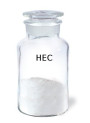
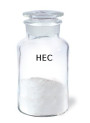
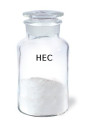
- Hydroxyethyl Cellulose (HEC): This is another option that provides thickening and gel formation. It is a non-ionic thickener. Note that HEC typically requires heating to dissolve properly.
Alternative Approach
Using a Sulfate Free Shampoo Base is a simpler method. These bases are formulated to be complete sulfate-free cleansing systems that can often be easily thickened with Sodium Chloride.
Related Products Mentioned
Glycerin (USP/Food Grade)
Cosmetics
Cocamidopropyl Betaine
Cosmetics
Mild-Wash L™ (Sodium Lauroamphoacetate)
Cosmetics
Hydroxyethyl Cellulose (HEC) (4500mPa.s)
Cosmetics
Hydroxyethyl Cellulose (HEC) (2800mPa.s)
Cosmetics
Sodium Chloride (High Purity, 99.9%)
Cosmetics