Sunscreen Balm Formulation with Bisoctrizole
Question
Is an emulsifier like Water Balm needed when formulating a sunscreen balm containing Bisoctrizole in an anhydrous base?
Answer
Sunscreen Balm Formulation with Bisoctrizole
Regarding your question about whether you need an emulsifier like Water Balm™ in your sunscreen balm formula containing Bisoctrizole, the answer is generally no, based on the typical nature of balm formulations and the formula you provided.
Here's why:
- Balm Structure: Balms are typically anhydrous (contain no water) or have a very low water content. They are primarily composed of oils, waxes, and butters.
- Emulsifier Function: Emulsifiers, such as Water Balm™, are used to help mix and stabilize a water phase within an oil phase (or vice versa) to create emulsions like creams or lotions. Water Balm™ specifically helps incorporate a small amount of water (up to 10%) into an oil/wax base without separation.
- Your Formula: The example formula you provided appears to be an anhydrous balm, consisting of waxes, oils (LipidSoft), silicones, powders, and oil-soluble/dispersible UV filters (BEMT, OMC, Bisoctrizole). There is no significant water phase listed that would require an emulsifier to blend with the oil/wax base.
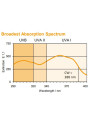
- Bisoctrizole in Balms: Bisoctrizole (like Bisoctrizole (MBBT, e.q. Tinosorb M)) is a particulate UV filter that works by being dispersed in the formula. While it can be dispersed in water, in an anhydrous balm, it is dispersed within the oil/wax matrix. Its function does not necessitate the presence of water or an emulsifier.
Therefore, you would only need a product like Water Balm™ if you intended to add a separate water phase (e.g., containing water-soluble actives) to your balm formula, up to the amount that Water Balm™ can effectively bind (typically up to 10%). For a standard anhydrous balm formulation like the one you described, a dedicated emulsifier is not required for the balm structure itself or for the function of Bisoctrizole.
Related Products Mentioned