Sunscreen Cream Formulation: Ingredients, Cold Process Mixing, and SPF
Question
Dear Officers,
I would like to inquire about the formulation and mixing of a cream. I want the cream to have the following properties:
- Waterproof sunscreen with SPF 30 and PA+++, light, non-greasy texture.
- Reduce wrinkles, reduce redness/dark spots, even out skin tone.
- Brighten skin.
- Reduce allergic reactions and acne.
- Provide soft, moisturized skin and help reduce wrinkles.
The ingredients I plan to use in this formulation are:
Zinc Oxide 200nm EasyDisperse™= 15%Titanium Dioxide 200nm EasyDisperse™= 7.5%Cyclomethicone / Cyclopentasiloxane (Low-Odor)= 22.5%SiliSolve Plus™= 3%- น้ำมันมะกอก (Olive Oil) = 5%
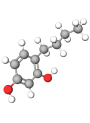
Activated Resorcinol™= 1%Bisabolol (German Chamomile Extract)= 1%Vitamin E(Tocopheryl Acetate) = 1%- น้ำ ID (DI Water) = 27%
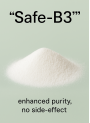
GlucoBright™(Acetyl glucosamine) = 4%Safe-B3™(Vitamin B3, Niacinamide) = 4%Disodium EDTA= 0.3%Licorice Extract(Licochalcone A) = 0.5%Phenoxyethanol (Optiphen)= 0.5%
Are the selected ingredients appropriate for the desired properties? I do not want to use heat in mixing the cream. Can it be mixed without heating? Are there any ingredients that should not be mixed together? Please advise on the method and order of mixing. Also, based on the percentages of the sunscreen ingredients selected, what SPF value would the formula achieve?
Thank you very much.
Answer
Subject: Re: Inquiry about Formulation and Mixing
Dear Customer,
Thank you for your inquiry regarding your sunscreen cream formulation. We appreciate you providing the details of your desired properties and chosen ingredients.
Here is our feedback on your formulation:
1. Appropriateness of Selected Ingredients:
The ingredients you have selected are generally appropriate for achieving the desired properties:
- Sun Protection (SPF 30 PA+++, water-resistant, light texture): Zinc Oxide and Titanium Dioxide are effective physical sunscreens. Cyclomethicone and SiliSolve Plus are suitable for creating a light, non-greasy feel and can contribute to water resistance.
- Anti-aging, Anti-redness/Dark Spots, Skin Tone Evening, Brightening: Activated Resorcinol, GlucoBright, Niacinamide, Licorice Extract, and Vitamin E are well-known active ingredients for these benefits.
- Anti-allergy and Anti-acne: Bisabolol, Licorice Extract, and Niacinamide have soothing and anti-inflammatory properties that can help with these concerns.
- Moisturizing and Wrinkle Reduction: Olive Oil and Vitamin E are good emollients. Niacinamide and GlucoBright also support skin hydration and barrier function.
Overall, the combination of ingredients addresses your desired outcomes comprehensively.
2. Mixing Without Heating:
It may be possible to mix this formulation without heating, especially since the Zinc Oxide and Titanium Dioxide are "EasyDisperse™" grades and SiliSolve Plus is likely a cold-processable emulsifier. However, achieving a stable and uniform emulsion, particularly with high percentages of dispersed solid sunscreens, is significantly easier and often more stable when at least one phase is gently heated and high-shear mixing is used during emulsification. Cold processing might require specialized high-shear equipment to ensure proper dispersion and emulsion stability. If you proceed with cold processing, monitor the stability closely over time (e.g., for separation or settling).
3. Ingredient Compatibility:
The ingredients you have chosen are generally compatible and commonly used together in cosmetic formulations. There are no major known incompatibilities that would cause significant issues under normal formulation conditions, assuming standard cosmetic grades are used and the final pH is within a suitable range (typically 5-7 for skin products). The main challenge is physical stability due to the high load of dispersed solids and the emulsification process itself.
4. Mixing Method and Order (Cold Process Suggestion):
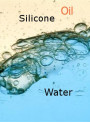
This formulation appears to be a water-in-silicone or silicone-in-water emulsion. A suggested cold process method would be:
- Phase A (Oil/Silicone Phase): Combine Cyclomethicone, Olive Oil, Vitamin E, Activated Resorcinol, Bisabolol, Licorice Extract, Phenoxyethanol, and SiliSolve Plus. Mix until homogeneous.
- Phase B (Solid Dispersion): Add Zinc Oxide and Titanium Dioxide to Phase A. Mix thoroughly to disperse the powders evenly. Using a high-shear mixer (like a homogenizer or high-speed disperser) at this stage is highly recommended to prevent aggregation and ensure optimal sunscreen performance.
- Phase C (Water Phase): In a separate container, combine Water, Disodium EDTA, GlucoBright, and Niacinamide. Mix until all powders are fully dissolved.
- Emulsification: Slowly add Phase C to Phase B while mixing continuously. Start with moderate mixing speed and increase as the emulsion begins to form. Continue mixing until a smooth, uniform cream is achieved.
Final Check: Once the emulsion is formed, mix for a few more minutes. Check the appearance for uniformity.
Note: Without heating, achieving a fine and stable dispersion of the solid sunscreens and a stable emulsion might be challenging with basic mixing equipment.*
5. Estimated SPF Level:
Based on the percentages of Zinc Oxide (15%) and Titanium Dioxide (7.5%), this combination is likely to provide broad-spectrum UV protection equivalent to SPF 30 or higher and PA+++ or PA++++. However, it is not possible to calculate the exact SPF and PA value without performing standardized in vitro or in vivo testing on the final product. The actual protection level depends heavily on the quality of the dispersion of the sunscreen particles, the final film formed on the skin, and interactions with other ingredients.
We hope this information is helpful for your formulation process.
Sincerely,
[Your Name/Team Name]
Related Products Mentioned
Vitamin E (Tocopheryl Acetate)
Safe-B3™ (Vitamin B3, Niacinamide)

Natural Bisabolol (Brazil Chamomile)

Olive Oil (Extra Virgin)
GlucoBright™ (Acetyl Glucosamine)
Phenoxyethanol (Extra Pure)
Disodium EDTA
Zinc Oxide 200nm EasyDisperse™