Sunscreen Formulation: Adjusting Texture, Water Resistance, and White Cast
Question
I would like to ask the team the following questions regarding my sunscreen formulation with the following ingredients:
Ingredients:
1) SPF Protect Ultra 15%
2) Zinc 200nm 5%
3) Dimethicone 1secs 5%
4) Dimethicone verylight/5 10%
5) Oil-Fix W 1%
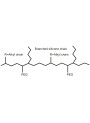
6) SiliSolve Plus 1%
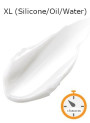
7) Warp Cream Maker XL 15%
8) Mild Preserved 1%
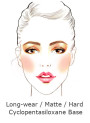
9) Silicone Film medium,wear 5%
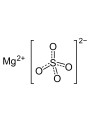
10) Magnesium Sulfate 1%
11) Siliperse 0.25%
12) Titanium Dioxide 200nm 1%
13) Water phase
1) If I want the sunscreen texture to be more liquid, is it suitable to increase SiliSolve Plus to 1.5-2% or Siliperse to 0.35%? Or are there any other methods to make the sunscreen more liquid without risking phase separation?
2) I want the formula to be more waterproof, to the point where it can be used for swimming. When using Silicone Film medium,wear 10% compared to Silicone Film Long,wear 10%, will the texture be significantly different? Because in the current formula, I use Medium,wear 5% which gives a satisfactory texture, but the water resistance is not good enough.
3) Using Titanium Dioxide 200nm EasyDisperse 1% results in an unnatural white look on the skin. Would using Titanium Dioxide Pigment 1% be more suitable? I only want the skin to look naturally brighter.
Answer
Sunscreen Formulation Advice
Based on your formulation and questions, here are some suggestions:
1. Making the Texture More Liquid
You are using SiliSolve Plus and Siliperse (likely SiliSolve) as emulsifiers in a water-in-oil/silicone system, along with Warp Cream Maker XL which also contributes to the creamy texture.
- Increasing SiliSolve Plus: Increasing SiliSolve Plus from 1% to 1.5-2% is a good approach to make the formula more liquid. The product description indicates that higher concentrations (up to 3%) can lead to a more liquid texture. This is within the recommended usage range and should help reduce viscosity without necessarily compromising stability, especially since you are also using Magnesium Sulfate as a stabilizer.
- Increasing Siliperse (SiliSolve): Increasing Siliperse (assuming it is SiliSolve) to 0.35% might not be as effective as its recommended usage rate starts from 0.5%. Increasing SiliSolve Plus is likely a more impactful way to reduce viscosity.
- Reducing Warp Cream Maker XL: Warp Cream Maker XL is a strong emulsifier designed to create creamy textures. Reducing the percentage of Warp Cream Maker XL (currently 15%) would also significantly contribute to a more liquid consistency. You could try reducing Warp Cream Maker XL gradually while potentially increasing SiliSolve Plus to find the desired balance of texture and stability.
2. Improving Water Resistance
To achieve better water resistance, especially for swimming, increasing the amount of film-forming polymer is necessary.
- Silicone Film Medium-Wear vs. Very Long-Wear: Increasing Silicone Film Medium-Wear from 5% to 10% will definitely improve the water resistance compared to 5%. However, Silicone Film Very Long-Wear is specifically described as providing "Extraordinarily long lasting" and "extremely long lasting" film properties. Using Silicone Film Very Long-Wear at 10% would likely provide superior water resistance suitable for swimming compared to the Medium-Wear type at the same concentration.
- Texture Difference: The description for Silicone Film Very Long-Wear mentions it "may cause skin discomfort" compared to the Medium-Wear type, which is described as "Soft". While it offers better longevity and water resistance, you might notice a difference in skin feel, potentially feeling slightly less comfortable or more "tight" on the skin compared to the Medium-Wear version you are currently satisfied with. You would need to test this to see if the trade-off is acceptable for your desired level of water resistance.
- Increasing Oil-Fix W: Oil-Fix W also contributes to waterproof performance at usage levels of 2-4%. Increasing Oil-Fix W from 1% to within this range could further enhance the water resistance of your formula.
3. Reducing White Cast
The white cast you are experiencing is likely due to the physical UV filters, Titanium Dioxide and Zinc Oxide, especially at the particle sizes you are using.
- Titanium Dioxide Grades: The Titanium Dioxide 200nm EasyDisperse and Titanium Dioxide 250nm Pigment you mentioned are both described as being for make-up products only and not specifically for sunscreen UV protection. Using these grades might not provide optimal UV protection and can contribute to a noticeable white cast as they are intended as pigments for whitening/concealing. Switching from Titanium Dioxide 200nm EasyDisperse to Titanium Dioxide 250nm Pigment at 1% is unlikely to solve the white cast issue and may not be suitable for a sunscreen product.
- Recommendation: To reduce white cast while ensuring effective UV protection, it is highly recommended to use sunscreen-specific grades of Titanium Dioxide and Zinc Oxide. Look for grades described as "nano," "transparent," or treated to minimize white cast while providing broad-spectrum UV protection. These are designed to disperse more evenly and be less visible on the skin. You may need to adjust the percentages of both Titanium Dioxide and Zinc Oxide based on the specific grades used to achieve the desired SPF and PA ratings with minimal white cast.
Related Products Mentioned
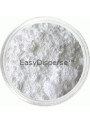
Zinc Oxide 200nm EasyDisperse™
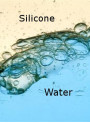
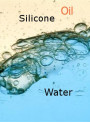
SiliSolve Plus™

SPF Protect Ultra™ II
Silicone Film (Medium-Wear, Soft)
Dimethicone (Very Light/5, Low-Odor)

Dimethicone 1Secs