Sunscreen Formulation: High Oil Phase and Emulsifier Selection
Question
I am developing a sunscreen formula and initially wanted to replace Octocrylene to reduce cost while maintaining high SPF. The suggestion was to reduce BEMT and Tris Biphenyl Triazine, increase DHHB, and add Ensulizole. Based on the following formula:
- Octocrylene 8%
- DHHB 3%
- OMC 8%
- BEMT 2%
- Tris-Biphenyl Triazine 5%
- LipidSoft Dry 10%
- Light Cream Maker 2%
- Disodium EDTA
- Phenoxyethanol SA
- Water (qs)
I have several questions:
- Is this a good sunscreen formula?
- Will the sunscreens dissolve completely?
- What is the correct mixing order?
- What is the difference between the formula with and without LipidSoft Dry?
- Is Light Cream Maker suitable, or is another emulsifier recommended?
- Should Vitamin E be added to improve stability?
Answer
Sunscreen Formula Evaluation and Advice
Based on the formula provided and the questions asked, here is a breakdown of the formula's characteristics and recommendations:
1. Is this a good sunscreen formula?
The formula uses a combination of modern organic UV filters: Octocrylene, DHHB, OMC, BEMT, and Tris-Biphenyl Triazine (Nano). This mix provides broad-spectrum protection against both UVA and UVB rays. DHHB, BEMT, and Tris-Biphenyl Triazine are known for their good UVA protection and photostability. OMC is a strong UVB filter. Octocrylene primarily boosts UVB protection and helps stabilize other filters like Avobenzone (though Avobenzone is not in this specific formula).
As noted in the replies, the effectiveness of Octocrylene can be lower compared to other filters, and removing it might significantly impact the overall SPF/PA values as calculated by simulation tools. The user's simulation results show a drop from SPF 62 (50+) PA++++ to SPF 45 (30) PA+++ when Octocrylene is removed, indicating it contributes to the final protection level, especially SPF.
Overall, the selection of filters is good for broad-spectrum protection, but the high total concentration of oil-soluble components (8% Octocrylene + 3% DHHB + 8% OMC + 2% BEMT + 5% Tris-Biphenyl Triazine + 10% LipidSoft Dry = 36% oil phase components) presents a formulation challenge, particularly regarding solubility and emulsification.
2. Will the sunscreens dissolve completely?
The organic UV filters (Octocrylene, DHHB, OMC, BEMT, Tris-Biphenyl Triazine) and LipidSoft Dry are oil-soluble or dispersible in oil. DHHB and BEMT are powders that require heating in the oil phase to dissolve. OMC and Octocrylene are liquids that dissolve in oil. Tris-Biphenyl Triazine (Nano) is a dispersion that is mixed into the cream/gel phase.
The primary challenge for complete dissolution and stable dispersion of the oil-soluble components is the high total percentage (36%) relative to the capacity of the emulsifier, Light Cream Maker. Light Cream Maker is designed to emulsify up to 20% oil. With 36% oil-phase components, it is highly likely that the Light Cream Maker will not be able to properly emulsify and stabilize the formula. This can lead to separation and potentially incomplete dissolution or dispersion of the UV filters, reducing their effectiveness and causing a poor texture.
As suggested in the replies, maintaining sufficient oil/emollient (like LipidSoft Dry) is crucial for dissolving the UV filters. However, the emulsifier needs to be capable of handling this oil load.
3. Mixing Order
A general mixing order for this type of formula would be:
- Water Phase: Add Disodium EDTA to the water and stir until dissolved.
- Oil Phase: Combine Octocrylene, DHHB, OMC, BEMT, and LipidSoft Dry. Heat this phase to around 80°C (as recommended for DHHB and BEMT) and stir until DHHB and BEMT are completely dissolved. Add Light Cream Maker to the oil phase.
- Combine Phases: Slowly add the heated oil phase to the water phase while stirring or homogenizing continuously. Continue stirring until a cream forms and cools down.
- Final Additions: Once the emulsion has cooled below 60°C, add Phenoxyethanol SA and Tris-Biphenyl Triazine (Nano). Mix until fully incorporated and the texture is homogeneous.
- Note: The mixing method for Light Cream Maker suggests it can be added to either the oil or water phase, or even used without an oil phase as a thickener. However, for emulsifying a significant oil phase, adding it to the oil phase is a common practice.*
4. Difference with and without LipidSoft Dry
LipidSoft Dry is an emollient that provides a light, non-greasy feel and helps to reduce the stickiness of the formula. It is also a solvent for oil-soluble ingredients, including many organic UV filters.
Including 10% LipidSoft Dry in this formula is important for several reasons:
- Texture: It significantly improves the feel of the sunscreen, making it less heavy and sticky, which is crucial for user acceptance, especially with a high concentration of UV filters.
- Solubility/Dispersion: It acts as a solvent, helping to dissolve the oil-soluble UV filters (Octocrylene, DHHB, OMC, BEMT) and disperse the Tris-Biphenyl Triazine (Nano) evenly throughout the oil phase before emulsification.
- Spreadability: It helps the sunscreen spread more easily and evenly on the skin, which is essential for achieving uniform coverage and thus the stated SPF/PA protection.
Without LipidSoft Dry, the formula would likely feel much heavier and stickier. More importantly, dissolving the high percentage of oil-soluble UV filters would be much more difficult, potentially leading to incomplete dissolution, instability, and reduced sun protection effectiveness.
5. Recommended Emulsifier
Light Cream Maker is suitable for formulas with up to 20% oil. Your formula has approximately 36% oil-phase components (UV filters + LipidSoft Dry). Using Light Cream Maker at 2% is unlikely to create a stable emulsion with this high oil load.
As suggested in the replies and supported by product descriptions, emulsifiers designed for higher oil percentages would be more suitable:
- Luxury Cream Maker: Can handle up to 20% oil (though its description also mentions handling higher oil loads with Milk Lotion Maker). It provides a rich, shiny cream texture.
- Soft Cream Maker: Can handle up to 25% oil. It requires heat during mixing and takes time to thicken, resulting in a soft, shiny cream with liquid crystal structure.
Given the 36% oil phase, even Luxury Cream Maker or Soft Cream Maker might be at their limit or require assistance from another emulsifier like Milk Lotion Maker (which requires heat). You would likely need to use a higher percentage of Luxury Cream Maker or Soft Cream Maker (e.g., 5-7%) to attempt to stabilize this formula, or consider using Milk Lotion Maker in combination.
Switching to an emulsifier capable of handling the high oil load is highly recommended for formula stability and proper dispersion of UV filters.
6. Vitamin E for Stability
Vitamin E (Tocopheryl Acetate) is an antioxidant. Its primary role in a sunscreen formula is to protect the oils and other ingredients from oxidation, which can lead to changes in color, odor, and overall product degradation.
OMC is mentioned in its product description as benefiting from the addition of antioxidants like Vitamin E Acetate (0.1%) for increased stability. While Vitamin E can help protect OMC and other components from oxidative degradation, it does not significantly stabilize the UV filters against photodegradation caused by UV exposure itself (unlike specific photostabilizers like those sometimes used with Avobenzone).
Adding Vitamin E is beneficial for the overall shelf-life and quality of the formula by preventing oxidation. However, adding just "1 drop" is not a precise or reliable measurement for a cosmetic formulation. For antioxidant benefits, a measured percentage, typically around 0.1%, is recommended. Using a proper percentage ensures consistent performance throughout the batch.
In summary, while the selection of UV filters provides broad-spectrum protection, the high oil phase concentration poses a significant challenge for the chosen emulsifier. Adjusting the emulsifier to one suitable for higher oil loads is crucial for stability and effectiveness. Including LipidSoft Dry is important for texture and dissolving the oil-soluble components. Adding Vitamin E is beneficial as an antioxidant for the formula's shelf-life, but should be added as a measured percentage.
Related Products Mentioned
Vitamin E (Tocopheryl Acetate)
Light Cream Maker™
Disodium EDTA
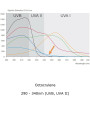
Octocrylene
Luxury Cream Maker™

LipidSoft™ Dry
Soft Cream Maker™

Phenoxyethanol SA (eq. Optiphen Plus)