Sunscreen Formulation Issues: Foaming, Viscosity, and Emollient Choice
Question
I'm adjusting a sunscreen formulation from a previous topic ([url]http://www.myskinrecipes.com/topic5001.html[/url]) because LipidSoft™ Dry is out of stock. I've replaced it with LipidSoft™ and made some other adjustments.
Here is the adjusted formula:
Oil Phase:
- SPF Protect Ultra 25%
- Titanium nano 3.00%
- Zinc Oxide nano 3%
- LipidSoft™ 10.00% (intended 7.5%, but added slightly more)
- Water in Oil 3.00%
- Beige color
Water Phase:
- Light Cream Maker 1.50%
- PowderCream 3%
- MatteSilica™ 4%
- Phenoxyethanol 0.50%
- Disodium EDTA 0.20%
- Distilled Water (remaining)
Mixing Procedure:
- Mix oil phase ingredients and blend.
- Mix water phase ingredients and blend.
- Slowly pour the water phase into the oil phase while blending until all is added.
- Blend at a very high speed.
I have a few questions:
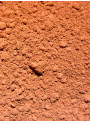
- The formula is foaming. I'm not sure if it's related to the beige color, because before adding the color, it didn't foam but separated. The application feel is otherwise very good. What adjustments should I make?
- If I want to make the texture thicker, how much Light Cream Maker can I add? It is currently less viscous than when I used LipidSoft™ Dry.
- The texture of the cream made with LipidSoft™ Dry was very sticky when applied to the skin, which doesn't happen with regular LipidSoft™. Can I just switch to using regular LipidSoft™? I plan to order large quantities for commercial production.
Answer
Formulation Feedback and Recommendations
Thank you for sharing your sunscreen formulation and questions. It's great that you are experimenting and looking to scale up production. Let's address your questions and the formula.
Addressing Your Questions
Foaming Issue: The foaming you are experiencing is most likely due to the high mixing speed you are using in the final step. Emulsifiers and thickeners, like Light Cream Maker™, can easily trap air when mixed at very high speeds. The description for Light Cream Maker™ specifically advises against spinning over 2500 rpm as it can damage the polymer and weaken the formula, which could also contribute to instability or texture issues over time. While the beige color could potentially contribute to foaming depending on its composition, the high mixing speed is the primary suspect.
- Recommendation: Reduce your mixing speed significantly, especially during the final emulsification step and after the emulsion has formed. Mix just enough to ensure homogeneity without incorporating excessive air.
Thickening with Light Cream Maker™: You can increase the concentration of Light Cream Maker™ to make the texture thicker. The recommended usage rate is 0.5-3%. Since you are currently using 1.5%, you can try increasing it up to 3%. However, be aware that using too much can make the cream very thick and difficult to dispense, especially from a pump bottle.
- Recommendation: Gradually increase the Light Cream Maker™ concentration from 1.5% up to a maximum of 3%, testing the viscosity at each increment until you achieve the desired thickness. Keep in mind the potential formulation conflicts discussed below.
Switching LipidSoft™: Yes, you can definitely switch from LipidSoft™ Dry to another type of LipidSoft™ to achieve a less sticky feel. LipidSoft™ Dry is designed for a drier feel, which is why you experienced stickiness. For a softer, smoother feel without the stickiness, consider:
- LipidSoft™ C1215: This is a standard emollient that provides medium softness and is commonly used.
LipidSoft™ Moist: This type is specifically focused on moisturizing without being greasy or clogging pores, and it has excellent spreadability, which might improve the application feel.
Recommendation: I recommend trying either LipidSoft™ C1215 or LipidSoft™ Moist at your desired concentration (around 10%) to see which provides the best skin feel for your formula.
Additional Formulation Considerations
Based on your formula, there are a couple of points regarding ingredient compatibility and the emulsification system that are important for stability, especially as you plan to scale up:
Zinc Oxide Type: You are using Zinc Oxide nano in your oil phase. The description for the likely product you are using (Zinc Oxide (Ultra-Fine, Non-Yellow, Non-Coated, USP)) indicates it is dispersible in water and not suitable for sunscreens. Using a water-dispersible powder in the oil phase of your formula will lead to poor dispersion and potential separation. For a stable sunscreen emulsion, you need a Zinc Oxide that is specifically treated to be dispersible in oil or silicones, or use a pre-dispersed form suitable for the oil phase.
Emulsifier System: Your formula uses both Water-in-Oil EZ™ (a W/O emulsifier) and Light Cream Maker™ (an O/W emulsifier/thickener). While you are using a W/O mixing method (adding water to oil), combining these two types of emulsifiers in this manner can be challenging and may lead to long-term instability or unexpected behavior. Water-in-Oil EZ™ is designed to create W/O emulsions (water droplets dispersed in an oil phase, which are typically more water-resistant and feel more occlusive), while Light Cream Maker™ is for O/W emulsions (oil droplets dispersed in a water phase, which are typically lighter and absorb faster).
- Recommendation: For better stability and predictability, especially for commercial production, consider focusing on either a pure W/O or a pure O/W emulsifier system. If you want a water-resistant, more emollient feel, optimize the formula around Water-in-Oil EZ™ and use oil-dispersible powders. If you prefer a lighter, faster-absorbing feel, switch to an O/W emulsifier system (like Light Cream Maker™ as the primary emulsifier) and adjust your oil phase accordingly, using water-dispersible powders where appropriate.
Addressing the Zinc Oxide type and potentially simplifying the emulsifier system will significantly improve the stability and quality of your product as you move towards larger scale production.
Related Products Mentioned
Light Cream Maker™
Phenoxyethanol (Extra Pure)
Disodium EDTA
Beige Iron Oxides EasyMix™
MatteSilica 5™ (5 Micron)
PowderCream™ (Water Absorbing PMMA)
LipidSoft™ Moist (Triethylhexanoin)
Titanium Dioxide Nanosil