Sunscreen Formulation Questions (W/Si, Physical Filters, TiO2 Dispersion, Heating)
Question
I have a sunscreen formulation with the following ingredients:
Silicone Phase:
- Warp Cream Maker 10%
- Zinc Oxide 200nm EasyDisperse™ 10%
- Cyclopentasiloxane (Low-Odor Cyclomethicone) 10%
- Silicone Gel (Ultra Clear) 20%
- PMMA Booster 5%
Water Phase:
- Titanium Dioxide Pigment 1% (intended for HEV light protection)
- mild preservative 1%
- Remaining Water
Color adjusted with Beige Iron Oxides EasyMix™ and Yellow Iron Oxides EasyMix™ according to skin tone.
I would like to ask the staff the following questions:
- Is this combination of sunscreen ingredients okay? Should anything be adjusted or added?
- In the staff's opinion, can this formula potentially achieve SPF 30 PA+++? (assuming Titanium Dioxide Pigment is not included)
- If I add Titanium Dioxide Pigment 1%, can it protect against HEV light? Are there other ingredients you would recommend? (I'm using only 1% because I don't want it to be too white). If it doesn't help, is it okay to remove it from the formula without any problems?
- This Titanium Dioxide Pigment is not coated. Will it disperse well in this sunscreen formula when mixed?
- Is it necessary to heat the ingredients before mixing?
Thank you.
Answer
Formula Review and Sunscreen Performance
Here is a review of your sunscreen formula and answers to your questions:
1. Ingredient Combination and Adjustments
The combination of ingredients in your formula is generally suitable for a water-in-silicone (W/Si) emulsion sunscreen. You are using Warp Cream Maker as the emulsifier, which is designed for this type of system, providing a light feel and potential water resistance. The silicone phase ingredients like Cyclopentasiloxane and Silicone Gel (Ultra Clear, Super Silky) contribute to the texture and spreadability, which is important for physical sunscreens like Zinc Oxide 200nm EasyDisperse™. The PMMA Booster is included to enhance SPF and improve texture.
The water phase contains the preservative, Mild Preserved Eco™, and the Titanium Dioxide 250nm Pigment. The Beige Iron Oxides EasyMix™ and Yellow Iron Oxides EasyMix™ are used for color adjustment in the silicone/oil phase.
Overall, the structure is sound for a physical sunscreen in a W/Si base. The main consideration for adjustment is the inclusion and dispersion of the Titanium Dioxide 250nm Pigment, as discussed below.
2. Expected SPF and PA (without Titanium Dioxide Pigment)
Your formula uses 10% Zinc Oxide 200nm EasyDisperse™ as the primary UV filter and 5% PMMA Booster. Zinc Oxide provides broad-spectrum protection against both UVA and UVB rays, contributing to both SPF (UVB) and PA (UVA) values. The PMMA Booster is specifically noted to significantly increase SPF and PA when used at 5% (stated to increase SPF by not less than 100%).
While a precise SPF and PA value can only be determined through laboratory testing, a formula with 10% Zinc Oxide and 5% PMMA Booster in a well-formulated and properly dispersed W/Si base could potentially achieve SPF 30 PA+++. However, this is an estimate, and actual performance depends heavily on the quality of dispersion and the final formulation's stability. Testing is recommended to confirm the exact SPF and PA.
3. Titanium Dioxide Pigment for HEV Light Protection
The Titanium Dioxide 250nm Pigment (Non-Treated) you are using is primarily intended as a white pigment for makeup products to provide coverage and whiteness. Its particle size (250nm) and non-treated nature mean it is designed to be dispersed in water and is not optimized for UV protection in sunscreen formulations. While Titanium Dioxide can offer some protection against blue light (part of HEV light), using this specific pigment grade at only 1% is unlikely to provide significant or reliable protection against HEV light.
For effective HEV light protection, ingredients specifically designed to absorb or reflect blue light are typically used, often at higher concentrations or in specific treated forms. If your primary goal for including this ingredient is HEV protection, it may not be effective at this concentration and type.
It is perfectly fine to remove the Titanium Dioxide 250nm Pigment from your formula if it is not providing the desired HEV protection or if you are concerned about its dispersion or effect on the formula's aesthetics (like whiteness). Removing it will not negatively impact the SPF and PA provided by the Zinc Oxide and PMMA Booster.
4. Dispersion of Uncoated Titanium Dioxide Pigment
The Titanium Dioxide 250nm Pigment (Non-Treated) is an uncoated pigment designed to be dispersed in water. Your formula is a water-in-silicone emulsion, where the water phase is dispersed within the continuous silicone phase. While the pigment is in the water phase, achieving uniform and stable dispersion of an uncoated, water-dispersible pigment within the internal water phase of a W/Si emulsion can be challenging.
Physical sunscreens and pigments often require specific surface treatments (like the coating on your Zinc Oxide 200nm EasyDisperse™) or specialized dispersing agents to ensure they remain evenly distributed and do not aggregate or settle over time, especially in complex emulsion systems like W/Si. You may find that the uncoated Titanium Dioxide 250nm Pigment is difficult to fully incorporate or may lead to instability or a less smooth texture compared to using a treated pigment or a pre-dispersed form suitable for the silicone phase.
5. Necessity of Heating Before Mixing
Based on the ingredients listed in your formula, heating the mixture before mixing is likely not necessary. The product description for Warp Cream Maker mentions heating only if the formula contains waxes that need to be melted into the oil/silicone phase. Your formula does not list any waxes.
The mixing instructions for Warp Cream Maker emphasize blending the silicone/oil/emulsifier phase well and then gradually adding the water phase while blending at high speed (at least 1000 rpm). The ingredients like Cyclopentasiloxane, Silicone Gel (Ultra Clear, Super Silky), Zinc Oxide 200nm EasyDisperse™, PMMA Booster, Mild Preserved Eco™, Beige Iron Oxides EasyMix™, and Yellow Iron Oxides EasyMix™ do not typically require heating for incorporation, although some can withstand heat if needed for other formula components.
Therefore, you should be able to prepare this formula at room temperature with proper high-speed mixing.
Related Products Mentioned
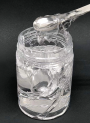
Silicone Gel (Ultra Clear, Super Silky)
Zinc Oxide 200nm EasyDisperse™
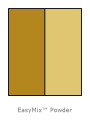
Yellow Iron Oxides EasyMix™
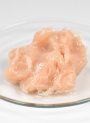
Warp Cream Maker™ (e.q. Nikkomulese wo)
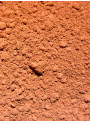
Beige Iron Oxides EasyMix™
Mild Preserved Eco™ (Preservative-Free)