Sunscreen Formulation: Solubility, Texture, and Mixing of BEMT and SPF Protect Ultra
Question
I am developing a sunscreen formula using Titanium Dioxide 1.5%, SPF Protect Ultra 18%, and BEMT 1%, aiming for SPF 50 PA++++.
I have several questions regarding the formulation process, particularly concerning solubility, texture, and mixing:
- When using
Water in Oil EZas an emulsifier, does mixing for a longer duration help achieve better dissolution and emulsification? Specifically, is mixing at 200-300 rpm for about 15 minutes after gradually adding the water phase sufficient? - Should
Water in Oil EZbe mixed slowly to prevent the formula from becoming too thick or viscous? - For
SPF Protect Ultrawhich is stored at room temperature, is simply shaking it sufficient before mixing, or is it necessary to heat it to 50-60°C along withLipidSoftto ensure better dissolution? - If I want to use alcohol in the formula to achieve a lighter texture, similar to products like Anessa or Biore, what percentage should I use and which part of the formula (e.g., water phase) should it replace?
Answer
Sunscreen Formulation with BEMT and SPF Protect Ultra
Based on the conversation, here is a summary of the information regarding your questions about using BEMT and SPF Protect Ultra in your sunscreen formulation:
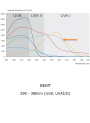
Using BEMT alone: While BEMT is highly effective and offers broad-spectrum protection, using it as the sole UV filter might result in weaker protection in the 380-400nm UVA range. A key reason for combining UV filters is that many high-performance filters, like BEMT, are powders that require sufficient dissolution to function correctly. They are typically dissolved in oil-based sunscreens (such as Octisalate or OMC) or emollients. Combining filters also helps achieve more comprehensive coverage across the entire UV spectrum.
Adding BEMT to a formula with SPF Protect Ultra: Yes, you can add BEMT to a formula containing SPF Protect Ultra. This can enhance the overall SPF and efficacy. Regarding reducing SPF Protect Ultra to potentially lower costs by increasing BEMT, this is a valid approach to consider. However, it is strongly recommended to use a sunscreen simulator (like the BASF Sunscreen Simulator) to accurately calculate the resulting SPF and PA values for different ingredient ratios.
Your specific formula (Titanium Dioxide 1.5%, SPF Protect Ultra 18%, BEMT 1%): Your goal of achieving SPF 50 PA++++ with this combination is noted. To confirm the exact SPF/PA and optimize the ratios, especially if considering adjusting BEMT and SPF Protect Ultra levels, using a sunscreen simulator is the most reliable method for precise formulation.
Solubility with LipidSoft CC and Isododecane: Using 10% of any LipidSoft type is generally sufficient for dissolving the UV filters. However, Isododecane does not help dissolve these sunscreens. Dissolution requires oil-based emollients or liquid sunscreens.
Checking for complete dissolution: Visual inspection is a basic check, but for absolute certainty, microscopic examination is needed to ensure no crystals remain. Practically, formulators often calculate the required amount of solvent based on known solubility data for the ingredients. For SPF Protect Ultra, approximately 50% of its amount in LipidSoft is needed for dissolution.
Using Isododecane vs. Alcohol for lightness: According to the staff's opinion, Ethyl Alcohol typically provides a lighter feel, evaporates faster, and offers a cooling sensation compared to Isododecane. Isododecane is lightweight and evaporates, but slower than alcohol, and does not provide cooling. However, Isododecane generally has fewer potential side effects on the skin than Ethyl Alcohol.
Adjusting viscosity: If your formula feels sticky or is difficult to spread, you should increase the amount of LipidSoft or similar emollients that improve spreadability. If the formula feels greasy or tacky on the skin after application, you should increase lightweight ingredients like powder emollients, Isododecane, or volatile silicones (such as Cyclomethicone).
Effect of mixing time/speed: Complete dissolution requires sufficient heat (70-80°C), adequate mixing speed (recommended 500+ rpm, ideally with a Dissolver/Disperser head), and sufficient time (around 15 minutes). Once dissolution is complete, continued mixing or heating will not further improve it. When using Water in Oil EZ, a higher mixing speed (1000+ rpm) is necessary for proper emulsification and does not cause the mixture to thicken, unlike some other emulsifiers.
Heating SPF Protect Ultra: Yes, it is recommended to heat SPF Protect Ultra with the oil phase to 70-80°C during the formulation process to ensure complete dissolution. Simple shaking at room temperature is not sufficient.
Using alcohol: Alcohol can be used to replace a portion of the water phase in your formula to achieve a lighter feel, similar to some commercial sunscreen products like Anessa or Biore. The specific percentage would depend on your desired texture and the overall formula composition.