Sunscreen Formulation: Stability, Texture & Ingredient Questions
Question
Hello, I would like to ask the team about a sunscreen formulation with the following ingredients:
INGREDIENTS
1.Warp cream XL 14%
2.Dimethicone(Very light/5) 12%
3.Dimethicone 1secs 5%
4.Oil-Fix W 1%
5.SiliSolve Plus 1%
6.Silicone Film (Long Wear, soft,Isododecane) 5%
7.PMMA Booster 3%
8.LipidSoft CC 3%
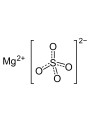
9.Magnesium Sulfate 1%
10.SiliPerse 0.25
11.SPF Protect Ultra 15%
12.Zinc Oxide 200nm 10%
13.Mild Preserved 1%
14.Aqua
1) I have found that layer separation occurs when left for a long time, with oil floating on top of the cream. I would like to know if increasing SiliSolve Plus to 2% and Oil-Fix W to 2% is suitable, or if there is a more appropriate method. Please advise.
2) Can 20nm Silver be used in a sunscreen formula to replace the preservative, specifically Mild Preserved?.
3) When comparing SiliSilk 5 micron with LipidSoft Spread, which one is better for providing softness and easy spreading on the skin, especially for a cream texture that feels quite stiff when spread?
4) Can Zinc Oxide Nano EasyDisperse be used in Water in Oil / water in silicone formulations?
Answer
Formulation Questions Answered
Here are the answers to your formulation questions based on the properties of the ingredients:
1) Layer Separation Issue
You are experiencing layer separation with oil floating on top after leaving the product for a long time. Your formula uses Warp Cream Maker XL and SiliSolve Plus as emulsifiers/binders in a water-in-oil/silicone system, along with Oil-Fix W and Magnesium Sulfate as stabilizers.
Increasing the concentration of SiliSolve Plus to 2% and Oil-Fix W to 2% is a reasonable approach to try and improve stability. Both ingredients are designed to help stabilize water-in-oil and water-in-silicone emulsions and prevent separation. SiliSolve Plus helps bind the water, oil, and silicone phases, while Oil-Fix W (Silica Dimethyl Silylate) acts as a stabilizer by forming a network that encapsulates the water phase within the oil/silicone phase and improves waterproof performance.
In addition to adjusting the ingredient percentages, ensure your mixing procedure follows the recommended method for water-in-oil emulsions, which is to slowly add the water phase to the oil/silicone phase while blending continuously with high shear. Improper mixing is a common cause of instability. Also, ensure the Magnesium Sulfate (which helps stabilize W/O emulsions) is fully dissolved in the water phase before combining.
If increasing SiliSolve Plus and Oil-Fix W is not sufficient, you could also consider:
- Increasing the concentration of Warp Cream Maker XL, as it is the primary emulsifier.
- Ensuring the Magnesium Sulfate is at the recommended 1% level for W/O stability.
- Checking if any other ingredients in your formula might be contributing to instability (e.g., high levels of certain glycols or alcohols, as mentioned in the description for Water-in-Oil EZ, although your formula doesn't list high amounts of these).
2) Using 20nm Silver as a Preservative
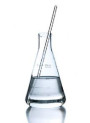
Mild Preserved Eco is a blend of Ethylhexylglycerin and Propanediol designed to prevent microbial growth in cosmetic formulas and allows for "preservative-free" claims.
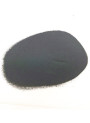
Nano Silver 20nm Powder has antimicrobial properties, but it is not typically used as a direct replacement for cosmetic preservative blends like Mild Preserved Eco in finished formulations. Cosmetic preservation requires ensuring broad-spectrum efficacy against bacteria, yeast, and mold over the product's shelf life, often confirmed through challenge testing.
Based on the available information, Nano Silver 20nm Powder is not described as a cosmetic preservative system suitable for replacing Mild Preserved Eco. It is best to continue using a tested and approved cosmetic preservative or preservative blend to ensure the safety and stability of your sunscreen formulation.
3) SiliSilk 5 micron vs LipidSoft Spread for Slip
You are looking to improve the spreadability and reduce the "stiff" feel of your cream.
- SiliSilk 5H and SiliSilk 5L (both 5 micron SiliSilk types) are silicone powders. They are primarily used to modify the texture and skin feel of a product, providing softness, smoothness, and a blurring effect. They can also help absorb oil and silicone. While they improve the feel of the spread, they are not designed to significantly increase the inherent spreadability of a stiff cream base in the same way a liquid emollient would.
- LipidSoft Spread is a liquid emollient (Diethylhexyl Carbonate) specifically developed for its easy spreadability and light texture.
For the purpose of making a stiff cream easier to spread and less "ฝืด" (stiff/resistant to spreading), LipidSoft Spread would generally be more effective than SiliSilk powders. LipidSoft Spread is a liquid oil-soluble ingredient that reduces friction and improves the flow of the cream on the skin. SiliSilk powders, while improving smoothness and feel, are solid particles that modify texture rather than directly lubricating the spread like a liquid emollient.
Consider adding or increasing the amount of LipidSoft Spread in your oil or silicone phase to improve the glide and reduce the stiff feel.
4) Zinc Oxide Nano EasyDisperse in Water-in-Oil / Water-in-Silicone
Yes, Zinc Oxide EasyDisperse types (including Zinc Oxide 200nm EasyDisperse used in your formula and the smaller "Nano EasyDisperse") are silicone-coated powders designed to disperse easily in silicone and oil phases.
This makes them highly suitable for use in water-in-oil (W/O) and water-in-silicone emulsion systems, such as those created with Warp Cream Maker XL or Water-in-Oil EZ. The silicone coating helps the Zinc Oxide particles remain evenly distributed in the external oil/silicone phase, contributing to formula stability and effective UV protection without settling.
Zinc Oxide 35nm Liquid is another form of nano Zinc Oxide that is a liquid dispersion specifically recommended for water-in-oil systems. Both the EasyDisperse powders and the 35nm Liquid are compatible with W/O and W/Silicone formulations.
Related Products Mentioned
Zinc Oxide 200nm EasyDisperse™
SiliSolve Plus™
Zinc Oxide 35nm Liquid
Nano Silver 20nm Powder
Mild Preserved Eco™ (Preservative-Free)
Dimethicone (Very Light/5, Low-Odor)
Dimethicone 1Secs