Sunscreen Formulation with Stable Whitening Agents
Question
I am formulating a sunscreen and initially considered adding L-Ascorbic Acid (Vitamin C) and Glutathione (specifically Glutathione (L-Glutathione) (Extrasol)) for whitening. The base uses physical filters like Titanium Dioxide Nanosil (10%) and Zinc Oxide 35nm Liquid or Zinc Oxide 40nm Dispersion (Water Base) (10%), along with Light Cream Maker (1.5%) and Caprylic/Capric Triglyceride (5%).
- What is the feasibility of this combination, considering stability, especially in a sunscreen for daytime use?
- How would the feel of this formula be, given the components?
- What would be the effect of removing Vitamin B3 (Niacinamide) and Centella Asiatica Extract from the formula?
- What are some stable whitening agents suitable for daytime use in a sunscreen, particularly for body application where cost-effectiveness is important?
- How long does it typically take to see visible whitening results when using a combination of Vitamin B3 and N-acetyl Glucosamine (like GlucoBright™)?
Answer
Sunscreen Formulation with Whitening Agents
Regarding your sunscreen formulation containing Vitamin C and Glutathione, and your questions about its feasibility, feel, and alternative whitening agents:
Feasibility and Feel of the Original Formula:
- Adding L-Ascorbic Acid (Vitamin C) to a sunscreen formulation intended for direct sun exposure is not recommended. L-Ascorbic Acid is highly unstable and degrades rapidly when exposed to light, losing its efficacy and potentially generating free radicals. This aligns with the staff's previous advice.
- While Glutathione (such as Glutathione (L-Glutathione) (Extrasol)) can be used for its antioxidant and potential whitening effects, its stability in a sunscreen base, especially alongside unstable Vitamin C, is questionable.
- The feel of the formula will likely be influenced significantly by the high percentage (20% total) of physical sunscreens (Titanium Dioxide and Zinc Oxide). Even using nano, "Oil Free" versions like Titanium Dioxide Nanosil and Zinc Oxide 35nm Liquid or Zinc Oxide 40nm Dispersion (Water Base) can contribute to a heavy feel or white cast, although nano particles are designed to minimize this. The 1.5% Light Cream Maker and 5% Caprylic/Capric Triglyceride are relatively low for the oil phase, which might help, but the high powder load is the main factor affecting the feel.
Effect of Removing Vitamin B3 and Centella Asiatica Extract:
- Removing Vitamin B3 (Niacinamide) and Centella Asiatica Extract would simplify the formula and might slightly reduce the overall "heaviness" or ingredient load.
- However, both Vitamin B3 (such as Safe-B3™ or Extreme-B3™) and Centella Asiatica Extract (such as Centella Asiatica Extract (Madecassoside 90%) or Pure-TECA™ Centella Asiatica Extract) offer significant benefits. Vitamin B3 improves skin barrier function, reduces hyperpigmentation, and controls oil, while Centella Asiatica is known for its soothing, anti-inflammatory, and collagen-stimulating properties. Removing them means losing these benefits. It wouldn't necessarily make the formula "better" in terms of efficacy, but it might slightly improve the texture depending on how they interact with the base.
Stable Whitening Agents for Daytime Use / Sunscreen (Low Cost for Body):
- Since L-Ascorbic Acid is unsuitable for daytime sun exposure, more stable whitening agents are recommended.
- Vitamin B3 (Niacinamide) is a good option. It is more stable than L-Ascorbic Acid and offers multiple benefits, including reducing hyperpigmentation. Products like Safe-B3™ or Extreme-B3™ are available.
- N-acetyl Glucosamine (such as GlucoBright™) is another stable option that works well in combination with Vitamin B3 to reduce dark spots and improve skin tone.
- Combining Vitamin B3 and N-acetyl Glucosamine is a well-researched approach for whitening and is generally more stable in formulations compared to L-Ascorbic Acid.
- Some stable Vitamin C derivatives like Ethyl Ascorbic Acid are also more suitable for daytime use than L-Ascorbic Acid, as they are more stable to light and heat. However, they might be more costly than Vitamin B3 or N-acetyl Glucosamine.
- For low-cost body applications, Vitamin B3 and N-acetyl Glucosamine are excellent choices due to their stability, efficacy, and relatively lower cost compared to some other whitening actives.
Expected Results Timeframe for Vitamin B3 + N-acetyl Glucosamine:
- Whitening agents, including the combination of Vitamin B3 and N-acetyl Glucosamine, typically require consistent use over time to show visible results.
- Significant changes are usually observed after at least one skin cell turnover cycle, which is approximately 28 days. Results may become more pronounced with continued use. This aligns with the information provided in the discussion.
In conclusion, while technically possible to mix Vitamin C and Glutathione into a sunscreen base, it is not advisable due to Vitamin C's instability in sunlight. The proposed formula's feel will likely be influenced by the high physical filter content. Removing B3 and Centella would remove their benefits. For stable daytime whitening, Vitamin B3 and N-acetyl Glucosamine are recommended, offering good efficacy and stability, with visible results typically seen after about 28 days.
Related Products Mentioned
Safe-B3™ (Vitamin B3, Niacinamide)

GlucoBright™ (Acetyl Glucosamine)
Vitamin C (L-ascorbic acid) (Ultra-Fine)
Light Cream Maker™
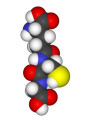
Glutathione (L-Glutathione) (Extrasol)
Zinc Oxide 35nm Liquid

Titanium Dioxide Nanosil