Sunscreen Formulation with Tinosorb S, Titanium Dioxide, and Zinc Oxide
Question
I am developing a sunscreen formula and would like to know the approximate percentages of the following UV filters needed to achieve SPF 30 PA +++:
- Tinosorb S
- Titanium Dioxide 200nm EasyDisperse
- Zinc Oxide 200nm EasyDisperse
Could you provide guidance on how to calculate or estimate these percentages, considering the information previously provided about using sunscreen simulators and the need for laboratory testing for accurate values?
Answer
Sunscreen Formulation with Tinosorb S, Titanium Dioxide, and Zinc Oxide
Regarding your question about the percentages needed for SPF 30 PA +++ using Tinosorb S, Titanium Dioxide 200nm EasyDisperse, and Zinc Oxide 200nm EasyDisperse, it's important to understand that determining the precise percentage of each UV filter to achieve a specific SPF and PA rating requires testing the final formulation.
The interaction between different UV filters, the base formula, and the manufacturing process all significantly impact the final protection level. Therefore, a simple calculation based on individual percentages is not accurate for claiming SPF/PA values.
How to Estimate and Verify SPF/PA
- Sunscreen Simulators: Tools like the BASF Sunscreen Simulator (as mentioned in the previous staff reply) can provide an estimated SPF and PA based on the UV filters and their concentrations in a formula. This can be a helpful starting point for formulation development.
- Laboratory Testing: The only way to confirm the exact SPF and PA values of your final product is through in-vivo (on skin) or in-vitro (laboratory) testing by a specialized lab. Our company offers a free SPF measurement service if you use Tinosorb S in your sunscreen product formula.
Information on the Ingredients:
Based on the product descriptions, here is some information about the ingredients you mentioned:
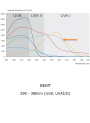
- BEMT (Bis-Ethylhexyloxyphenol Methoxyphenyl Triazine, e.q. Tinosorb S): This is an organic (chemical) sunscreen that provides excellent protection against both UVA and UVB rays (290-370 nm) and is highly stable. It works well with physical sunscreens like Zinc Oxide and Titanium Dioxide. The recommended usage rate is typically 1-10%, with 2-4% often sufficient for high performance.
- Titanium Dioxide 200nm EasyDisperse™: This is a physical sunscreen that protects against short-wave UVA and UVB. The description notes that this specific type is primarily for use in makeup products due to its treatment and recommends selecting from the "Titanium Dioxide for UV Protection" category for sunscreen applications. Its usage rate is 1-25%. It is designed to disperse easily in silicone or oil.
- Zinc Oxide 200nm EasyDisperse™: This is also a physical sunscreen, particularly effective at protecting against long-wave UVA. Its usage rate is 5-25%. This type is coated to disperse easily in silicone and is suitable for formulas claiming to use non-nano Zinc Oxide. For liquid sunscreen formulas, it's recommended to include 0.2-0.3% Xanthan Gum and 3-4% Propylene Glycol to aid dispersion and stability.
In summary, while you can use the recommended usage ranges as a guide for initial formulation, you will need to use a simulator for estimation or, preferably, send your final formula for laboratory testing to accurately determine the percentages required to reach SPF 30 PA +++.