Sunscreen Formulation with Titanium Dioxide 250nm for SPF 50 PA+++
Question
If I want to make a sunscreen using Titanium Dioxide 250nm WaterProof™ (Dimethicone Treated) and achieve SPF 50 PA+++ with both UVA and UVB protection:
- What percentage should be used in the formulation?
- Do I need to add any other extracts or ingredients to reach these targets?
Answer
To create a sunscreen with SPF 50 and PA+++ using Titanium Dioxide 250nm WaterProof™ (Dimethicone Treated), there are several important technical considerations regarding particle size and broad-spectrum protection:
1. The Role of Titanium Dioxide 250nm
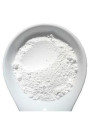
The product you selected has an average particle size of 250nm, which is considered "Pigment Grade."
- Coverage: It provides excellent coverage and a "Tone-up" (whitening) effect.
- UV Protection: While it provides UVB protection, its large particle size makes it less efficient as a primary sunscreen agent compared to "Ultra-fine" or "Nano" grades.
- Usage Rate: If used alone to reach SPF 50, you would likely need more than 20-25%, which would result in an extremely heavy, thick, and very white paste that is difficult to spread.
2. Achieving PA+++ (UVA Protection)
Titanium Dioxide is primarily effective against UVB rays. To achieve a PA+++ rating, which measures protection against UVA rays, Titanium Dioxide alone is usually insufficient. You must add a dedicated UVA filter.
- Recommendation: Add Zinc Oxide to the formula. Zinc Oxide is a broad-spectrum physical filter that is essential for achieving high PA ratings.
- Zinc Oxide 35nm Liquid or Zinc Oxide (40nm, Triethoxycaprylylsilane Coated) are excellent choices for high UVA protection with less white cast.
3. Suggested Formula Strategy for SPF 50 PA+++
To achieve your goal with a pleasant texture and high protection, it is recommended to use a combination of ingredients:
- Titanium Dioxide 250nm WaterProof™: Use at 3-5% to provide the waterproof property and a slight tone-up effect.
- Zinc Oxide (Nano/Micronized): Use at 10-15% to ensure broad-spectrum UVA protection (PA+++).
- Titanium Dioxide 15nm Liquid (Gloss): You may add this at 5-10% to boost the SPF to 50 without significantly increasing the white cast, as smaller particles are more efficient at scattering UV rays.
Summary of Ingredients to Add:
- For UVA Protection (PA+++): Zinc Oxide 35nm Liquid or Zinc Oxide (40nm, Triethoxycaprylylsilane Coated).
- For SPF Boost (without extra whiteness): Titanium Dioxide 15nm Liquid (Gloss).
Blending Note: Since the Titanium Dioxide you selected is Dimethicone-treated (oil-dispersible), your formula should be an Oil-in-Water (O/W) or Water-in-Oil (W/O) emulsion where the UV filters are dispersed in the oil phase.
Related Products Mentioned
Titanium Dioxide 15nm Liquid (Gloss)