Sunscreen Foundation Formulation: Waterproofing & Mixing without a Blender
Question
I have a sunscreen foundation formula that I want to be waterproof, oil-controlling, non-whitening, suitable for all skin types, and non-comedogenic.
The formula includes:
- Water-in-Oil EZ
- Silk Mica Powder
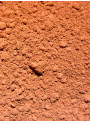
- Beige Iron Oxides
- Titanium Dioxide
- Polyethylene Wax
- LipidSoft Disperse
- SPF Protect Ultra II
- Mild Preserved Eco
I do not have a blender.
- Does this formula need any adjustments?
- Could you provide the mixing procedure for this formula?
Answer
Hello,
Thank you for providing your sunscreen formulation and explaining your desired properties (sunscreen with foundation, oil control, non-whitening, suitable for all skin types, non-comedogenic, waterproof).
Regarding your questions:
Does the formula need adjustment?
- The formula you provided includes ingredients like Water-in-Oil EZ, Silk Mica Powder, Beige Iron Oxides, and Titanium Dioxide, which are typical for a foundation-sunscreen product.
- As the staff mentioned, this type of formula is likely a Water-in-Oil (W/O) emulsion, where oil surrounds water. This structure is often preferred for products that need to provide coverage and water resistance, like foundation-sunscreen.
- However, creating a stable and well-mixed Water-in-Oil emulsion, especially one containing powders like pigments and UV filters, typically requires a high-shear mixer or blender to properly emulsify the phases and disperse the powders evenly.
- Since you mentioned you don't have a blender, achieving the desired texture, stability, and performance (like non-whitening, smooth application, and waterproofness) with this specific formula might be challenging or impossible without one. The formula itself is designed for certain properties, but its successful execution depends heavily on the mixing method and equipment.
- To make the formula waterproof, the Polyethylene Wax helps, but the overall formula structure (Water-in-Oil) is also key, which again points to the need for proper mixing equipment.
- Therefore, while the ingredients are chosen to aim for your desired properties, the formula as written might need adjustment or a completely different approach if you cannot use a blender. The staff's suggestion of a simpler, non-waterproof formula is an example of an adjustment made necessary by the lack of equipment.
How to mix it?
- Mixing a Water-in-Oil emulsion with powders typically involves heating the oil phase (containing ingredients like Water-in-Oil EZ, Polyethylene Wax, LipidSoft Disperse, SPF Protect Ultra II, Mild Preserved Eco, and potentially some water-dispersible ingredients if added to oil first) and the water phase separately.
- The powders (Silk Mica, Iron Oxides, Titanium Dioxide) would usually be dispersed into the oil phase (often with the help of a dispersant like LipidSoft Disperse) before emulsification.
- The water phase is then slowly added to the oil phase while mixing continuously and vigorously with a high-shear mixer or blender to form the emulsion.
- Without a blender, it is very difficult to create a stable W/O emulsion and evenly disperse the powders, which can lead to separation, poor texture, uneven color/SPF distribution, and failure to achieve waterproofness.
- The staff did not provide specific mixing instructions for your original formula, likely because it requires equipment you don't have. They referred you to the product page for the alternative formula, which would have different mixing instructions suitable for a simpler emulsion type (likely Oil-in-Water, which is easier to make without a high-shear mixer).
In summary, your original formula is designed to be a foundation-sunscreen with waterproof properties, but its successful creation relies on using a blender due to its Water-in-Oil nature and the inclusion of powders. Without a blender, you may find it difficult to achieve the desired results. You might need to consider a simpler formula (like the staff's suggestion, though it's not waterproof) or invest in a blender to make your original formula work. To make a formula waterproof without the Water-in-Oil method, you would need to incorporate specific film-forming ingredients designed for water resistance.
Related Products Mentioned
Beige Iron Oxides EasyMix™
Mild Preserved Eco™ (Preservative-Free)