Sunscreen Gel-Cream Formulation for Oil Control: Evaluating Lecithin & Rice Starch vs. Recommended Ingredients
Question
I want to create a light, dry-touch gel-cream sunscreen with oil absorption properties, similar to La Roche-Posay Anthelios XL Dry touch Gel-cream SPF50+.
I am proposing a formula using Soy Lecithin and Rice Starch. My initial thought was to use Soy Lecithin at 1%, but the staff mentioned 4-5% is needed for emulsification. I am considering increasing it to 4%.
My proposed mixing method is to heat Glycerin, Lecithin, and Rice Starch together, then add water at the end.
My questions are:
- Can Soy Lecithin (at 4-5%) and Rice Starch achieve the desired light, dry-touch gel-cream texture with good oil absorption, similar to the reference product?
- Does heating Rice Starch significantly reduce its oil absorption capability?
- Is my proposed mixing method suitable for creating a stable emulsion and achieving the desired texture and oil absorption?
Answer
Based on your questions and the previous advice from the staff, let's address your proposed formula using Soy Lecithin and Rice Starch to achieve a light gel-cream texture with oil absorption properties, similar to La Roche-Posay Anthelios XL Dry touch Gel-cream SPF50+.
The staff previously mentioned that using Soy Lecithin at only 1% is not enough to emulsify a formula; typically, 4-5% is needed. While increasing Soy Lecithin to 4% might allow it to function as an emulsifier, the staff also noted that Lecithin generally results in a texture that is not as light as desired and is more difficult to work with compared to alternatives like Light Cream Maker or Pro Polymer. Soy Lecithin requires heating to dissolve in oil.
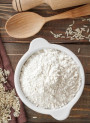
Regarding Rice Starch (RiceSorb™), it can help thicken a formula and absorb oil. However, the staff confirmed that if Rice Starch is heated and gelled, its oil absorption capability is significantly reduced. For effective oil absorption, Rice Starch should ideally be added in powder form at the end of the formulation process, without high heat.
Your proposed mixing methods involve heating Glycerin, Lecithin, and potentially Rice Starch together, and adding water at the end. This approach is generally not suitable for creating a stable oil-in-water (O/W) emulsion, which is the basis for most light creams and gel-creams. O/W emulsions typically involve mixing the heated oil phase (containing oil-soluble ingredients and emulsifier) with the heated water phase (containing water-soluble ingredients) and then cooling while stirring. Adding water at the very end would likely break the emulsion. Furthermore, heating the Rice Starch in this manner would counteract your goal of achieving oil absorption.
To achieve a light, dry-touch gel-cream with good oil absorption, similar to the product you mentioned, it's more effective to follow the staff's recommendations:
- Use SPF Protect Ultra™ II as your sunscreen base. You can use it at 20% for very sufficient protection or 30% for maximum protection, keeping in mind that 30% might feel slightly heavier.
- Choose an emulsifier/thickener known for creating light textures without needing high heat, such as Light Cream Maker or Pro Polymer. Pro Polymer can create a gel-cream texture and has good electrolyte resistance, which might be beneficial depending on other ingredients you might add.
- To ensure oil absorption and a dry-touch feel, incorporate MatteSilica XL into the formula. This ingredient is specifically designed for high oil absorption. It should be dispersed evenly, ideally added at the end or mixed into the water phase, avoiding high heat to maintain its oil-absorbing properties.
- As the staff suggested for achieving a lighter texture, consider reducing or removing moisturizing ingredients like Glycerin, Aloe Vera Extract, and using Vitamin E at a low concentration (e.g., 0.1-0.2%) if oil control and lightness are the primary goals.
Here is a suggested approach based on these recommendations for a light gel-cream with oil absorption:
Suggested Formulation Approach (Example):
- Water Phase: Distilled Water, Pro Polymer (or Light Cream Maker), Mild Preserved™ (Ethylhexylglycerin), Phenoxyethanol (if used).
- Oil Phase: SPF Protect Ultra™ II, Vitamin E (at low concentration).
- Oil Absorbing Powder: MatteSilica XL.
Mixing Steps (General Guideline - specific percentages and detailed steps would require testing):
- Prepare the water phase by dispersing Pro Polymer (or mixing Light Cream Maker) in distilled water. Add Mild Preserved™ and Phenoxyethanol and stir until homogeneous.
- Prepare the oil phase by mixing SPF Protect Ultra™ II and Vitamin E. Gently warm this phase if necessary to ensure SPF Protect Ultra™ II is fully dissolved (refer to its usage instructions, typically 70-80°C, but minimize heating time).
- Slowly add the oil phase to the water phase while stirring or homogenizing until an emulsion forms.
- Continue stirring while cooling the mixture.
- Once the emulsion has cooled sufficiently (below 40°C), gradually add MatteSilica XL and stir until evenly dispersed. Avoid high-speed mixing that could damage the particles.
This approach utilizes ingredients recommended for lightness and oil control and follows standard emulsification techniques. Using Rice Starch for oil absorption would require adding it as a powder in the final step, which might affect the texture differently than using MatteSilica XL.
In summary, while you could attempt to use Lecithin and Rice Starch, it may not yield the desired light gel-cream texture and effective oil absorption compared to using recommended alternatives like Light Cream Maker or Pro Polymer along with MatteSilica XL. The proposed mixing methods are also not ideal for creating a stable emulsion.
Related Products Mentioned
Vitamin E (Tocopheryl Acetate)
Light Cream Maker™
Glycerin (USP/Food Grade)
Phenoxyethanol (Extra Pure)
Pro Polymer™ (Gel Maker)
Ethylhexylglycerin