Sunscreen SPF/PA Determination and Formulation for High Protection
Question
What is the estimated SPF and PA of my provided sunscreen formula containing Zinc Oxide, Titanium Dioxide, and BEMT, and what adjustments are needed to achieve SPF 50+ PA++++?
Answer
Understanding Your Sunscreen Formula's SPF and PA
Determining the exact SPF (Sun Protection Factor) and PA (Protection Factor of UVA) values of a sunscreen formulation like yours requires laboratory testing of the final product. It's not possible to calculate these values precisely based solely on the ingredient list and percentages.
Here's why:
- Filter Type and Quality: The specific form, particle size (especially for mineral filters like Zinc Oxide and Titanium Dioxide), and surface treatment of the UV filters significantly impact their effectiveness. For example, different types of Zinc Oxide or Titanium Dioxide are optimized for UV protection versus cosmetic appearance or dispersion.
- Dispersion: How well the UV filters are dispersed throughout the formula is critical. If they clump together, they won't form a uniform protective layer on the skin, reducing effectiveness.
- Formulation Base: The other ingredients in your formula (like oils, emulsifiers, thickeners, film formers) affect how the product spreads, absorbs, and forms a film on the skin. This film's uniformity and durability are crucial for achieving the stated SPF/PA.
- Synergy: The combination of filters can sometimes offer synergistic effects, but this also needs to be validated through testing.
Your formula contains key UV filters:
- Zinc (likely Zinc Oxide): At 20%, this is a significant concentration. Zinc Oxide is a broad-spectrum filter, protecting against both UVA and UVB rays. Its effectiveness depends heavily on its particle size and dispersion quality. Some types, like Zinc Oxide 40nm Dispersion (Water Base), are specifically designed for easy dispersion in water-based formulas and effective UVA/UVB protection. Other types, like Micronized Zinc Oxide powder, might be less suitable for high-performance sunscreens if not properly dispersed.
- Titanium (likely Titanium Dioxide): At 0.25%, this concentration seems low for significant UV contribution, but it depends on the specific type used. Titanium Dioxide primarily protects against UVB rays, with some UVA protection depending on particle size. Types like Titanium Dioxide Transparent (15nm, Water-Dispersion) are designed for transparent, water-based sunscreens.
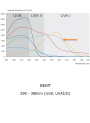
- BEMT (Bis-Ethylhexyloxyphenol Methoxyphenyl Triazine): At 10%, this is a high concentration of a very effective chemical filter known for strong UVA protection and good photostability.
How to Aim for SPF 50+ PA++++
To achieve SPF 50+ PA++++, you need to ensure your formula provides very high protection across the full UV spectrum. While your current formula has a good foundation with high concentrations of Zinc Oxide and BEMT, reaching this specific high level requires careful optimization and testing:
- Optimize Filter Selection: Ensure the specific grades of Zinc Oxide and Titanium Dioxide you use are cosmetic grades intended for UV protection and have appropriate particle sizes and treatments for your desired formula type (e.g., dispersions for easier mixing).
- Refine Concentrations: While your current concentrations are high, slight adjustments or ensuring the active percentage of filters in dispersions is accounted for might be necessary.
- Improve Dispersion: Focus on the mixing process to ensure mineral filters are perfectly dispersed and don't aggregate. The choice of emulsifiers and rheology modifiers is critical here.
- Enhance Film Formation: Ingredients that help the sunscreen form a uniform, durable, and potentially water-resistant film on the skin will significantly boost performance.
- Laboratory Testing: The most crucial step is to produce a batch of your optimized formula and send it to a certified laboratory for in vivo (or validated in vitro) SPF and PA testing. This is the only way to confirm the actual protection level. You may need to adjust the formula based on the test results and re-test until the desired SPF 50+ PA++++ is achieved.
In summary, while your formula contains effective UV filters at substantial concentrations, its actual SPF and PA can only be determined through testing. To reach SPF 50+ PA++++, focus on optimizing the specific types and dispersion of your filters, refining the overall formulation base for optimal film formation, and conducting rigorous laboratory testing.
Related Products Mentioned
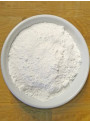
Zinc Oxide (Micronized)
Titanium Dioxide Nanosil