Sunscreen W/O Formulation: Mixing, Oily Skin, and Water Resistance
Question
Sunscreen Formulation using Water-Capsule (50g)
I am creating a 50g batch of sunscreen using Water-Capsule as the emulsifier with the following formulation:
Oil Phase:
- SPF Protect Ultra: 10 g
- LipidSoft CC: 1 g
- Water-Capsule: 1.5 g
Water Phase:
- Light Cream Maker: 0.75 g
- Disodium EDTA: 0.1 g
- WaterLock: 0.5 g
- Phenoxyethanol: 0.4 g
- Distilled water: 34.3 g
Added Later:
- AminoSilk: 1 g
- PowderCream: 0.5 g
Total: 50.05 g
My proposed mixing method is:
(A) Mix oil phase (SPF Protect Ultra, LipidSoft CC, Water-Capsule)
(B) Mix water phase (Light Cream Maker, Disodium EDTA, WaterLock, Phenoxyethanol, Distilled water)
(C) Pour oil phase into water phase all at once, stir until combined.
(D) Add AminoSilk + PowderCream, stir until combined.
I have several questions regarding this formulation and method:
- Is the formula composition and mixing method correct for creating a stable Water-in-Oil emulsion with Water-Capsule?
- Light Cream Maker's description mentions mixing in the oil phase if there is one, or in the water phase without an oil phase. In this Water-in-Oil formula, is it correct to place Light Cream Maker in the water phase?
- What is the technical difference and consequence of adding the water phase to the oil phase versus adding the oil phase to the water phase when using a Water-in-Oil emulsifier like Water-Capsule?
- (Question 4 was not listed.)
- AminoSilk's description suggests mixing it with water first before adding to the cream. Is it acceptable to add AminoSilk (and PowderCream) at the end after the cream has formed, as per my step (D)? Will it disperse correctly?
- How can I adjust this formula to make it more suitable for oily skin? I'm considering removing WaterLock and LipidSoft CC. What other ingredients or adjustments would help control oiliness and reduce shine?
- How can I make the cream more water-resistant without feeling sticky? Water-Capsule is described as less sticky than traditional W/O, but are there other ingredients or methods to enhance water resistance while minimizing stickiness?
Answer
Sunscreen Formula Review (50g)
Your formula includes the following ingredients:
Oil Phase:
- SPF Protect Ultra: 10 g
- LipidSoft CC: 1 g
- Water-Capsule: 1.5 g
Water Phase:
- Light Cream Maker: 0.75 g
- Disodium EDTA: 0.1 g
- WaterLock: 0.5 g
- Phenoxyethanol: 0.4 g
- Distilled water: 34.3 g
Added Later:
- AminoSilk: 1 g
- PowderCream: 0.5 g
Total: 50.05 g (This is a correctly calculated amount for a 50g batch, accounting for ingredient percentages).
Mixing Method Review
Your proposed mixing method is:
(A) Mix oil phase (1 + 2 + 3)
(B) Mix water phase (4 + 5 + 6 + 7 + 8)
(C) Pour oil phase into water phase all at once, stir until combined.
(D) Add 9 + 10, stir until combined.
Based on the properties of the ingredients, particularly Water-Capsule which is a water-in-oil (W/O) emulsifier, the mixing method needs adjustment. For a W/O emulsion, the water phase should be added gradually to the oil phase, not the other way around. Also, SPF Protect Ultra requires heating to dissolve properly in the oil phase.
A more appropriate mixing method for a Water-in-Oil emulsion using Water-Capsule would be:
- Prepare Oil Phase: Combine SPF Protect Ultra, LipidSoft CC, and Water-Capsule. Heat this mixture to 70-80°C and stir or blend until SPF Protect Ultra is fully dissolved and the oil phase is homogeneous.
- Prepare Water Phase: Combine Light Cream Maker, Disodium EDTA, WaterLock, Phenoxyethanol, and Distilled water. Stir until all water-soluble ingredients are dissolved. Heating the water phase slightly (e.g., to 70-80°C, matching the oil phase temperature) can sometimes help with emulsification stability, but Light Cream Maker works without heat. Ensure Phenoxyethanol is added below 80°C.
- Emulsification: While continuously stirring or blending the oil phase (from step 1), gradually add the water phase (from step 2) in small portions. Blend at a low speed initially until the mixture starts to thicken and emulsify. Once the emulsion forms, you can increase the blending speed to achieve the desired cream thickness (Water-Capsule description suggests 1000-1500 rpm for thicker cream, max 3000 rpm). Blend until the cream is smooth and homogeneous.
- Add Powders: Once the cream has formed and cooled down, add AminoSilk and PowderCream. Blend until these powders are fully dispersed and the cream texture is smooth.
Answers to Your Questions
Is the formula and mixing method correct?
The formula composition is generally suitable for a sunscreen for dry skin using Water-Capsule as the emulsifier. However, the proposed mixing method (specifically step C, adding oil to water) is incorrect for creating a stable water-in-oil emulsion with Water-Capsule. The water phase should be added gradually to the oil phase while blending.Light Cream Maker placement (oil vs. water phase):
Light Cream Maker is primarily an oil-in-water (O/W) emulsifier and thickener. Its description mentions mixing it in the oil phase if there is one or in the water phase without an oil phase (where it acts as a thickener).
In a water-in-oil (W/O) formula like yours (using Water-Capsule), Light Cream Maker is often placed in the water phase. This is because it is water-soluble and helps to thicken the internal water phase. While Water-Capsule is the primary W/O emulsifier holding the system together, thickening the internal water droplets with Light Cream Maker can improve the stability and texture of the overall W/O emulsion. So, placing Light Cream Maker in the water phase is appropriate in this W/O formula context, even though its general description also mentions mixing in the oil phase for O/W systems.Difference between adding water to oil vs. oil to water:
The order of adding phases is critical for determining the type of emulsion formed (Oil-in-Water or Water-in-Oil) and for achieving stability with a specific emulsifier.- Adding oil phase to water phase (your step C): This method is used to create an Oil-in-Water (O/W) emulsion. The water is the continuous external phase, and oil droplets are dispersed within it. This typically results in lighter, less greasy creams that are easily washed off with water.
- Adding water phase to oil phase (recommended for Water-Capsule): This method is used to create a Water-in-Oil (W/O) emulsion. The oil is the continuous external phase, and water droplets are dispersed within it. This typically results in richer, more occlusive, and more water-resistant creams because the outer phase is oil.
Since Water-Capsule is a W/O emulsifier, you must add the water phase to the oil phase gradually while blending to properly form the W/O emulsion. Adding the oil phase to the water phase will not work correctly with a W/O emulsifier and will likely result in separation.
(Question 4 was not included in your list.)
AminoSilk placement:
Adding AminoSilk after the cream has formed (your step D) is a correct and effective method. AminoSilk is soluble in oil, silicone, and cream, and mixing it into the finished cream allows it to disperse and provide its texture-enhancing benefits (softness, smoothness, improved spreadability). The information you read about mixing it with water first is also a valid approach, especially if using a blender, as it helps ensure even dispersion of the powder before the emulsification step. However, adding it at the end is simpler if you have adequate mixing to disperse it into the cream.Adjusting for oily skin:
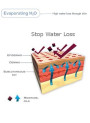
To make the formula more suitable for oily skin, reducing the amount of emollients that can feel heavy is a good approach. Removing WaterLock (a moisturizer/film former) and LipidSoft CC (an emollient) will help reduce the richness.
To further control oiliness and reduce shine, you can add oil-absorbing powders. Consider replacing some of the water or reducing the amount of emollients and adding:- MatteSilica 5XL: This is specifically designed for high oil absorption and provides a matte finish.
- PowderCream: You already have this in your formula, and it helps absorb oil and water, giving a powdery feel. You could potentially increase its percentage slightly (within the recommended range of 1-15%).
- Oil-Fix O, S, or W: These Silica-based ingredients can help reduce stickiness and provide a matte texture, in addition to their gelling/stabilizing properties. Oil-Fix W is particularly useful if you also want to maintain water resistance.
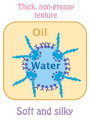
Regarding Water-Capsule, it is a W/O emulsifier which inherently creates a more occlusive and potentially heavier feel than O/W emulsions. While Water-Capsule is designed to be lighter than traditional W/O, it might still be too rich for very oily skin types compared to an O/W sunscreen. If you need the water resistance it provides, you can try to balance the richness by significantly reducing other emollients and adding oil absorbers. For very oily skin, an O/W sunscreen formula might be a better starting point.
Water resistance without stickiness:
Water-Capsule itself contributes significantly to water resistance by forming a W/O emulsion with an oil-continuous phase. It is also designed to be less sticky than traditional W/O systems.
To enhance water resistance further and minimize stickiness, consider:- Oil-Fix W: This ingredient is specifically noted for improving the waterproof performance of water-in-oil and water-in-silicone formulas and helps reduce stickiness.
- LipidSoft Fix: This is described as a Water Resistant + Stabilizer.
- Using certain silicones in the oil phase (like Cyclomethicone or Dimethicone) can also contribute to a smoother, less sticky feel and some water repellency.
In summary, your formula ingredients are suitable, but the mixing method needs to be adjusted to correctly form a water-in-oil emulsion with Water-Capsule by adding the water phase gradually to the heated oil phase while blending. You can adjust the formula for oily skin by reducing emollients and adding oil-absorbing powders like MatteSilica 5XL or increasing PowderCream, and consider if a W/O system is the best fit for very oily skin compared to an O/W. For enhanced water resistance, Oil-Fix W or LipidSoft Fix can be considered.
Related Products Mentioned
Light Cream Maker™
Phenoxyethanol (Extra Pure)
Disodium EDTA
WaterLock™ (Polyquaternium-51)
AminoSilk™ (Lauroyl lysine)
LipidSoft™ CC (Cetyl Ethylhexanoate)
PowderCream™ (Water Absorbing PMMA)
Water-Capsule™ (Water-in-Oil Cream)

Purified Water, TDS Limit 1PPM)

SPF Protect Ultra™ II