Tinosorb M: Properties, FDA Status, and Formulation Considerations
Question
What are the properties and formulation considerations for Tinosorb M, a hybrid sunscreen ingredient? Specifically, what is its status regarding approval by the US FDA, and is it true that its formulation often requires the use of Decyl Glucoside? How does it compare to traditional physical (like Zinc Oxide and Titanium Dioxide) and chemical sunscreens in terms of safety and effectiveness? Are there any plans for MySkinRecipes to import and sell this ingredient in Asia?
Answer
Tinosorb M and Hybrid Sunscreens
Based on the discussion, there is no single "best" sunscreen technology, as each has its own advantages and disadvantages.
Tinosorb M is considered a good hybrid sunscreen by some, noted for its effectiveness. However, points were raised regarding its status, including:
- It has not yet been approved by the US FDA, despite being submitted for review many years ago.
- Its formulation often requires the use of Decyl Glucoside, a surfactant.
Compared to other types:
- Physical sunscreens like Zinc Oxide and Titanium Dioxide (non-nano) are considered very safe, although they can sometimes leave a white cast.
- Chemical sunscreens have clear usage limits approved by global regulatory bodies like the FDA, indicating their safety when used within those limits.
Ultimately, the "best" sunscreen depends on individual priorities, balancing factors like safety, texture, ease of use, and effectiveness.
Regarding the company's plans to import Tinosorb M, the conversation indicates that this ingredient is not currently popular in Asia, and there was no mention of specific plans to import it.
Updated Review: May 2026
This section was added after reviewing the original answer against current product availability and formulation knowledge at the stated point in time.
As of May 7, 2026, high-performance hybrid and organic filters are now widely available and have become industry standards in Asian and European sunscreen formulations:
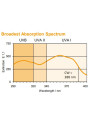
- Bisoctrizole: The active ingredient equivalent to Tinosorb M. It provides broad-spectrum UVA/UVB protection and is supplied as a water-dispersible liquid, making it easier to incorporate into various textures.
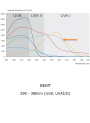
- BEMT: The active ingredient equivalent to Tinosorb S. It is highly photostable and often paired with DHHB to achieve high PA++++ ratings without a white cast.
- Modern Solutions: For simplified formulation, encapsulated blends like SynMax™ are now available, offering stable, water-dispersible UV protection.
Regulatory Note: While these filters are approved for use in Thailand, Europe, and Japan (typically up to 10%), they have not yet been approved by the US FDA. Products containing these ingredients cannot be exported for sale in the United States.
Related Products Mentioned