Toner Formula Review and Questions
Asked by: dezcaliber
On: March 25, 2013
Product Type:
Cosmetics
Answered
Question
I have the following toner formula (in percentages):
- DI Water
- Natural Moisturizing Amino Acids 5%
- Sodium Lactate Plus 5%
- Glycerin 5%
- Trehalose 2%
- Acetyl Glucosamine 4%
- Niacinamide 2%
- Ethyl Ascorbic Acid 3%
- Dipotassium Glycyrrhizinate 5%
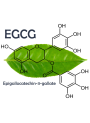
- Epigallocatechin Gallate (EGCG) 1%
- Aloe Barbadensis Leaf Juice 1%
- Phenoxyethanol 1%
- DI Water to 100%
I have some questions regarding this formula:
- Does Trehalose (TreMoisture™) dissolve in water at room temperature, or does it require cold temperatures like some Sodium Hyaluronate?
- Can I increase Niacinamide (Safe-B3™) to 4-5% for better whitening? Are the percentages of Natural Moisturizing Amino Acids and Sodium Lactate Plus too high for moisturizing? Is 5% Dipotassium Glycyrrhizinate (DPG) too high?
- Is a pH of 5.5 suitable for this formula?
- Will storing the product in the refrigerator extend its shelf life compared to room temperature storage?
- What is the recommended order for adding the ingredients?
- If the formula is in percentages (by weight), what is the total volume in ml?
Answer
Toner Formula Review
Your formula includes a good range of ingredients to address your desired outcomes:
- Moisturizing & Skin Barrier Repair: Ingredients like Natural Moisturizing Amino Acids, Sodium Lactate Plus, Glycerin, Trehalose, and Acetyl Glucosamine (which helps the skin produce Hyaluronic Acid) are excellent humectants and skin barrier supporters. Aloe Vera Extract also contributes to hydration and soothing. The current levels are quite high, which should provide significant hydration, but you might find the texture slightly sticky.
- Anti-Oxidant: Ethyl Ascorbic Acid (a stable Vitamin C derivative) and Epigallocatechin Gallate (EGCG) are potent antioxidants that will help protect the skin from free radical damage.
- Whitening: Niacinamide, Acetyl Glucosamine, and Ethyl Ascorbic Acid work together to target hyperpigmentation and improve skin tone.
- Anti-Inflammatory / Anti-Irritant: Dipotassium Glycyrrhizinate and Aloe Vera Extract are well-known for their soothing and anti-inflammatory properties.
Overall, the formula is comprehensive and targets all the goals you've listed.
Answers to Your Questions
- Trehalose solubility: Yes, Trehalose (like TreMoisture™) dissolves directly in water at room temperature. It does not require cold temperatures for preparation or storage like some forms of Sodium Hyaluronate might.
- Ingredient percentage adjustments:
- For enhanced Whitening, increasing Niacinamide (Safe-B3™) from 2% to 4-5% is a good suggestion, as mentioned in the previous reply. This is within the recommended usage rate for Safe-B3™ (up to 10% without flushing) and works well synergistically with Acetyl Glucosamine (GlucoBright™) at 4%.
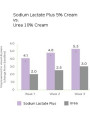
- Regarding Moisturizing, your current levels of Natural Moisturizing Amino Acids (5%) and Sodium Lactate Plus (5%) are at the higher end of typical recommendations. If you find the final product too sticky or heavy, you could consider slightly reducing one or both of these ingredients.
- Your Dipotassium Glycycyrrhizinate (DPG) is at 5%. While DPG is excellent for reducing irritation, typical usage rates are 0.1-2.0% (recommended 0.5-1.0%). Using 5% might be unnecessarily high and could potentially impact the formula's feel or stability without providing significantly more anti-irritant benefit than a lower concentration. You might consider reducing this to 0.5-1.0%.
- Impact of pH 5.5: A pH of 5.5 is suitable for this formula. It falls within the optimal or acceptable pH range for the stability and efficacy of most of your active ingredients, including Niacinamide, Acetyl Glucosamine, Ethyl Ascorbic Acid, Dipotassium Glycyrrhizinate, Aloe Vera Extract, and Phenoxyethanol.
- Shelf Life (Refrigeration vs. Room Temp): While Phenoxyethanol provides preservation, some of your key active ingredients, such as Ethyl Ascorbic Acid, Dipotassium Glycyrrhizinate, and Aloe Vera Extract, are recommended to be stored in the refrigerator for long-term stability and to maintain their potency. Storing the final product in the refrigerator will likely extend its shelf life and better preserve the effectiveness of these sensitive ingredients compared to storing it at room temperature, especially in warm climates.
- Order of adding ingredients: A common method for this type of formula is to combine the water-soluble ingredients in the water phase. You can gently heat the water phase if needed to help dissolve powders, but avoid high heat (above 60°C) once heat-sensitive ingredients are added. A suggested order:
a. Combine DI Water and Glycerin.
b. Add and dissolve all powder ingredients: Trehalose, Acetyl Glucosamine, Niacinamide, Dipotassium Glycyrrhizinate, and Ethyl Ascorbic Acid. Stir until fully dissolved.
c. Once the mixture has cooled (if heated), add the remaining liquid ingredients: Natural Moisturizing Amino Acids, Sodium Lactate Plus, Epigallocatechin Gallate, Aloe Barbadensis Leaf Juice, and Phenoxyethanol.
d. Mix thoroughly.
e. Check and adjust the pH to 5.5. - Total Volume: Your formula is listed in percentages, totaling 100%. If these percentages are by weight (which is standard for formulations), you have a total of 100 grams of product. To convert this to milliliters (ml), you would need to know the density of the final mixture. Since the density of ingredients other than water is generally greater than 1 g/ml, the final volume will be slightly less than 100 ml. Without knowing the specific densities of all components in the final mixture, it's not possible to calculate the exact volume in ml.
Your formula is well-designed to achieve your desired skin benefits. Pay attention to the texture and feel after making a test batch, as the levels of humectants and DPG are quite high and might be adjusted based on your preference.
Related Products Mentioned
Safe-B3™ (Vitamin B3, Niacinamide)
Cosmetics
GlucoBright™ (Acetyl Glucosamine)
Cosmetics
Glycerin (USP/Food Grade)
Cosmetics
Phenoxyethanol (Extra Pure)
Cosmetics
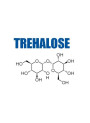
TreMoisture™ (Trehalose)
Cosmetics
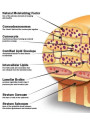
Sodium Lactate Plus
Cosmetics