Toner Formulation Issues (Precipitation, Separation) and Recommended Formula
Question
I was trying to formulate a toner for combination skin targeting oil control, strengthening, brightening, and hydration. My formula included Ceramide Complex, Vitamin E, Centella Asiatica Extract, Laureth-23 (3%), Safe-B3, Vitamin B5, Zinc PCA, Licorice Extract, GlucoBright, MOIST24, Butylene Glycol, 1,2-Hexanediol, and Water. I encountered two main issues: Ceramide Complex precipitated at the bottom, and an oily layer separated on top. The staff recommended a different formula. Could you explain why my original formula had these issues and confirm the staff's recommended formula and mixing steps are suitable?
Answer
Subject: Feedback on Toner Formula for Combination Skin (Whitening, Anti-wrinkle)
Thank you for sharing your proposed toner formula and the conversation with the staff. It seems you encountered some common challenges when mixing ingredients with different solubility properties.
Based on the feedback you received:
- Ceramide Complex: The staff correctly pointed out that Ceramide Complex is not ideal for low-viscosity formulas like toners and can precipitate at the bottom, which you observed. Removing it would resolve this specific precipitation issue.
- Oil/Water Separation: The separation you saw (oily layer on top) is due to the presence of oil-soluble ingredients (like Vitamin E and Centella Asiatica Extract) in a mostly water-based formula without sufficient emulsification. Laureth-23 is an emulsifier that can help, but as the staff mentioned, you would need a higher concentration (around 5-7%) than your initial 3% to properly emulsify the oil phase (Vitamin E + Centella).
- Removing Vitamin E: If you remove the oil-soluble ingredients like Vitamin E and Centella Asiatica from your formula, you would significantly reduce or eliminate the need for an emulsifier like Laureth-23, as the remaining ingredients are mostly water-soluble or dispersible in water/glycols.
The staff provided a revised formula recommendation that is well-suited for combination skin, focusing on oil balance, strengthening, brightening, and hydration, and is designed to be stable as a toner. This formula avoids ingredients prone to separation or precipitation in a low-viscosity liquid.
Here is the staff's recommended formula and how to mix it:
Staff Recommended Toner Formula:
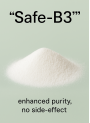
- Safe-B3 (Niacinamide) 5%
- Vitamin B5 (Panthenol) 1%
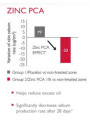
- Zinc PCA 1%
- Licorice Extract 1%
- GlucoBright (N-Acetyl Glucosamine) 3%
- MOIST24 (Glycereth-26) 5%
- Butylene Glycol 3%
- 1,2-Hexanediol 3%
- Water (remaining up to 100%)
Mixing Instructions:
- In a beaker or container, combine the water, Butylene Glycol, 1,2-Hexanediol, and MOIST24. Stir well.
- Add the powder or liquid ingredients: Safe-B3, Vitamin B5, Zinc PCA, Licorice Extract, and GlucoBright. Stir thoroughly until all powders are completely dissolved and the mixture is uniform. Gentle heating (e.g., in a warm water bath) can help dissolve some ingredients if needed, but ensure it's not too hot.
- Once everything is dissolved and mixed, add the remaining water to reach your desired total weight/volume (e.g., 100g or 100ml).
- Stir again to ensure everything is evenly distributed.
- Pour the finished toner into a clean bottle.
This formula effectively addresses your goals for combination skin (Zinc PCA, Safe-B3, Licorice help with oil balance and strengthening) and whitening/brightening (Safe-B3, GlucoBright, Licorice). Vitamin B5 and MOIST24 provide hydration. 1,2-Hexanediol acts as a carrier and preservative booster.
While your original formula included ingredients like Ceramide, Aloe, Centella, and Vitamin E which offer additional benefits (barrier support, soothing, antioxidant), the staff's recommended formula provides a stable and effective base specifically formulated for a toner consistency targeting your primary concerns. If you wish to incorporate some of those benefits, you might consider adding them in a different product step (like a serum or cream) or researching alternative, more water-compatible forms of those ingredients if available.
For your current mixture that separated, as user C7 mentioned, you can shake it well before each use. Removing the floating oil layer would mean losing the benefits of Vitamin E and Centella.
I hope this clarifies the issues and provides a clear method for the staff's recommended formula!
Related Products Mentioned
Safe-B3™ (Vitamin B3, Niacinamide)

GlucoBright™ (Acetyl Glucosamine)
Zinc PCA
Butylene Glycol