Troubleshooting Clumping Issues with Snail Resin in Bar Soap and Pro Polymer in Serum
Question
I purchased Snail Resin to make bar soap. It doesn't dissolve in water. Even with heat, only some parts dissolve, while others remain clumped. How can I make it dissolve?
I also purchased Pro Polymer to make a serum to increase viscosity, but it also clumps in water. How can I prevent this?
Answer
Understanding Clumping
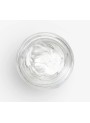
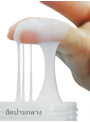
Clumping, often referred to as "fish eyes" when dealing with powders in liquids, happens when the outer surface of the powder particles hydrates and becomes sticky too quickly, forming a barrier that prevents water from reaching the inner powder. This leaves dry powder trapped inside a gelled or sticky shell. Proper dispersion and controlled hydration are key to preventing this.
Snail Resin in Bar Soap
Snail Resin (PEG-90M) is a polymer that requires heat to dissolve properly in water. The product description specifies using heat around 80°C.
- Reason for Clumping: If the water temperature is not consistently maintained at or above 80°C, or if the powder is added too quickly without sufficient stirring, it will not fully dissolve and can form clumps.
- Solution:
- Ensure the water phase (or the entire mixture if adding later, as suggested by staff) is heated to 80°C and maintained at this temperature while adding the Snail Resin.
- Slowly sprinkle the Snail Resin powder onto the surface of the hot liquid while continuously stirring or blending. This helps disperse the particles before they can clump together.
- Blend thoroughly at 80°C until the powder is completely dissolved and the mixture is smooth.
- If your formula contains glycols like Butylene Glycol, dissolving the Snail Resin in the heated glycol (70-80°C) first before combining with the water phase can facilitate dissolution.
Pro Polymer in Serum
Pro Polymer™ (Acrylates/C10-30 Alkyl Acrylate Crosspolymer) is a gel-forming polymer that hydrates in water to create viscosity. Unlike Snail Resin, it generally does not require heat for hydration, but it does require careful dispersion.
- Reason for Clumping: Adding Pro Polymer powder too quickly to water without adequate dispersion will cause the outer layer to gel instantly, trapping dry powder inside and forming clumps. Over-blending can also damage the polymer structure and reduce viscosity.
- Solution:
- Slowly sprinkle the Pro Polymer powder onto the surface of the water phase while gently stirring or blending continuously. The key is to disperse the individual particles as much as possible before they start to hydrate.
- Avoid high-speed blending initially (>2500 rpm) as this can damage the polymer.
- A highly recommended method is to sprinkle the powder while stirring, then stop stirring and let the mixture sit for several hours or preferably overnight. This allows the powder to fully absorb the water and hydrate without mechanical stress.
- After the hydration period, blend slowly until a smooth, uniform gel is achieved.
- If your formula contains glycerin or propylene glycol (more than 5%), you can first disperse the Pro Polymer in the glycol before adding this mixture to the water phase.
- Be aware that electrolytes in your serum formula can reduce the viscosity of Pro Polymer gels. If your formula contains electrolytes, you might need to use a higher concentration of Pro Polymer, and it's often best to add ingredients containing electrolytes after the Pro Polymer gel has fully formed.
In summary, for both ingredients, the clumping is primarily a result of improper dispersion and hydration technique. Ensuring the correct temperature and method of addition, along with sufficient mixing time (especially for Pro Polymer), will help achieve smooth, clump-free formulations.
Related Products Mentioned