Troubleshooting Hair Coloring Shampoo Formulation: Liquid Texture and Color Development Issues
Question
Hello, I would like to inquire about a hair coloring shampoo. The formula consists of:
Phase A:
Water qs to 100
Propylene Glycol 2%
Polyquaternium-7 2%
2Na EDTA 0.1%
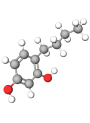
resorcinol 0.5%
Phase B:
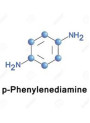
p-Phenylenediamine 1.5%
Cetearyl Alcohol 10%
Transcutol CG 2%
Ceteareth 20 2%
Glyceryl Stearate SE 2%
Phase C:
Cocamidopropyl Betaine 10%
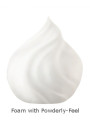
Powderly Foam 5%
Phase D:
Mild Preserved Eco 1%
Triethanolamine qs (pH8.5)
The method is to heat Phase A and B to 70-75°C, mix them together, and then add Phase C and D in order.
- After making it, the texture is quite liquid. How can this be fixed?
- When mixed with developer and applied to hair, no change occurs. How can this be fixed?
Thank you.
Answer
Hello, I have received the information about your hair coloring shampoo formula and understand you are facing issues with the texture being too liquid and the color not developing after mixing with the developer.
Here are some considerations and solutions for both issues:
Issue 1: Liquid Texture
The viscosity of the shampoo depends on the balance between the thickeners/emulsifiers in Phase B and the surfactants in Phase C.
Potential Causes:
- The concentration of thickeners/emulsifiers in Phase B might be insufficient relative to the amount of surfactants in Phase C.
- The ratio of surfactants to the emulsifier/thickener system might be too high, leading to a reduction in viscosity.
- The heating and mixing process for Phases A and B might not be optimal, resulting in an incomplete emulsion.
Suggested Solutions:
- Increase Concentration of Phase B Ingredients: Try slightly increasing the amounts of Cetearyl Alcohol (ID 480), Ceteareth-25 (ID 1129), and Glyceryl Stearate SE (ID 174) in Phase B. Adjust gradually and test the viscosity.
- Add an Additional Thickener: Consider adding a polymeric thickener suitable for surfactant systems, such as Hydroxyethylcellulose (HEC) or Carbomer (requires pH neutralization). Add this after combining Phase C, gradually incorporating it while stirring until the desired viscosity is achieved.
- Review Phase A and B Process: Ensure heating reaches the specified temperature (70-75°C) and that Phases A and B are mixed while still hot with appropriate speed to form a stable emulsion.
Issue 2: Color Not Developing After Mixing with Developer
This hair coloring system uses Oxidation Dyes (p-Phenylenediamine and Resorcinol) which require a reaction with a Hydrogen Peroxide Developer to produce color. The issue of color not developing is often related to the Developer or the reaction environment.
Potential Causes:
- Developer:
- Not using a Hydrogen Peroxide Developer, or using the wrong type (e.g., conditioner instead of peroxide).
- The Developer concentration is too low (low Volume).
- The Developer is expired or degraded.
- Mixing Ratio: The ratio of the shampoo base to the Developer is incorrect.
- Final pH: The pH of the mixture of the shampoo base and the Developer is not suitable for color development. Oxidation dyes typically develop well in an alkaline environment (around pH 9-10). Although the base formula's pH is adjusted with Triethanolamine (ID 139), the final pH after mixing with the often acidic Developer might be too low.
- Dye Concentration: The concentration of p-Phenylenediamine (ID 7763) and Resorcinol (ID 493) might be too low for the desired color intensity.
- Application Process: The mixture was left on the hair for too short a time, or the hair condition was not receptive to color.
- Developer:
Suggested Solutions:
- Verify Developer:
- Confirm that you are using a Hydrogen Peroxide Developer with an appropriate concentration (e.g., 6% or 20 Volume).
- Check the expiry date and freshness of the Developer.
- Verify Mixing Ratio: Mix the shampoo base with the Developer at the recommended ratio (typically 1:1 or 1:1.5).
- Measure and Adjust Final pH: After mixing the shampoo base with the Developer, measure the pH of the mixture. It should be in the range of approximately 9-10. If it is too low, you may need to consider slightly increasing the amount of Triethanolamine in the base formula or using another suitable alkaline pH adjuster (though Triethanolamine is common in shampoos).
- Consider Increasing Dye Concentration: If the developer and pH are confirmed to be correct, you might consider slightly increasing the concentration of p-Phenylenediamine and Resorcinol (within safety regulations and allowed maximum concentrations).
- Review Application Process: Apply evenly to clean, towel-dried hair and leave on for the recommended processing time (typically 20-40 minutes).
- Verify Developer:
I hope this information helps you in adjusting your formula. Please feel free to ask if you have further questions.
Related Products Mentioned
Triethanolamine 99%
Cocamidopropyl Betaine
Cetearyl Alcohol (50/50, e.q. Lanette O)