Troubleshooting Liquid Matte Lipstick Formulation Issues
Question
I have formulated a liquid matte lipstick with the following components:
- Isododecane (25%)
- Cyclomethicone (20%)
- Dimethicone
- Kaolin
- Matte Silica (15%)
- Squalene (8%)
- Hectorite Oil Gel
- Regular Lake pigments
I am experiencing the following issues:
- The texture is still too oily upon application.
- The Lake pigments settle and do not disperse well, resulting in uneven color.
- The color lacks sufficient opacity.
Could you please provide guidance on how to address these problems to achieve a matte, opaque, and evenly colored liquid lipstick?
Answer
Lip Matte Formula Feedback
Based on your formula and the issues you're experiencing with your Lip Matte product, here's an analysis and some recommendations:
Your formula uses a combination of volatile silicones/hydrocarbons (Isododecane, Cyclomethicone, Dimethicone), powders (Kaolin, Matte Silica), an oil (Squalene), and a gelling agent (Hectorite Oil Gel). This is a common structure for liquid matte lipsticks. Let's address each of your issues:
1. Excessive Oiliness
You mentioned the texture is still too oily when applied. This can be influenced by the balance of volatile emollients, non-volatile oils, and oil-absorbing powders.
- Squalene (8%): Squalene, especially the synthetic type often used in cosmetics, is a non-volatile oil known for providing shine and gloss. While it can offer a smooth feel, its presence at 8% is likely contributing significantly to the oily feel, which is counterproductive for a matte finish. Reducing or removing Squalene would be a primary step to reduce oiliness.
- Matte Silica (15%): Matte Silica is included to absorb oil and provide a matte look. While 15% is a substantial amount, the oiliness from Squalene might be overwhelming its effect.
- Volatile Components (Isododecane 25%, Cyclomethicone 20%): Isododecane and Cyclomethicone are volatile and evaporate after application, contributing to the matte finish. Their percentages are quite high, which is good for a quick-drying, non-oily feel after evaporation, but the initial feel is also influenced by the non-volatile components.
Recommendation for Oiliness:
- Reduce or eliminate Squalene. Replace it with a volatile emollient like Isododecane or a non-volatile, less greasy ester if needed for feel, but prioritize reducing the overall oil phase that doesn't evaporate.
- Consider adjusting the ratio of powders. While 15% Matte Silica is high, increasing the total powder content by incorporating Mica or Talc (as discussed in point 3) will significantly boost oil absorption and contribute to a drier, more matte feel. The suggestion to replace some Squalene and Matte Silica with Mica/Talc is valid.
2. Pigment Sedimentation and Poor Dispersion
You're using "regular lake" colors and experiencing sedimentation and uneven color.
- Pigment Type: Regular lake pigments are solid particles that need to be properly wetted and dispersed in the liquid base to prevent settling and ensure even color distribution. They often require high-shear mixing.
- Dispersion Process: Simple stirring is usually insufficient for dispersing pigments effectively. Agglomerates (clumps of pigment particles) will form and settle over time, leading to sedimentation and streaky, uneven color application.
- Hectorite Oil Gel: Hectorite Gel is used as a gelling agent and helps suspend pigments, which is good. However, even with a suspending agent, the pigments must be properly dispersed initially.
Recommendation for Pigment Dispersion:
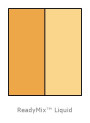
- Use pre-dispersed pigments: Consider using pigments that are already dispersed in a suitable base (like the ReadyMix™ series which are dispersed in oil/ester bases). These are much easier to incorporate and provide consistent color without extensive milling. For example, ReadyMix™ FD&C Yellow No.5 Lake (Oil Based) is pre-dispersed for easy mixing.
- Improve dispersion technique: If you continue using regular lake pigments, you must use a high-shear mixer (like a homogenizer) to thoroughly disperse the pigments in a portion of the oil/silicone phase before adding them to the rest of the formula. The mixing duration needs to be sufficient to break down all agglomerates – this could range from several minutes to longer depending on the equipment and batch size.
- Consider a dispersing agent: Adding a pigment dispersing additive designed for solvent-borne systems (like BYK 185) can help improve pigment wetting, reduce viscosity, and enhance stability, preventing sedimentation.
3. Lack of Opacity
You noted the color is not opaque enough, potentially related to dispersion issues, and asked about adding white pigment.
- Opacity Sources: Opacity comes from solid particles that block light. In your formula, Kaolin and Matte Silica contribute somewhat, but color pigments, Mica, Talc, and Titanium Dioxide are the main contributors to coverage and opacity.
- Pigment Concentration and Dispersion: As you suspected, poor pigment dispersion directly impacts opacity. If pigments are clumped, they don't spread evenly to cover the surface, resulting in a sheer appearance. Fixing the dispersion issue (point 2) will definitely improve the opacity of the color you are using.
- Mica and Talc: Adding Mica or Talc, as suggested by the other user, is an excellent way to increase opacity. Talc, in particular, is known for its coverage and whiteness. Including these powders at higher percentages (e.g., 20-30% combined total of Kaolin, Matte Silica, Mica, Talc) will significantly improve the film-forming properties and opacity of the lip product. Coated versions of Mica and Talc (like Methicone Coated Talc Powder or Methicone Coated Mica Powder) can offer better feel and water resistance.
- Titanium Dioxide: Adding a white pigment like Titanium Dioxide is a standard method to increase the opacity and brightness of any makeup product, including lipsticks. Titanium Dioxide Nanosil is a suitable option for makeup formulations.
By addressing the oiliness by adjusting the oil phase, improving pigment dispersion through proper technique or using pre-dispersed pigments/dispersing agents, and increasing the level of opaque powders like Mica, Talc, and potentially Titanium Dioxide, you should be able to achieve a matte, opaque, and evenly colored Lip Matte similar to the NYX style.
Related Products Mentioned
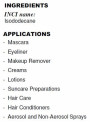
Isododecane (Germany)
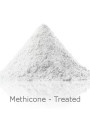
Talc Powder (5 Micron, Methicone Coated)
Squalene (Synthetic, For Lip Gloss)
Dimethicone (Light/50, Low-Odor)
Hectorite Gel™ (Mineral Oil Base)
Titanium Dioxide Nanosil
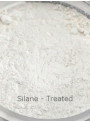
Mica Powder (9 Micron, Silane Coated)
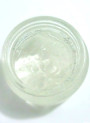
Isododecane Gel (Thixotropic)
Kaolin (400nm High Whiteness)