Troubleshooting Serum Separation During Mixing and Storage
Question
Seeking advice on troubleshooting serum formulation issues: experiencing separation during initial emulsification (adding water to oil/emulsifier with homogenization) and long-term phase separation/syneresis after storage, in a complex serum containing high levels of water-soluble actives, oils, silicones, Magnesium Sulfate, and polymers, despite trying different emulsifiers.
Answer
Serum Formulation Stability Issues
It sounds like you're dealing with a very challenging formulation! It's frustrating when you put a lot of effort into a serum and face stability issues both during mixing and over time. Based on your detailed formula and method, here's an analysis of the potential causes and suggested solutions:
Your serum formula is quite complex, containing a high concentration of various water-soluble active ingredients, including electrolytes (Magnesium Sulfate) and polymers (Natto Gum, 4D Hyaluronic Acid), alongside an oil/silicone phase. This complexity makes achieving and maintaining a stable emulsion difficult.
Here are the most likely reasons for the separation you're experiencing:
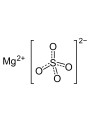
- Electrolyte Interference (Magnesium Sulfate): Magnesium Sulfate is a salt (electrolyte). Electrolytes can significantly destabilize emulsions, especially oil-in-water (O/W) emulsions, by disrupting the emulsifier's ability to function correctly. Your formula contains 1.5% Magnesium Sulfate, which is a notable concentration. The product description for Magnesium Sulfate even states it's commonly used as an emulsion stabilizer in water-in-oil formulas, not typically oil-in-water, and the description for Silky Serum Base Plus suggests adding it last for stability. Adding it to the water phase before emulsification might be contributing to the initial separation and long-term instability.
- High Active Load in Water Phase: The large number and concentration of water-soluble ingredients (like Tranexamic Acid, Vitamin B3 (Safe-B3 TM), various extracts, peptides, 4D Hyaluronic Acid, Natto Gum, etc.) can increase the polarity and ionic strength of the water phase, making it harder for the emulsifier to create and hold oil droplets within it.
- Emulsifier Concentration and Suitability:
- You tried Silky Serum Base Plus (16%), SiliSolve (1%), and SiliSolve Plus (1%). While these emulsifiers are designed to handle water/silicone or water/oil/silicone systems and can tolerate electrolytes, the specific combination and high concentration of challenging ingredients in your formula might require a higher emulsifier concentration, especially for SiliSolve and SiliSolve Plus, where you used the lower end of the recommended range (0.5-3%).
- Ensure the emulsifier is truly the best fit for this specific complex system with high electrolytes and polymers.
- Mixing Method and Shear: While adding the water phase to the oil/emulsifier phase is a valid method for these types of emulsifiers, the speed of addition and the homogenizer's shear power are crucial. Adding the water phase too quickly can overwhelm the emulsifier system before a stable emulsion can form. The fact that it separates when you've added about half the water suggests the system is struggling to incorporate the remaining water phase.
- Polymer Compatibility: Natto Gum is described as a weak electrolyte and can cause formulas to melt if the thickener isn't electrolyte tolerant. While the emulsifiers claim tolerance, the interaction between Natto Gum, 4D Hyaluronic Acid, and the high concentration of Magnesium Sulfate could be problematic for long-term stability (syneresis).
Troubleshooting Steps:
Here are some steps you can take to try and resolve these issues:
- Address Magnesium Sulfate: This is a primary suspect.
- Reduce Concentration: Try reducing the concentration of Magnesium Sulfate (e.g., to 0.5% or less) in test batches to see if stability improves.
- Change Addition Method: Try adding the Magnesium Sulfate after the initial emulsion has formed and cooled slightly, as suggested for Silky Serum Base Plus. Dissolve it in a small amount of water and add it slowly while continuing to mix.
- Optimize Emulsifier Concentration: If using SiliSolve or SiliSolve Plus, try increasing the concentration to 2% or 3% in test batches. A higher emulsifier level might be needed to handle the challenging water phase.
- Refine Mixing Procedure:
- Slow Addition: Add the water phase to the oil/emulsifier phase very slowly in small increments, especially at the beginning. Allow each addition to be fully incorporated before adding the next. This gives the emulsifier time to form and stabilize the emulsion droplets.
- Homogenization: Ensure your homogenizer is providing adequate shear and that you are homogenizing for a sufficient time after all the water has been added to fully develop the emulsion structure.
- Simplify and Test: Create a simpler version of your formula containing just water, the oil/silicone phase (including Cyclopentasiloxane), the emulsifier, and the Magnesium Sulfate. If this simpler system is unstable, it confirms the issue lies with the emulsifier's ability to handle the oil/silicone phase in the presence of the electrolyte. If it's stable, gradually add groups of your water-soluble actives (like Natto Gum, 4D Hyaluronic Acid, Tranexamic Acid, Vitamin B3 (Safe-B3 TM), Disodium EDTA) to pinpoint which ones are causing the breakdown.
- Check pH: Ensure the pH of your water phase and the final serum is within the optimal range for your chosen emulsifier and the stability of all active ingredients.
- Consider Alternative Stabilizers: If the combination of Natto Gum, 4D Hyaluronic Acid, and Magnesium Sulfate proves incompatible, you might need to explore alternative water-phase thickeners or emulsion stabilizers that are more robust in the presence of electrolytes.
Formulating complex serums with high active loads and electrolytes is challenging and often requires iterative testing to find the right balance of ingredients and processing methods. Focusing on the electrolyte and optimizing the emulsifier concentration and mixing speed are good starting points.
Related Products Mentioned

Safe-B3™ (Vitamin B3, Niacinamide)
Disodium EDTA
Natto Gum Extract
SiliSolve Plus™
Silky Serum Base Plus (Face/Eye, Oil)
Tranexamic Acid (Trans-White™)