Understanding Ingredients and Formulation for Gel Hair Treatment
Question
I have a popular gel hair treatment product that claims to help treat dry, damaged hair from harsh chemicals and provide a wax-like shine.
The ingredients are listed as follows:
Aqua/Water, Alcohol Denat., Glycerin, Citric Acid, Lactic Acid, Hydroxyethylcellulose, Quaternium-87, Sodium PCA, Hydroxypropyltrimonium Hydrolyzed Wheat Protein, Xanthan Gum, 2-Oleamido-1, 3-Ocatadecanediol, Fragrance
Could you please explain the function of each ingredient highlighted in the asterisk (*) section? Based on my understanding, Hydroxyethylcellulose helps create the gel base from water, is that correct? Also, Lactic Acid is known as an AHA fruit acid; can it be used in hair products, and what is its function there? Which ingredient among those listed is the Ceramide?
The product I mentioned is advertised as being free from Ammonia and Hydrogen Peroxide.
I am interested in creating my own gel-based hair treatment because I am tired of cream bases containing Fatty Alcohols. Is it feasible to make a gel-based hair treatment? I am particularly interested in using Lactic Acid but am hesitant to order it as I'm unsure if it's suitable for hair care.
Answer
Understanding the Ingredients in Your Gel Hair Treatment
Let's break down the functions of the ingredients you highlighted in the gel hair treatment:
- Hydroxyethylcellulose: You are correct! This is a common gelling agent used to create the gel texture in water-based formulations like your hair treatment. It helps increase viscosity and stabilize the product.
- Lactic Acid: Yes, Lactic Acid can be used in hair products. While known as an AHA for skin exfoliation, in hair care, it primarily functions as a pH adjuster. It can also help to smooth the hair cuticle, which can improve shine and manageability, and contribute to a conditioning effect.
- Quaternium-87: This is a type of conditioning agent (specifically, a quaternary ammonium compound). These ingredients are positively charged and help to neutralize the negative charge on damaged hair, reducing static, improving detangling, and leaving hair feeling smoother and softer.
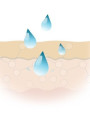
- Sodium PCA: Sodium PCA is a humectant, meaning it helps the hair (and skin) attract and retain moisture from the environment. This helps to keep hair hydrated, improving its softness, elasticity, and preventing dryness.
- Hydroxypropyltrimonium Hydrolyzed Wheat Protein: This is a modified protein derived from wheat. The modification makes it positively charged, allowing it to bind effectively to the hair shaft. It helps to strengthen the hair, reduce breakage, and improve its overall feel and appearance.
- Xanthan Gum: Like Hydroxyethylcellulose, Xanthan Gum is another gelling agent used to thicken and stabilize the formula, contributing to the gel texture.
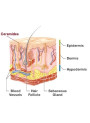
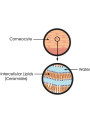
- 2-Oleamido-1, 3-Ocatadecanediol: Yes, this ingredient is a synthetic ceramide analog. Ceramides are lipids naturally found in the hair cuticle that help to hold the structure together. Adding ceramides or ceramide-like ingredients to hair products helps to repair damage, strengthen the hair fiber, improve smoothness, and enhance shine.
It is indeed possible to create a gel-based hair treatment. By using gelling agents like Hydroxyethylcellulose and Xanthan Gum as the base, you can achieve a gel texture without relying on fatty alcohols commonly found in cream bases. You can then incorporate conditioning ingredients like those mentioned above (quaternary compounds, proteins, humectants, and ceramides) to provide the desired benefits for dry and damaged hair, as well as for shine.
Related Products Mentioned
Sodium PCA 50%
Cerasoft™ (Synthetic Ceramide)
Hydroxyethyl Cellulose (HEC) (4500mPa.s)

LipidSoft™ Lactic (C12-13 Alkyl Lactate)
Hydroxyethyl Cellulose (HEC) (2800mPa.s)