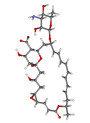
Understanding Natamycin (50%) and Dosage Calculation for 100% Requirement
Question
I have a question regarding the ingredient Natamycin (50%, From Bacteria Fermentation).
- What exactly is this product?
- In practical food formulation, if a recipe specifies a requirement for
Natamycin 100%(pure active ingredient), is it correct that I must use double the amount of theNatamycin (50%, From Bacteria Fermentation)product to achieve the required active concentration?
Answer
1. What is Natamycin (50%, From Bacteria Fermentation)?
This product is a natural preservative derived from the fermentation of Streptomyces natalensis bacteria. It is highly effective at controlling Yeast and Mold, but it is less effective against bacteria, which is why it is often recommended to be used in conjunction with Nisin for a broad-spectrum preservative effect.
The product is a light-colored powder standardized to contain:
- 50% active Natamycin
- 50% Lactose (which acts as a carrier/diluent)
It is used as a preservative in food products and is effective in the pH range of 4-7. It is slightly soluble in water (maximum solubility is about 0.4%).
2. Dosage Calculation for 100% Natamycin Requirement
Yes, your understanding is correct.
If a food formula calls for a specific amount of "Natamycin 100%" (meaning 100% active ingredient), you must use double the amount of the "Natamycin (50%, From Bacteria Fermentation)" product to achieve the required level of active Natamycin.
Calculation Principle:
To get the required amount of active ingredient ($W_{100}$), you must divide it by the concentration of the product you are using (50% or 0.50).
$$ \text{Amount of 50\% Product} = \frac{\text{Required Amount of 100\% Natamycin}}{0.50} $$
$$ \text{Amount of 50\% Product} = 2 \times \text{Required Amount of 100\% Natamycin} $$
Example: If the formula requires 1 gram of 100% Natamycin, you must use 2 grams of the 50% product (2g * 50% = 1g active).