Understanding Niacinamide Skin Penetration and Formulation for DIY Serum
Question
I'm interested in DIY cosmetic formulation, specifically a Niacinamide serum, but I'm confused about how Niacinamide penetrates the skin and the role of different formulation types.
1. Can Niacinamide (also known as b3) dissolve in water and penetrate the skin on its own? Is a penetration enhancer like Propylene Glycol necessary? I've read conflicting information: some say Niacinamide's molecule is too large without Propylene Glycol, while others suggest mixing b3 + water + emulsifier + essential oil, claiming the oil helps penetration.
2. Which penetrates the skin better: a formulation using water + active ingredients, or one using oil + active ingredients (like creams)? I read a dermatologist on Twitter said creams with oil penetrate best, better than water + active.
I have very sensitive skin and want to make a Niacinamide serum but am hesitant to add Niacinamide powder to an existing cream due to concerns about concentration and potential irritation. Please clarify these points regarding Niacinamide penetration and formulation types.
Answer
Understanding Niacinamide Penetration and Formulation
It's completely understandable to feel confused with the varying information available on cosmetic ingredients and their penetration into the skin. Let's break down your questions regarding Niacinamide (Vitamin B3).
1. Can Niacinamide Dissolve in Water and Penetrate Skin Without Penetration Enhancers?
Yes, Niacinamide is highly water-soluble and can penetrate the skin when dissolved in water. While its molecular size is not extremely small, it is capable of passing through the skin's barrier to some extent.
- Propylene Glycol and other penetration enhancers are not strictly necessary for Niacinamide to enter the skin, but they can significantly improve its absorption. These ingredients work by temporarily altering the skin barrier to allow better passage of active ingredients.
- Regarding the use of oils and emulsifiers in a formula: Oils themselves do not directly help a water-soluble ingredient like Niacinamide penetrate the skin through the lipid pathways. However, in an emulsion (like a cream or lotion), the overall formulation structure, including the presence of oils and emulsifiers, can influence how ingredients are delivered to the skin. Oils can provide emolliency and reduce water loss, indirectly affecting the skin's condition and potentially aiding the overall efficacy of the product, but they don't act as direct penetration enhancers for water-soluble actives in the same way as glycols.
In summary, Niacinamide can penetrate skin from a simple water solution, but incorporating penetration enhancers or formulating it within a well-designed vehicle (like a serum or cream) can enhance its delivery and effectiveness.
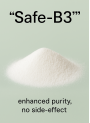
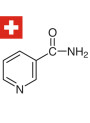
We have high-purity Niacinamide products available, such as Safe-B3™ (Vitamin B3, Niacinamide), Safe-B3™ (Vitamin B3, Niacinamide, Switzerland), and Extreme-B3™ (Vitamin B3, Niacinamide, Highest Purity). These are designed to be mixed into the water phase of formulations and can be used at concentrations up to 10% with reduced risk of irritation compared to standard grades.
2. Water-Based vs. Oil-Based/Cream Penetration
The ability of a substance to penetrate the skin depends heavily on its properties (like water or oil solubility, size, charge) and the formulation it's in. The skin's outermost layer (stratum corneum) is primarily a lipid barrier.
- Oil-soluble substances tend to penetrate more easily through the lipid-rich pathways between skin cells.
- Water-soluble substances like Niacinamide typically penetrate via other routes, such as hair follicles, sweat glands, or potentially through temporary disruptions in the lipid barrier.
- Creams and lotions (emulsions) contain both water and oil phases. This structure allows them to deliver a wider range of ingredients (both water-soluble and oil-soluble) and can provide better overall skin conditioning and barrier support, which might indirectly improve the penetration or efficacy of active ingredients compared to a simple water solution for some substances. The statement you read from the dermatologist likely refers to the overall effectiveness and delivery potential of a well-formulated emulsion compared to a pure water solution for certain actives.
For Niacinamide, a water-based serum is a very effective and popular vehicle because Niacinamide dissolves readily in water. Adding moisturizing ingredients like Hyaluronic Acid (HA) can enhance the serum's hydration benefits.
Regarding your concern about adding Niacinamide to an existing cream: You are right to be cautious. Adding an active ingredient like Niacinamide to a finished product can disrupt its stability, affect its texture, and potentially lead to using a concentration that is too high, especially if the original cream already contains Niacinamide. This could cause irritation, particularly for sensitive skin. It's generally recommended to formulate from scratch or use products with known concentrations.
Given your interest and sensitive skin, starting with a simple DIY Niacinamide serum using high-purity Niacinamide powder dissolved in water with perhaps some Hyaluronic Acid is a great approach. This allows you to control the concentration and minimize potential irritants found in complex finished products.