Using Cyclodextrin to Incorporate Drugs into Cream
Question
Please explain the process of using Cyclodextrin, including both Beta-methyl Cyclodextrin and regular Cyclodextrin, to incorporate drugs into a cream formulation. Specifically, what are the steps involved in encapsulating the drug within the Cyclodextrin, and how is the resulting drug-Cyclodextrin complex then mixed into the other cream ingredients?
Answer
Using Cyclodextrin in Cream Production
Cyclodextrins, including Beta Cyclodextrin and Beta-methyl Cyclodextrin, are substances used for encapsulating other compounds, such as drugs, to improve their solubility, stability, or bioavailability.
Here are the general steps for incorporating a drug into Cyclodextrin and then mixing this complex into a cream:
Encapsulating the Drug with Cyclodextrin (Inclusion Complex Formation)
This process is called Inclusion Complex formation, where the drug molecule fits into the cavity of the Cyclodextrin structure. There are several methods, depending on the properties of the drug and the specific Cyclodextrin used, but the basic principle involves bringing the drug and Cyclodextrin into contact in a suitable solvent to facilitate complex formation.
- Preparation of Solutions: Dissolve the Cyclodextrin in a suitable solvent (often water or a mixture of water and alcohol, such as ethanol). Simultaneously, dissolve the drug in a suitable solvent. The solvent for the drug may be the same as for the Cyclodextrin or different, depending on the drug's solubility.
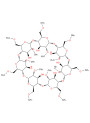
- Beta Cyclodextrin (Beta Cyclodextrin) has relatively low water solubility.
- Hydroxypropyl Beta Cyclodextrin and Methyl Beta Cyclodextrin (Methyl Beta Cyclodextrin (MβCD)) are more water-soluble.
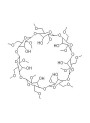
- (Heptakis) 2,6-Dimethyl Beta Cyclodextrin is soluble in oil.
- Mixing: Combine the drug and Cyclodextrin solutions. Stirring or gentle heating may be used to facilitate the process. The mixing time can vary.
- Complex Isolation: After mixing to form the Inclusion Complex, the complex needs to be isolated from the solvent. Common methods include solvent evaporation (e.g., spray drying or freeze drying) or crystallization to obtain the drug-Cyclodextrin complex powder.
This process requires specific knowledge to ensure an effective and stable complex is formed.
Incorporating the Drug-Cyclodextrin Complex into Cream
Once the drug-Cyclodextrin complex powder is obtained, the next step is to incorporate it into the cream base. The method of incorporation depends on the type of cream (O/W or W/O emulsion) and the solubility properties of the resulting complex:
- If the complex is water-soluble: If a water-soluble Cyclodextrin like Hydroxypropyl Beta Cyclodextrin or Methyl Beta Cyclodextrin (MβCD) was used and the resulting complex is water-soluble, the complex powder can be dispersed or dissolved in the water phase of the cream formulation before or during the emulsification process.
- If the complex is oil-soluble: If an oil-soluble Cyclodextrin like (Heptakis) 2,6-Dimethyl Beta Cyclodextrin was used and the resulting complex is oil-soluble, the complex powder can be dispersed or dissolved in the oil phase of the cream formulation before or during the emulsification process.
- If the complex has limited solubility: If the complex is not well soluble in either water or oil, the powder may need to be dispersed directly into the cream base during the final stage of cream production, using equipment that ensures uniform dispersion (e.g., a homogenizer).
It is crucial to ensure that the complex is uniformly dispersed or dissolved in the cream base to maintain the drug's efficacy and stability in the final product.
The entire process should be carried out by individuals with specialized knowledge and experience in pharmaceutical or cosmetic formulation development.
Related Products Mentioned

Hydroxypropyl Beta Cyclodextrin

Beta Cyclodextrin