Using Multiple Peptides Together: Recommended Percentages and Skin Safety
Question
Ingredients such as Copper Peptide have a recommended usage rate: 1-3%
Nonapeptide-1 recommended usage rate: 1% (no need to use more than this)
In the case that we want to use several types of Peptide in the formula, what should be the appropriate proportion? (Should all peptides combined not exceed 3%, or can each type be added as desired according to its recommended rate?)
In the case of using a large amount of peptide, is it harmful to the skin?
Answer
Combining Peptides in Formulations
When combining multiple peptides like Copper Peptide and Nonapeptide-1 in a cosmetic formulation, the appropriate total percentage depends on the specific peptides used and their recommended usage rates.
- Copper Peptide (GHK-Cu): Recommended usage is typically 1-3% for solutions (like Copper Peptide (GHK-Cu, Copper Tripeptide-1) (1000ppm Solution) or Copper Tripeptide 10x (GHK-Cu, Copper Tripeptide-1) (10000ppm Solution)) and 0.01-1% for powder form (like Copper Peptide (GHK-Cu Copper Tripeptide-1, 1:1) Powder).
- Nonapeptide-1: The recommended usage rate is typically 1% (as seen with Pep®-Radiance (Nonapeptide-1)).
It is generally recommended to follow the suggested usage rate for each individual peptide. While there isn't a strict universal rule for the total combined percentage of all peptides, you can often use each peptide at its recommended concentration simultaneously.
For example, if you use Copper Peptide solution at 2% and Nonapeptide-1 at 1%, the total peptide concentration would be 3%. This is generally acceptable as long as the individual peptides are used within their recommended ranges.
However, it's important to consider the overall formulation and the total concentration of all active ingredients. Using very high concentrations of multiple potent actives, including peptides, can potentially lead to:
- Reduced stability of the formulation.
- Potential interactions between ingredients.
- Increased risk of skin irritation or sensitization.
Therefore, while you can often use each peptide at its recommended individual rate, avoid exceeding the maximum recommended percentage for any single peptide. Starting with lower concentrations when combining multiple actives is always a good practice to test for compatibility and skin tolerance before increasing the percentage.
Using an excessively large amount of peptides beyond the recommended levels is generally not necessary for efficacy and could potentially be detrimental to the skin or the product's stability.
Updated Review: May 2026
This section was added after reviewing the original answer against current product availability and formulation knowledge at the stated point in time.
As of May 17, 2026, please note the following technical updates for combining these peptides:
- Usage Rate Correction: For Copper Peptide (GHK-Cu) in powder form, the current recommended usage rate is 0.01% to 0.1%. Avoid exceeding 0.1% for the pure powder to ensure stability and skin compatibility.
- pH Compatibility: When combining Copper Peptide (GHK-Cu) with Nonapeptide-1, the final formulation should be maintained within a pH range of 4.5 to 6.5. This ensures both peptides remain stable and effective, as Copper Peptide requires a pH above 4.5 and Nonapeptide-1 is most stable below 6.5.
- Pre-blended Alternatives: For formulations requiring multiple peptides, consider using a pre-mixed solution like Pep®-Max12. This blend contains 12 different peptides, including both Copper Tripeptide-1 and Nonapeptide-1, optimized for stability at a 5-10% usage rate.
- Formulation Warning: Always avoid using Disodium EDTA in formulas containing Copper Peptides, as it will chelate the copper ions and deactivate the ingredient.
Related Products Mentioned
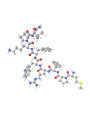
Pep®-Radiance (Nonapeptide-1)