Using Oil Control Ingredients in Serum for Different Skin Types
Question
I am formulating a facial serum and plan to use oil control ingredients like Vitamin B3, Zinc PCA, MSM, L-Carnitine, and Licorice Extract.
My main concern is for individuals with normal to dry skin. If I include these oil control ingredients, will it cause their skin to become excessively dry?
Could you please provide details on the recommended usage rate, solubility, mixing method, and optimal pH range for each of these ingredients when used in a serum formulation?
- Vitamin B3 (Niacinamide)
- Zinc PCA
- Pure MSM™ (Methylsulfonylmethane)
- L-Carnitine (Carnitine)
- Licorice Extract (Licochalcone A)
Answer
Information on Oil Control Ingredients
Regarding the use of Vitamin B3 (Niacinamide) Ultra-Low Niacin in facial serum for oil control, it is effective for oily and combination skin, helping to reduce excess oiliness. For best results, consistent use is recommended.
Combining Vitamin B3 with Zinc PCA, MSM, L-Carnitine, and Licorice Extract can enhance the oil control benefits.
For normal to dry skin, incorporating these oil control ingredients is intended to help balance the skin's oil production, rather than causing dryness. This can help the skin achieve a more balanced and healthy appearance.
Here are the details for each ingredient:
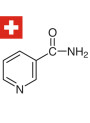
Vitamin B3 (Niacinamide)
- Usage Rate: 1-10% (commonly recommended at 5%, can be used up to 10% depending on the specific grade and desired effect).
- Solubility: Water-soluble.
- Mixing Method: Add to the water phase of your formulation. It can withstand heat but avoid prolonged heating. The optimal pH range is 3-8, ideally 4.0-7.0.
- Note: There are different grades available, such as Safe-B3™ and Extreme-B3™, which offer varying levels of purity and gentleness.
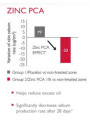
-
- Usage Rate: 0.2-1.0% (use 1.0% for oily skin and acne reduction).
- Solubility: Water-soluble (highly soluble at pH 4-6).
- Mixing Method: Add to the water phase. It is heat resistant but avoid prolonged heating. The optimal pH range is 3-7, ideally 4-6.
Pure MSM™ (Methylsulfonylmethane)
- Usage Rate: 1-5% (recommended at 3% for oil control).
- Solubility: Water-soluble.
- Mixing Method: Add to the water phase. The formula pH should be in the range of 3-7.
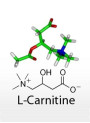
-
- Usage Rate: 1-5% (recommended at 3%).
- Solubility: Water-soluble.
- Mixing Method: Add to the water phase. The formula pH must be below 8 (optimal pH 3.5-8). If the pH is higher than 8, L-Carnitine may degrade. Adjust pH to 4-7 if needed. Avoid moisture as it is highly hygroscopic.
Licorice Extract (Licochalcone A)
- There are different types based on solubility:
- Water-Soluble Type (e.g., Licochalcone A 1%):
- Usage Rate: 0.5-3% (recommended 0.5-1.0% for reducing oiliness and acne).
- Solubility: Soluble in water.
- Mixing Method: Mix into the water phase or emulsifier. The formula pH should be in the range of 3.5-6.5.
- Glycol-Soluble Type (e.g., Licochalcone A 20%):
- Usage Rate: 0.1-0.3% (recommended 0.1-0.2% for reducing oiliness and acne).
- Solubility: Soluble in Glycol (e.g., Propylene Glycol). Cannot dissolve in water.
- Mixing Method: Mix in Propylene Glycol or other Glycols until clear, then add to the formula. The formula pH should be in the range of 3.5-6.5.
- Water-Soluble Type (e.g., Licochalcone A 1%):
- There are different types based on solubility:
When formulating your serum, ensure the overall pH of the final product is suitable for the skin (typically pH 4-7) and compatible with all the ingredients used. Always follow good manufacturing practices.