Using Phosphatidylcholine for Encapsulating Plant Extracts in Food
Question
For a thesis project, can Phosphatidylcholine be used to encapsulate plant extracts for food applications? If so, what is the recommended usage percentage for encapsulating these plant extracts?
Answer
Using Phosphatidylcholine for Encapsulating Plant Extracts in Food
Yes, Phosphatidylcholine can be used for encapsulating plant extracts, especially for food applications. Phosphatidylcholine is a major component of lecithin, which is commonly derived from sources like soybeans (as seen in the products found) or egg yolks. Soy Lecithin is widely used in the food industry as an emulsifier and is a key ingredient for forming liposomes.
Encapsulation Mechanism: Liposomes
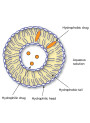
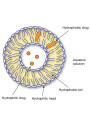
Phosphatidylcholine's structure allows it to form bilayer vesicles called liposomes in water. These liposomes can encapsulate both water-soluble (in the aqueous core) and fat-soluble (within the lipid bilayer) compounds, making them suitable for delivering various plant extracts.
Suitability for Food Applications
Soy Lecithin (containing Phosphatidylcholine) is a recognized food additive (often E322) and is considered safe for consumption. Its use in encapsulation technologies like liposomes is a common method for improving the stability, bioavailability, and controlled release of sensitive or poorly absorbed nutrients and active compounds in food products.
Usage Percentage
There is no single fixed percentage for using Phosphatidylcholine to encapsulate plant extracts. The optimal concentration depends heavily on several factors:
- The specific plant extract: Its solubility, stability, and concentration.
- The desired liposome size and structure: Smaller liposomes might require different concentrations than larger ones.
- The encapsulation method: Different techniques (e.g., thin-film hydration, sonication, extrusion) require different starting concentrations.
- The final food matrix: How the encapsulated extract will be incorporated into the food product.
- Desired encapsulation efficiency and release profile.
Determining the ideal percentage typically requires experimental formulation and optimization based on the specific extract and application goals. You would need to conduct experiments to find the concentration that yields the best encapsulation efficiency and desired properties for your specific plant extract and thesis requirements.
Products like Soy Extract (Phosphatidylcholine 90%) and Soy Extract (Phosphatidylcholine 50%) are examples of suitable sources of Phosphatidylcholine for such encapsulation work.