Using Pro Polymer for SOD and Beta Glucan Stability and Suspension
Question
What is the minimum percentage of Pro Polymer needed to stabilize 1% SOD and prevent precipitation of 10% Beta Glucan (Saccharomyces cerevisiae) in a liquid, water-based cosmetic formulation?
Answer
Using Pro Polymer with SOD and Beta Glucan
Here's guidance on using Pro Polymer as a thickener for formulations containing SOD and Beta Glucan:
1. SOD (Superoxide Dismutase) Stabilization
When incorporating 1% SOD into a liquid, water-based formula, using a polymeric thickener such as Pro Polymer is recommended. This helps to reduce the movement of the enzyme, which can contribute to a longer shelf-life.
While there isn't a specific minimum percentage of Pro Polymer stated solely for SOD stabilization, achieving a general gel texture is beneficial. Pro Polymer is typically recommended at 0.8% for a standard gel. This concentration should provide enough viscosity to help keep the SOD enzyme stable in the formula.
2. Preventing Beta Glucan Precipitation
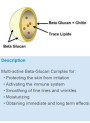
Beta Glucan from Saccharomyces cerevisiae has relatively heavy particles that can settle or precipitate in formulations that are not sufficiently viscous. To prevent this when using 10% Beta Glucan in a liquid formula, you need to add a thickener like Pro Polymer to provide adequate suspension.
The Beta Glucan description suggests the formula should be "slightly viscous" to disperse the particles. A standard gel created with 0.8% Pro Polymer might offer enough viscosity for initial dispersion. However, given the high concentration of Beta Glucan (10%) and the note about particle weight, using a slightly higher percentage of Pro Polymer, such as 1% to 2%, would likely be more effective in maintaining long-term stability and preventing the heavy particles from settling out. The optimal percentage will depend on the desired final texture and the specific composition of your formula.
Related Products Mentioned
Pro Polymer™ (Gel Maker)