Using Retinal with Other Skincare and Daytime Application
Question
Using Retinal
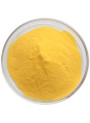
This Vitamin A product, Retinal (Retinaldehyde), after mixing as 0.1% Cream:
Can it be used together with other skincare products? For example, use Serum before applying Retinal and use moisturizer after applying Retinal.
Can it be used during the day? If not going out of the house, or if applying sunscreen.
Can it be used together with Copper Peptide?
The opaque white bottle that the shop uses to put other products in — can that bottle protect from light?
One more question:
Is the way to use each type of Vitamin A acid not the same? For example, Retin-A is used when the face is dry and cannot be used together with other skincare, but Differin can be used together with other skincare.
Question is: Which Vitamin A acid products on the website can be used together / cannot be used together with other skincare? *I’m afraid of using them inappropriately and that they won’t be beneficial.
Answer
Subject: Usage of Retinal
Regarding your questions about using Retinal (Retinaldehyde) 0.1% cream:
Can it be used with other skincare products?
Yes, it can be used normally with other skincare products like serum before and moisturizer after.Can it be used during the day?
You should avoid direct sunlight. It is fine to use indoors where there is no direct sun exposure.Can it be used with Copper Peptide?
Yes, it can be used with Copper Peptide, even when mixed in the same formula, as long as the Copper Peptide is not exposed to heat.Does the opaque white bottle protect from light?
The opaque white bottle provides a low level of light protection, which is insufficient for Vitamin A products.
Regarding your follow-up question about different types of Vitamin A and their compatibility with other skincare:
The staff mentioned that they are unsure why you believe Retin-A cannot be used with other products. Generally, the products you asked about do not contain ingredients that would cause issues with Retin-A or other types of Vitamin A. The key consideration when using Vitamin A, including Retin-A, is that it can cause skin irritation. Therefore, it is important to use it on healthy skin, and formulations often include oils or moisturizers to help prevent dryness and peeling. Compatibility depends more on avoiding irritating combinations rather than a blanket rule against using Vitamin A with other skincare.
Updated Review: May 2026
This section was added after reviewing the original answer against current product availability and formulation knowledge at the stated point in time.
As of May 17, 2026, here is the updated technical guidance regarding the use of Retinal and Copper Peptide:
- pH Compatibility for Combined Formulas: While Retinal (Retinaldehyde) and Copper Peptide (GHK-Cu) can be used together, if you are mixing them into the same formula, you must maintain a specific pH range. Retinal is stable between pH 3.5–6.5, while Copper Peptide requires pH 4.5–7.4. Therefore, a combined formula must be strictly adjusted to pH 4.5–6.5 to ensure the stability and efficacy of both actives.
- Ingredient Incompatibilities: When using Copper Peptide, you must avoid Disodium EDTA in the formulation. EDTA will bind with the copper ions, causing the peptide to lose its effectiveness and potentially changing the color of the product.
- Advanced Packaging Requirements: Vitamin A derivatives are extremely sensitive to light and oxygen. It is now strongly recommended to use airless pumps or UV-blocking dark packaging to prevent degradation. For water-based formulas, using an encapsulated version like Retinal-EZ™ can provide improved stability and easier dispersion.
- Modern Alternatives: For users concerned about irritation or stability, Hydroxypinacolone Retinoate (Perfect-A™) is a modern alternative. It offers high efficacy with significantly lower irritation potential and better stability in cosmetic formulations compared to standard Retinal.
- Sun Protection: Regardless of whether Vitamin A is used during the day or night, the use of a broad-spectrum sunscreen (SPF 30 or higher) is mandatory during the day, as these ingredients increase the skin's sensitivity to UV radiation.
Related Products Mentioned
Retinal (Retinaldehyde)