Using Silicone CS-1600 in Water-Free Cream and SPF 40 Sunscreen Formulation
Question
How to formulate products using Silicone CS-1600 (Cyclopentasiloxane (and) Dimethicone Crosspolymer) as a base, specifically:
- A water-free nourishing cream using Silicone CS-1600 at 50% along with oils (Rose Hip Oil, Olive Oil, German Chamomile, Carnation oil) and extracts (Emblica Extract, Centella asiatica Extract). What are the suitability and recommended percentages for these ingredients?
- An SPF 40 sunscreen formulation. Can Silicone CS-1600 be used as a base, and what are the considerations and challenges in achieving SPF 40?
Answer
Formulation Advice
1. Water-Free Nourishing Cream
You plan to use Silicone CS-1600 at 50% along with several oils and extracts.
Suitability of Ingredients:
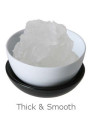
- Silicone CS-1600 (50%): This is a suitable base for an anhydrous (water-free) formula, providing texture and the desired feel and light diffusion.
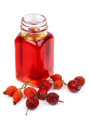
- Oils (Rose Hip Oil, Olive Oil, German Chamomile, Carnation oil): Natural oils like Rose Hip Oil (Extra Virgin or Virgin, Fresh) and Olive Oil (Extra Virgin) are generally compatible with silicone bases and provide nourishing properties. Natural Bisabolol (derived from German Chamomile) is oil-soluble and known for soothing properties. Carnation oil, if it's an essential oil or extract, might be primarily for fragrance.
- Extracts (Emblica Extract, Centella asiatica Extract): The compatibility of extracts depends heavily on their solvent. Water-soluble extracts, including some forms of Centella asiatica Extract (like Madecassoside 90%) and Dianthus Caryophyllus (Carnation) Extract, can be challenging to incorporate into a completely water-free silicone gel base and may require specific solubilizers or might cause the formula to become cloudy or unstable. Oil-soluble extracts or dispersing powder extracts like Pure-TECA™ Centella Asiatica Extract might be more suitable, though dispersing powders requires careful formulation to avoid grittiness. We did not find specific information on Emblica Extract in our database, so its form and solubility are unknown.
Percentage Recommendations:
- Silicone CS-1600: 50% is a good starting point for the base.
- Oils (Rose Hip Oil, Olive Oil, etc.): The total percentage of oils can range from 1% up to 20% or more, depending on the desired richness. You can distribute this percentage among the oils you wish to use. For example, Olive Oil could be 5-10%, and Rose Hip Oil 1-5%.
- Extracts (Centella asiatica Extract, Natural Bisabolol): For ingredients like Centella asiatica Extract (Madecassoside 90% or Pure-TECA™) and Natural Bisabolol, follow the supplier's recommended usage rate, typically ranging from 0.1% to 2%.
- Carnation oil (Dianthus Caryophyllus (Carnation) Extract): If used for fragrance, a very low percentage (e.g., 0.1-0.5%) is usually sufficient. Be mindful of its water solubility if aiming for an anhydrous product.
- Ensure the total percentage of all ingredients adds up to 100%.
Additional Ingredients:
- Antioxidant: Adding an antioxidant like Vitamin E (Tocopherol) at 0.1-1% is highly recommended to protect the oils from oxidation and extend shelf life.
- Sensory Enhancers: Depending on the final feel, you might consider adding a small amount of a light emollient or a silicone powder like SiliSilk™ for enhanced smoothness and soft-focus effect.
2. SPF 40 Sunscreen Formulation
Formulating a sunscreen to a specific SPF level like 40 is a complex process that requires careful selection and combination of UV filters and laboratory testing to confirm efficacy and stability.
- Silicone Gel as a Base: Silicone gels can be used in sunscreen formulations, particularly anhydrous stick sunscreens or water-in-silicone emulsions, providing a pleasant feel and helping to disperse UV filters.
- Achieving SPF 40: To reach SPF 40, you need to incorporate sufficient concentrations of effective UV filters. These can be:
- Physical Filters: Zinc Oxide (e.g., Zinc Oxide 200nm EasyDisperse™, Zinc Oxide 35nm Liquid, Zinc Oxide Transparent Dispersion) and Titanium Dioxide (e.g., Titanium Dioxide 200nm EasyDisperse™, Titanium Dioxide 15nm Liquid, Titanium Dioxide Transparent). These need to be properly dispersed in the silicone/oil phase.
- Chemical Filters: Such as Avobenzone and OMC (Octinoxate). These need to be dissolved in suitable emollients.
- Formulation Challenges:
- Compatibility: Some UV filters are incompatible with each other (e.g., Avobenzone can be unstable with certain physical filters or OMC unless properly stabilized).
- Dispersion/Solubilization: Physical filters need to be evenly dispersed, and chemical filters need to be fully dissolved to provide even protection. Using pre-dispersed liquid forms of physical filters can simplify this.
- Stability and Film Formation: The formula must be stable, and the UV filters must form a continuous, even film on the skin to be effective. This often requires specific formulating techniques and additional ingredients like film formers and stabilizers.
Providing a precise SPF 40 formula without laboratory testing is not feasible. It is highly recommended to use pre-tested sunscreen bases or follow detailed formulations provided by UV filter suppliers to ensure the target SPF and broad-spectrum protection are achieved.
In summary, Silicone CS-1600 is a great base for anhydrous products and contributes to a smooth feel and light diffusion. For the nourishing cream, pay close attention to the solubility of your extracts. For the SPF 40 sunscreen, be aware that achieving a specific SPF requires expertise in UV filter selection, formulation, and testing.
Related Products Mentioned

Natural Bisabolol (Brazil Chamomile)

Olive Oil (Extra Virgin)
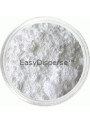
Zinc Oxide 200nm EasyDisperse™
Titanium Dioxide 15nm Liquid (Gloss)
Zinc Oxide 35nm Liquid