Using Skincare Actives (Niacinamide) in CP/HP Bar Soap
Question
I would like to know about the possibility and challenges of incorporating skincare extracts or active ingredients, specifically Niacinamide, into bar soap made using Cold Process (CP) and Hot Process (HP) methods.
Considering that the production process involves high alkalinity (typical soap pH 9-11) and high heat (especially in HP), how does this affect the stability and effectiveness of ingredients like Niacinamide?
Based on product information for variants like Safe-B3™ and Extreme-B3™, Niacinamide can withstand heat but not prolonged heating, and its optimal pH is 3-8 (best at 4.0-7.0). Given these conditions, is Niacinamide suitable for long-term stability and effectiveness in bar soap? Are there specific recommendations for adding sensitive ingredients in CP/HP processes to minimize degradation?
Answer
Skin Care Ingredients for CP/HP Bar Soap
Making bar soap using Cold Process (CP) and Hot Process (HP) methods presents a challenge in selecting skin care extracts or active ingredients, as the production process involves high alkalinity and heat, which can degrade many ingredients or cause them to lose their properties.
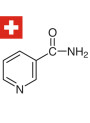
Regarding Niacinamide (Vitamin B3), which is beneficial for the skin (e.g., reducing wrinkles, dark spots, strengthening the skin barrier, and controlling oiliness), product information for variants like Safe-B3™ and Extreme-B3™ indicates that Niacinamide can withstand heat but should not be heated for a long time. The optimal pH range for its activity is 3-8 (best at 4.0-7.0).
Since bar soap has a high pH (typically around 9-11) and CP/HP processes involve high heat, especially HP, these conditions may not be suitable for maintaining Niacinamide's stability and effectiveness in the long term within the soap.
Finding extracts or active ingredients that are truly stable and highly effective directly in the high alkalinity and heat conditions of soap making is difficult, as most skin care actives tend to degrade under such conditions.
Recommendations:
- Choose skin care ingredients that the supplier explicitly states can be used in bar soap and are stable under alkaline and heat conditions.
- For ingredients that are not tolerant of high heat or alkalinity, consider adding them towards the end of the production process when the temperature and pH have started to decrease, such as at trace in CP soap or during the cool-down phase in HP soap. However, their effectiveness may still not be equivalent to use in products with an optimal pH.
In summary, while Niacinamide has good properties and some heat resistance, the very high pH of soap may compromise its stability and effectiveness. It is important to consider the stability data of each ingredient in soap conditions specifically or choose ingredients designed for use in high-pH cleansing products.