Vitamin and Mineral Heat Stability in Baked Cookies for Children
Question
What is the heat stability of Zinc, Vitamin D, Vitamin A, and B Vitamins (B1, B2, B6, B12) when added to cookies for young children that are baked? Are there recommended heat-stable options suitable for this application?
Answer
Vitamin Heat Stability in Baked Goods for Young Children
Regarding your interest in adding vitamins (Zinc, Vit D, Vit A, Vit B1, Vit B2, Vit B6, Vit B12) to cookies for young children that will be baked, here is information on the heat stability of these nutrients:
Generally, the stability of vitamins during baking depends on the specific vitamin, the temperature, baking time, moisture content, and other ingredients in the recipe.
- B Vitamins (B1, B2, B6, B12): These are water-soluble vitamins and are generally sensitive to heat. Vitamin B1 (Thiamine) and Vitamin B12 are particularly prone to degradation at high temperatures. Significant losses can occur during baking.
- Vitamin A: This is a fat-soluble vitamin that can also be sensitive to heat and light, although it is generally more stable than some B vitamins. Degradation can still occur during baking.
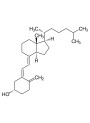
- Vitamin D: Vitamin D is relatively more stable to heat compared to Vitamins A and B, but prolonged exposure to high temperatures can still lead to some loss.
- Zinc: As a mineral, Zinc is very stable to heat. Any loss during baking is more likely due to leaching into moisture or interactions with other ingredients rather than thermal degradation of the mineral itself.
For vitamins that are sensitive to heat, such as the B vitamins and Vitamin A, incorporating them into baked goods like cookies means some portion of the vitamin will likely be lost during the baking process. The exact percentage of loss is difficult to predict without specific testing under your baking conditions.
To maximize the retention of heat-sensitive vitamins in baked goods, consider the following:
- Use Stabilized Forms: Some vitamin suppliers offer stabilized or encapsulated forms of vitamins that are designed to withstand processing conditions like heat. While our product descriptions don't specify heat stability during baking, it's worth inquiring with the supplier about forms suitable for high-temperature applications.
- Adjust Dosage: You might need to add a higher amount (overage) of the heat-sensitive vitamins to ensure the final product contains the desired nutritional level after baking.
- Minimize Baking Time and Temperature: Baking at the lowest effective temperature for the shortest possible time can help reduce vitamin degradation.
Based on your interest and our product availability for food applications, here are some relevant products we have that contain the vitamins and mineral you are looking for:
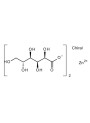
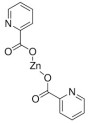
- Zinc: We have various forms such as Zinc Picolinate, Zinc Bisglycinate, and Zinc Gluconate.
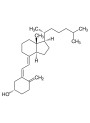
- Vitamin D3: Available in powder (Cholecalciferol Vitamin D3 Powder) and oil (Cholecalciferol (Vitamin D3) Oil) forms.
- Vitamin A: Available as Vitamin A Retinyl Palmitate (oil-soluble) and Vitamin A Acetate Water-Dispersible.
- Vitamin B1: Vitamin B1 Thiamine Hydrochloride.
- Vitamin B2: Vitamin B2 Riboflavin.
- Vitamin B6: Vitamin B6 Pyridoxine Hydrochloride.
- Vitamin B12: Available as Vitamin B12 Methylcobalamin, Vitamin B12 Cyanocobalamin 99%, and Vitamin B12 Cyanocobalamin 1%.
For precise information on the heat stability of these specific products during baking, we highly recommend consulting the Certificate of Analysis (CoA) or technical data sheet provided by the supplier for each ingredient, or contacting the supplier directly. They can provide data on how much of the vitamin is retained under specific temperature and time conditions.
Adding vitamins to food products requires careful consideration of stability, potential interactions with other ingredients, and regulatory requirements for fortification, especially for products intended for young children. It is advisable to consult with a food technologist or nutritionist experienced in food fortification.
Updated Review: May 2026
This section was added after reviewing the original answer against current product availability and formulation knowledge at the stated point in time.
Update as of 2026-05-24
The 2022 answer remains generally correct, but for cookies intended for young children the recommendation should be applied more strictly. Do not rely only on oven temperature or quote an exact “maximum heat-stable °C” for each vitamin unless that value comes from the exact supplier data or a validated cookie-baking retention study. Actual retention depends on the vitamin form, cookie matrix, water activity/moisture, oxygen, light, pH, baking time, oven temperature, and the actual internal temperature of the cookie.
Current catalog options include food-type Vitamin D3 powder/oil, Vitamin A forms, B1, B2, B6, B12, and several zinc forms. These can be considered as ingredient candidates, but catalog availability does not guarantee post-baking potency. Vitamin D is generally more heat-stable than Vitamin A and some B vitamins, but still needs validation. Vitamin A is sensitive to light, oxygen, and heat; B1 and B12 can have higher processing loss risk; B2 is especially light-sensitive. Zinc is a mineral and is not destroyed by heat like vitamins, but the amount per serving and daily intake for children still must be controlled.
If a nutrient amount will be declared on the label, make a pilot batch and test the finished cookies after baking and after storage. Use any overage only after assay data and a children’s safety calculation. For young children, the serving size, age group, expected cookies per day, other fortified foods/supplements, and local food regulations must be checked carefully—especially for Vitamin A, Vitamin D, zinc, and B6.
References: Ottaway PB, “Stability of vitamins during food processing and storage” (2002); Garg M. et al., Frontiers in Nutrition (2021); NIH Office of Dietary Supplements Vitamin A and Vitamin D fact sheets (updated 2025); EFSA Tolerable Upper Intake Levels for Vitamins and Minerals (2006).