Vitamin C and Niacinamide Compatibility: pH, Derivatives, and Stability
Question
I've recently researched the compatibility of Vitamin C and Niacinamide. My understanding is that L-Ascorbic Acid should not be directly combined with Niacinamide, but they can be applied in layers, or one can use Vitamin C derivatives that are stable at a 'neutral pH'.
Could you confirm if this research is accurate? Specifically:
- Is it true that many brands are successfully combining
VitCwithNiacinamidein a single product based on this scientific understanding? - What is the specific 'neutral pH' range that allows for stable combination of these ingredients?
- Will combining them impact the long-term stability of either ingredient, and what measures can be taken to maintain their stability?
Answer
Regarding the compatibility of Vitamin C and Niacinamide, your research is largely correct. Here are the facts from a formulation expert perspective:
Vitamin C (L-Ascorbic Acid) and Niacinamide Compatibility
Historically, it was advised to avoid combining L-Ascorbic Acid with Niacinamide in the same formula. This was due to two main concerns:
- pH Mismatch: L-Ascorbic Acid requires a highly acidic pH (typically 2.0-4.0) for stability and efficacy. Niacinamide, while stable over a broader range (optimal pH 4.0-7.0), can convert to nicotinic acid (which causes skin flushing and irritation) at very low pH levels, especially when exposed to heat.
- Degradation: At higher pH levels, L-Ascorbic Acid rapidly oxidizes and loses its potency.
However, modern cosmetic science has found ways to combine these ingredients effectively.
Layering and pH Neutral Vitamin C Derivatives
- Layering: Applying L-Ascorbic Acid and Niacinamide in separate layers can reduce direct interaction, but it doesn't completely eliminate the potential for pH shifts on the skin's surface.
Vitamin C Derivatives at "Neutral pH": The key is indeed to use stable Vitamin C derivatives that are effective at a more "neutral" pH range, which is compatible with Niacinamide.
What is "Neutral pH"? For Niacinamide, the optimal pH range is 4.0-7.0. For Vitamin C derivatives that are compatible with Niacinamide, a "neutral pH" typically refers to a range where both ingredients can remain stable. Based on our product data, this would be a pH range of 7.0-8.0.
Our Recommendations for Combination:
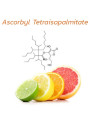
While some stable Vitamin C derivatives like Ethyl Ascorbic Acid, Ascorbyl Glucoside (AA-2G), and Perfect-C™ (Ascorbyl Tetraisopalmitate) are stable at more neutral to slightly acidic pH levels, our product guidelines specifically advise against using them with Vitamin B3 (Niacinamide) in the same formula to ensure optimal stability and efficacy.However, we recommend Magnesium Ascorbyl Phosphate (MAP) and Sodium Ascorbyl Phosphate (SAP) as excellent choices for combining with Niacinamide. These derivatives are highly stable and work optimally in a pH range of 7.0-9.0 (with 7.0-8.0 being ideal), which perfectly overlaps with Niacinamide's stable range. They do not have stated incompatibilities with Niacinamide in our product information.
Long-Term Stability
Yes, long-term stability is a critical consideration. To ensure the stability and efficacy of both Vitamin C derivatives and Niacinamide in a combined formula:
- Precise pH Control: This is the most crucial factor. For formulations combining Niacinamide with Magnesium Ascorbyl Phosphate (MAP) or Sodium Ascorbyl Phosphate (SAP), maintaining the formula's pH between 7.0 and 8.0 is essential.
- Packaging: Use opaque, air-tight packaging (e.g., pump bottles, tubes) to minimize exposure to light and oxygen, which can degrade both ingredients.
- Antioxidants and Chelating Agents: Incorporating additional antioxidants (like Vitamin E) and chelating agents (such as Disodium EDTA) can help protect the ingredients from oxidation caused by metal ions in the formula. Our product descriptions for L-Ascorbic Acid, Perfect-C™, Ethyl Ascorbic Acid, Magnesium Ascorbyl Phosphate, and Sodium Ascorbyl Phosphate all recommend using Disodium EDTA.
- Storage Conditions: Store the final product in a cool, dark place, away from direct sunlight and heat. Refrigeration is often recommended for optimal long-term stability, especially for L-Ascorbic Acid and some derivatives.
By carefully selecting the right Vitamin C derivative and meticulously controlling the formulation's pH and storage conditions, it is indeed possible to create stable and effective products combining Vitamin C and Niacinamide.
Related Products Mentioned

Safe-B3™ (Vitamin B3, Niacinamide)
Vitamin C (L-ascorbic acid) (Ultra-Fine)
Vitamin C (L-ascorbic acid) (Fine)

Vitamin C (L-ascorbic acid) (Standard)