Vitamin C Formulation: Dilution, Compatibility, and Stability (Natural-C Glycol, Perfect-C TransDerm)
Asked by: monrada16
On: July 31, 2015
Product Type:
Cosmetics
Answered
Question
Regarding Vitamin C products, I have the following questions:
- Besides using Propylene Glycol to dilute Natural-C Glycol, are there other options like Glycerine, silicone, Fractionated Coconut Oil/Natural oil, or Lipid soft?
- When using a high proportion of Glycols, I feel a warming sensation. Is this harmless to the skin?
- In the Natural-C Glycol base, there are only two types of Glycols combined, likely more than 80%. However, the details for Butylene Glycol recommend 1-20% (max 50%) and Ethoxydiglycol recommend 1-20% (max 80%). Is the proportion of Glycols in the Natural-C Glycol base too high?
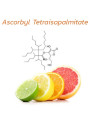
- If I want to formulate my own Vitamin C serum for skin brightening using Perfect-C TransDerm (Ascorbyl Tetraisopalmitate), which can be mixed with water, using the following formula:
a. water q.s.
b. EDTA 0.2% of water
c. Ethoxydiglycol 20%
d. Propylene Glycol 10%
e. Glycerine 4%
f. Laureth 23 3%
g. T.E.A 1% (adjust pH)
h. Pantheol 0.5%
i. Perfect-C TransDerm (Ascorbyl Tetraisopalmitate) 5%
j. Phenoxyethanol 1%- Can the above formula be mixed without causing Perfect-C to suspend or precipitate? Is Laureth 23 necessary as an emulsifier in this formula?
- Alternatively, using the following formula:
a. Ethoxydiglycol 20%
b. Butylene Glycol 20%
c. Cyclomethicone 20%
d. Fractionated Coconut Oil 30.3%
e. Glycerine 4%
f. Perfect-C TransDerm (Ascorbyl Tetraisopalmitate) 5%
g. Phenoxyethanol 0.7%- Can the above formula be mixed together? Will it cause Perfect-C to suspend or precipitate?
- Does the company plan to sell Pentylene Glycol?
Answer
Hello,
Here are the answers to your questions about Natural-C Glycol and Perfect-C TransDerm:
Diluting Natural-C Glycol (ID 486):
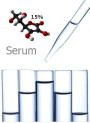
- Since Natural-C Glycol has a concentration of 15% and causes stinging, you can reduce the concentration to about 10% by diluting it.
- Based on available information, Propylene Glycol (ID 138) and Butylene Glycol (ID 320) can be used for dilution.
- We do not recommend using water for dilution as it will destabilize the Vitamin C in the formula.
- Regarding other substances like Glycerin (ID 143), silicones (ID 171), Fractionated Coconut Oil (ID 169)/Natural oil, or Lipid soft, our team is unsure if they can be used for dilution due to limited information from the manufacturer, who did not provide guidance on formula adjustments.
Ingredients and Water in Natural-C Glycol (ID 486) and Warming Sensation:
- You should not add water to Natural-C Glycol (ID 486) as it will cause the Vitamin C to degrade.
- The warming sensation experienced when using products with a high proportion of glycols (such as Butylene Glycol ID 320, Ethoxydiglycol ID 137) is a normal characteristic of such formulas and is not harmful to the skin.
- Regarding the high proportion of glycols exceeding manufacturer recommendations (e.g., Butylene Glycol ID 320 recommended 1-20%, max 50%; Ethoxydiglycol ID 137 recommended 1-20%, max 80%), please note that the manufacturer's recommended usage levels are just initial suggestions. In terms of safety, these substances do not have maximum usage limits set by the FDA (Food and Drug Administration in Thailand), meaning they can be used in higher proportions than the manufacturer's recommendations.
Formulating Your Own Vitamin C Serum Using Perfect-C TransDerm (ID 727, ID 499):
- Perfect-C TransDerm (ID 727, ID 499) is an oil-soluble ingredient and cannot be dissolved in water.
- Formula 1 (Water-based formula):
- This formula has water as the main component, but Perfect-C TransDerm (ID 727, ID 499) is oil-soluble. Therefore, Laureth 23 (ID 140) is necessary as an emulsifier to help incorporate Perfect-C TransDerm into the water phase.
- However, using 5% Perfect-C TransDerm in a water-based formula might require a relatively high amount of Laureth 23 (ID 140) (around 10-15%), which may not be suitable for the formula.
- For formulas containing both water and oil phases like this, we recommend making a cream using a cream maker for better stability.
- Formula 2 (Water-free formula):
- This formula contains glycols (Ethoxydiglycol ID 137, Butylene Glycol ID 320), silicone (Cyclomethicone ID 171), oil (Fractionated Coconut Oil ID 169), Glycerin (ID 143), Perfect-C TransDerm (ID 727, ID 499), and Phenoxyethanol (ID 155).
- These substances are miscible (can be mixed together) but are not completely soluble (dissolved into a single phase).
- Due to the different viscosities of each ingredient, some separation might occur over time when left standing, although it may not result in distinct layers.
- To reduce the chance of separation, we recommend trying to simplify the formula by using fewer types of solvents/oils, such as perhaps only one or two types of glycol along with Fractionated Coconut Oil (ID 169) and Perfect-C TransDerm (ID 727, ID 499).
Plans to Sell Pentylene Glycol:
- Currently, the company has no plans to sell Pentylene Glycol. This is because there is not yet sufficient research comparing the differences between Pentylene Glycol and Propylene Glycol (ID 138).
We hope this information is helpful.
Thank you,
MySkinRecipes Team
Related Products Mentioned
Ethoxydiglycol (e.q. Transcutol)
Cosmetics
Propylene Glycol (USP)
Cosmetics
Laureth-23
Cosmetics
Glycerin (USP/Food Grade)
Cosmetics
Phenoxyethanol (Extra Pure)
Cosmetics
Fractionated Coconut Oil
Cosmetics
Butylene Glycol
Cosmetics