Vitamin C Gel Cream Formulation for Brightening and Anti-Aging
Question
Hello, I would like a formulation for a gel cream that primarily contains Vitamin C, specifically [url=http://www.myskinrecipes.com/shop/whitening-%E0%B8%AA%E0%B8%B2%E0%B8%A3%E0%B9%83%E0%B8%AB%E0%B9%89%E0%B8%9C%E0%B8%B4%E0%B8%A7%E0%B8%82%E0%B8%B2%E0%B8%A7/134-vitamin-c-l-ascorbic-acid-%E0%B8%9C%E0%B8%87%E0%B8%A7%E0%B8%B4%E0%B8%95%E0%B8%B2%E0%B8%A1%E0%B8%B4%E0%B8%99%E0%B8%8B%E0%B8%B5.html:1h053nmp]L-Ascorbic Acid powder[/url:1h053nmp], to help nourish the skin for brightening, reducing wrinkles, and dark spots.
Answer
Vitamin C Gel Cream Formulation
Creating a gel cream with Vitamin C requires careful consideration of the type of Vitamin C used, as stability and efficacy vary. You mentioned L-Ascorbic Acid, which is a highly effective form but can be challenging to formulate due to its instability in water and requirement for a low pH.
Here's a breakdown of suitable Vitamin C options for a gel cream and general formulation tips:
Vitamin C Options for Gel Cream
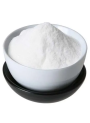
Vitamin C (L-ascorbic acid) (Fine) (as you linked):
- Pros: Highly potent for brightening, reducing wrinkles, and stimulating collagen. Very effective at low pH.
- Cons: Very unstable in water; oxidizes easily. Requires a low pH (ideally 3.5-4.0 for skin application, but can be used between 2.0-4.0 in formulation) which can be irritating. Requires careful formulation, including the use of a chelating agent like Disodium EDTA.
- Usage Rate: 3-15% (3% for general anti-wrinkle, up to 15% for whitening).
Ethyl Ascorbic Acid (3-O-ethyl ascorbic acid, Vitamin C Ethyl Ether):
- Pros: Water-soluble, highly stable, and easier to formulate than L-Ascorbic Acid. Good efficacy for brightening and reducing dark spots, with anti-aging benefits. Works in a slightly wider pH range (3.5-6.0).
- Cons: May be slightly less potent than L-Ascorbic Acid at the same concentration.
- Usage Rate: 1-10% (recommended 3%).
Magnesium Ascorbyl Phosphate (MAP) and Sodium Ascorbyl Phosphate (SAP):
- Pros: Water-soluble, highly stable, and very easy to mix. Good for brightening.
- Cons: Require a higher pH (7-9) which is less acidic than typically recommended for optimal skin absorption of Vitamin C. Less potent for anti-aging compared to L-Ascorbic Acid or Ethyl Ascorbic Acid.
- Usage Rate: 0.5-10% (recommended 3%).
For a gel cream formulation that balances efficacy and ease of use, Ethyl Ascorbic Acid is often a good choice due to its stability and water solubility within a skin-friendly pH range.
General Gel Cream Formulation Tips with Vitamin C
- Choose your gelling agent: Select a gelling agent compatible with your chosen Vitamin C's required pH range.
- Water Phase: Dissolve water-soluble ingredients, including your Vitamin C derivative (like Ethyl Ascorbic Acid, MAP, or SAP) and a chelating agent (like Disodium EDTA at 0.05-0.2%) in the water phase. For L-Ascorbic Acid, dissolve it in a small amount of water containing Disodium EDTA just before adding to the final, cooled base.
- Oil Phase (if any): If your gel cream contains an oil phase, prepare it separately.
- Combine Phases: Combine the water and oil phases (if applicable) and create your gel/emulsion base according to your recipe.
- Add Vitamin C: For L-Ascorbic Acid, add the freshly dissolved solution to the cooled base (below 30°C). For stable derivatives like Ethyl Ascorbic Acid, MAP, or SAP, they can often be added to the water phase or the cooled final product, depending on the specific gelling agent and formula.
- Adjust pH: Crucially, adjust the final pH of your gel cream to the recommended range for your chosen Vitamin C form (e.g., 3.5-4.0 for L-Ascorbic Acid, 3.5-6.0 for Ethyl Ascorbic Acid, 7-9 for MAP/SAP). Use a pH meter and adjust with a suitable acid (like Lactic Acid or Citric Acid solution) or base (like Sodium Hydroxide solution) as needed.
- Add Preservative: Include a broad-spectrum preservative system effective in your final pH range.
- Storage: Store the finished product properly, often in an airtight, opaque container away from light and heat. Refrigeration is recommended for L-Ascorbic Acid formulas to help maintain stability.
Using a stable derivative like Ethyl Ascorbic Acid will generally make formulating a Vitamin C gel cream much simpler while still providing excellent benefits for brightening, dark spots, and skin rejuvenation.