Vitamin C Serum Mixing Issue: Separation and Watery Texture
Question
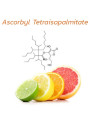
I am making a Vitamin C serum using a specific formulation including water phase, oil phase (with Ascorbyl Tetraisopalmitate and Vitamin E), and a Sodium Polyacrylate/Polyisobutene emulsifier/thickener blend. I mixed the water and oil phases separately, then slowly added the oil phase to the water phase while stirring. However, the mixture separated into water and oil layers and the texture remained watery, not thickening into a serum. Is my mixing method correct, and what could be the reasons for the separation and lack of viscosity?
Answer
Subject: Re: Vitamin C Serum Mixing Method
Hello,
Thank you for sharing your Vitamin C serum formulation and mixing method. You are asking if your mixing method is correct, as you experienced phase separation (water and oil layers separating) and a watery texture instead of a serum consistency.
The formulation you provided includes a water phase (Distilled Water, Disodium EDTA, Phenoxyethanol), an oil phase (Ascorbyl Tetraisopalmitate, Vitamin E), and an emulsifier/thickener blend (Sodium Polyacrylate and Polyisobutene, referred to as "Light Cream Maker").
Your described mixing method involves preparing the oil phase ingredients (4, 5, 6) and the water phase ingredients (1, 2, 3) separately, and then slowly adding the oil phase mixture into the water phase mixture while stirring. This general approach of combining an oil phase and a water phase with an emulsifier is a standard method for creating emulsions like serums or creams (specifically, an oil-in-water emulsion, which is common for serums).
However, the fact that your mixture separated and remained watery indicates that the emulsifier/thickener blend (Sodium Polyacrylate and Polyisobutene) did not properly emulsify and thicken the formulation. This is the reason you did not achieve a stable serum texture.
There are a few potential reasons for this failure:
- Specific Instructions for the Emulsifier: The "Light Cream Maker" (Sodium Polyacrylate and Polyisobutene) is a specific product blend. It may have particular requirements for hydration, dispersion, or mixing that were not met. It's crucial to follow the supplier's recommended instructions for using this specific emulsifier blend. Some blends need to be added to the water phase first and mixed until a gel forms before adding the oil phase, while others are incorporated differently.
- Insufficient Mixing/Shearing: Some emulsifier/thickener blends, especially those based on polymers like Sodium Polyacrylate, require significant mechanical energy (high-shear mixing) to properly hydrate, swell, and form a stable gel network or emulsion. Simple hand stirring or low-speed mixing might not be sufficient.
To troubleshoot this, I recommend the following:
- Check Supplier Instructions: Please refer to the specific usage instructions provided by the supplier for the "Light Cream Maker" (Sodium Polyacrylate and Polyisobutene) product (Product ID 141). These instructions will guide you on the correct way to incorporate and activate this ingredient.
- Improve Mixing: If possible, try using a higher-speed mixer (like a small lab mixer or even an immersion blender on a low setting, taking care to avoid incorporating too much air) to ensure sufficient shear during the emulsification process.
While your general approach of combining phases is correct, the specific details of how the emulsifier is handled and the level of mixing are critical for success with this type of formulation.
I hope this helps you achieve a stable and effective Vitamin C serum!
Related Products Mentioned
Vitamin E (Tocopheryl Acetate)
Light Cream Maker™
Phenoxyethanol (Extra Pure)