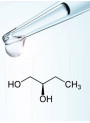
Vitamin C Serum Stability and Formulation
Question
I have a question about using L-ascorbic acid serum:
- Can the serum be used beyond the recommended time if it hasn't changed color?
- I want to create a serum similar to Cellular Skin RX using the following ingredients. What percentages should I use for Ethoxydiglycol and Butylene Glycol, and can I add 1% Pro Polymer?
- L-ascorbic acid 15%
- Ethoxydiglycol ?%
- Butylene Glycol ?%
- Phenoxyethanol 1%
Answer
Vitamin C Serum Formulation and Stability
Regarding your questions about your L-ascorbic acid serum formulation:
Vitamin C Stability
L-ascorbic acid is known to be unstable when dissolved in water and is prone to oxidation, which reduces its effectiveness. The typical visual indicator of this degradation is the solution turning yellow or orange. While storing the serum in the refrigerator helps slow down this process, it doesn't stop it completely. The recommendation to use the serum within 3 days is for optimal potency. If the serum remains clear after 7 days, it suggests that significant oxidation hasn't occurred yet, and it may still retain some activity. However, the potency might have decreased compared to a freshly mixed batch, even before a visible color change. For best results, it is still advisable to adhere to the recommended usage timeframe.
Adjusting Your Formula
You are looking to create a serum similar to Cellular Skin RX, using L-ascorbic acid, Butylene Glycol, Ethoxydiglycol, Phenoxyethanol, and potentially Pro Polymer.
L-ascorbic acid requires a solvent to dissolve. While it dissolves in water, water contributes to its instability. Solvents like Butylene Glycol and Ethoxydiglycol can help dissolve ingredients and improve penetration.
Ethoxydiglycol is a solvent and carrier. The product description indicates a recommended usage rate of 1-10%. For leave-on products like serums, regulatory limits (like in the EU) often restrict its use to no more than 2.6%. The description also notes that concentrations above 5% can cause a warming sensation on the skin. To minimize the risk of irritation or warming and to comply with common regulatory guidelines for leave-on products, it is advisable to keep the concentration of Ethoxydiglycol at or below 2.6%.
Butylene Glycol is another solvent and humectant. Its typical usage rate is 1-20%, with a maximum limit of 50%. It is generally milder than Propylene Glycol.
To formulate a serum with 15% L-ascorbic acid, you will need sufficient solvent to dissolve it. Assuming you will use water as the primary solvent along with Butylene Glycol and Ethoxydiglycol as co-solvents, a possible starting point for your formula could be:
- L-ascorbic acid: 15%
- Phenoxyethanol: 1%
- Pro Polymer: 1%
- Disodium EDTA: 0.2% (Recommended for water-based formulas to chelate metal ions)
- Ethoxydiglycol: 2-5% (Consider staying at or below 2.6% for regulatory compliance and to minimize warming)
- Butylene Glycol: 10-20%
- Water: Add to 100%
The exact percentages for Ethoxydiglycol and Butylene Glycol within these ranges can be adjusted based on your desired texture, feel, and how well the L-ascorbic acid dissolves. You may need to experiment to find the best balance.
Adding Pro Polymer
Yes, adding 1% Pro Polymer is suitable for increasing the thickness of your serum. Pro Polymer is a gel maker that works in water-based formulas. 1% is within the recommended usage range (0.5-5%) for creating a gel texture. It should be mixed into the water phase of your formulation.
Related Products Mentioned
Vitamin C (L-ascorbic acid) (Ultra-Fine)
Ethoxydiglycol (e.q. Transcutol)
Phenoxyethanol (Extra Pure)
Disodium EDTA
Pro Polymer™ (Gel Maker)