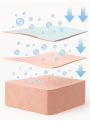
W/O Emulsion Formula for Lidocaine HCl Penetration
Question
I've tried mixing a Lidocaine HCl formula several times before without success.
The problem is that the Lidocaine doesn't penetrate the skin.
A friend suggested using a W/O type emulsion and finding an oil that can act as a Penetration Enhancer to help the active ingredient penetrate the skin.
I would like to know if this formula can be used and how to mix it:
1. Lidocaine HCl 10%
2. น้ำกลั่น (Distilled Water) 20%
3. น้ำมันสวีทอัลมอน (Sweet Almond Oil) 60%
4. ตัวผสานน้ำในน้ำมัน W/O ?%
5. กันเสีย (Preservative) ?%
Answer
W/O Emulsion Formula for Lidocaine HCl Penetration
It sounds like you've had some challenges getting Lidocaine HCl to penetrate the skin, and you're exploring a water-in-oil (W/O) emulsion approach with a carrier oil and penetration enhancer. This is a reasonable strategy, as W/O emulsions can help deliver water-soluble ingredients through the skin's lipid barrier.
Let's evaluate your proposed formula:
- Lidocaine HCl 10%: This is your active ingredient, which is water-soluble.
- Distilled Water 20%: This is the water phase where the Lidocaine HCl will be dissolved.
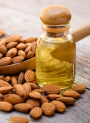
- Sweet Almond Oil 60%: This is your proposed oil phase. While Sweet Almond Oil (such as NaturalProfile™ Sweet Almond Oil) is a good emollient and carrier oil that is well absorbed, it may not be the most potent penetration enhancer specifically for active pharmaceutical ingredients like Lidocaine HCl when used as the sole oil phase. Its primary role here would be forming the continuous external phase of the W/O emulsion.
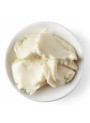
- W/O Emulsifier ?%: This is a crucial missing piece. You absolutely need an emulsifier designed for W/O emulsions to create a stable product. The percentage required will depend on the specific emulsifier chosen. Potential options from the search include non-ionic emulsifiers like SureCream™ and Emulsifying Beeswax (Non-Ionic, Natural).
- Preservative ?%: A broad-spectrum preservative is essential for any formula containing water to prevent microbial contamination.
Formula Viability and Considerations:
The concept of using a W/O emulsion for Lidocaine HCl delivery is viable. However, relying only on Sweet Almond Oil for penetration enhancement might not yield the desired results for a 10% concentration. The high concentration of Lidocaine HCl in a relatively small water phase also requires ensuring complete dissolution and stability. The acidic nature of Lidocaine HCl can also influence the balance of its forms (ionized vs. un-ionized), which affects skin penetration.
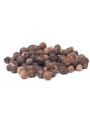
To potentially enhance penetration, you could consider adding a dedicated penetration enhancer. Ingredients like Tetrahydropiperine (Natural Penetration Enhancer) or Hexa-B3™ (Hexyl Nicotinate) are specifically designed to improve the delivery of actives into the skin. Tetrahydropiperine is water-soluble and added at low rates, while Hexa-B3 is oil-soluble and added to the oil phase.
General W/O Emulsion Mixing Method:
Creating a stable W/O emulsion requires careful technique, including temperature control and proper mixing. Always follow the specific instructions for your chosen emulsifier, but here is a general guide:
Prepare the Water Phase (Phase A):
- Combine Distilled Water (20%) and Lidocaine HCl (10%). Stir until fully dissolved.
- Add any water-soluble preservative.
- Heat Phase A to the temperature recommended by your W/O emulsifier (typically 70-80°C).
Prepare the Oil Phase (Phase B):
- Combine Sweet Almond Oil (60%) and your chosen W/O emulsifier (at its recommended percentage).
- If using an oil-soluble penetration enhancer like Hexa-B3™ (Hexyl Nicotinate), add it here and heat as required (Hexa-B3 needs heating to 70°C).
- Add any oil-soluble preservatives or other oil-soluble ingredients.
- Heat Phase B to the same temperature as Phase A.
Combine Phases:
- Slowly add Phase A (water phase) into Phase B (oil phase) while mixing continuously and vigorously. High shear mixing is often necessary at this stage to create a stable emulsion.
Cooling Phase:
- Continue mixing as the emulsion cools.
- If using a heat-sensitive penetration enhancer like Tetrahydropiperine (Natural Penetration Enhancer), dissolve it separately and add it below 40°C during cooling, mixing well.
- Add any other heat-sensitive ingredients during this phase.
Final Check:
- Once cooled, check the emulsion's consistency. pH adjustment might be considered but can be complex.
In summary, while your formula's structure is a good starting point for a W/O Lidocaine HCl cream, you must select appropriate W/O emulsifier and preservative, and consider incorporating a dedicated penetration enhancer like Tetrahydropiperine or Hexa-B3™ for potentially better results. Precise mixing technique and temperature control are also vital for emulsion stability.
Related Products Mentioned
SureCream™ (Non-Ionic Cream Maker)
Emulsifying Beeswax (Non-Ionic, Natural)