Water-Free Sunscreen Formulation Review
Asked by: nbinnima
On: July 26, 2014
Product Type:
Cosmetics
Answered
Question
Following up on the previous discussion, I would like to know if the following water-free sunscreen formulation is acceptable, as I prefer not to include water in the product:
Phase A
- Cyclomethicone: 50g (25%)
- Zinc Oxide: 50g (25%)
Phase B
- LipidSoft™ CC: 50g (25%)
- Vitamin C Ester: 16g (8%)
- Q10: 10g (5%)
- Vitamin E: 4g (2%)
Procedure:
Combine (1+2) -> Phase A
Combine (3+4+5+6) -> Phase B
Mix A + B -> Lightweight Silicone Sunscreen
Is this formulation viable and are there any potential issues?
Answer
Proposed Water-Free Sunscreen Formulation\n\Based on your proposed water-free sunscreen formulation and our previous discussion regarding the solubility of Vitamin E (Tocopheryl Acetate) and Vitamin C Ester (Ascorbyl Palmitate), here is an assessment:\n\nYour formula includes:\n* Cyclomethicone (25%)\n* Zinc Oxide (25%)\n* LipidSoft™ CC (25%)\n* Vitamin C Ester (8%)\n* Q10 (5%)\n* Vitamin E (2%)\n\n## Solubility of Actives\nAs we discussed, LipidSoft™ CC is effective at dissolving oil-soluble ingredients. With LipidSoft™ CC at 25% in your formula, it should be able to dissolve both the Vitamin C Ester (Ascorbyl Palmitate) at 8% and Vitamin E (Tocopheryl Acetate) at 2%. Vitamin E is an oil-soluble liquid, and Vitamin C Ester is an oil-soluble powder that benefits from being mixed in the oil phase, ideally with gentle warming.\n\nCoenzyme Q10 is also oil-soluble. However, your proposed concentration of 5% is significantly higher than the typical recommended usage rate (often 0.01-0.5% for the powder form). While it is oil-soluble, dissolving 5% might be challenging and could impact the final texture or stability. Ensure it is fully dissolved in the LipidSoft™ CC phase with gentle warming (below 60°C as recommended for Q10) before combining phases.\n\n## Zinc Oxide Dispersion\nYour formula uses 25% Zinc Oxide and 25% Cyclomethicone, which aligns with the recommended 1:1 ratio for dispersing Zinc Oxide 200nm EasyDisperse™ in silicone. Achieving a uniform and stable dispersion of this high percentage of solid Zinc Oxide is critical for efficacy and preventing sedimentation. Thorough mixing, potentially with high shear, is necessary when combining phase A (Cyclomethicone + Zinc Oxide) and phase B (LipidSoft CC + Actives).\n\n## Overall Viability\nThe structure of your water-free formula is viable and logical for a silicone-based sunscreen containing oil-soluble actives and a dispersed solid UV filter. The inclusion of LipidSoft™ CC addresses the solubility concerns for Vitamin C Ester and Vitamin E.\n\nHowever, key considerations for success are:\n* Full dissolution of Q10: Ensure the 5% Q10 is completely dissolved in phase B.\n* Zinc Oxide Dispersion: Proper and stable dispersion of 25% Zinc Oxide is essential.\n* Texture and Feel: The high levels of solids (Zinc Oxide) and actives might result in a texture that is not as light as desired, potentially feeling slightly heavy or leaving a white cast depending on the specific Zinc Oxide grade and dispersion quality.\n* Stability Testing: Long-term stability testing is recommended to ensure the formula remains homogeneous, the Zinc Oxide does not settle, and the actives remain potent.\n\nIn summary, the formula is fundamentally sound regarding the solubility of the vitamins due to the LipidSoft™ CC. The main challenges and points to focus on during formulation and manufacturing will be the high concentration of Q10 and ensuring excellent dispersion and stability of the Zinc Oxide.
Related Products Mentioned
Vitamin E (Tocopheryl Acetate)
Cosmetics
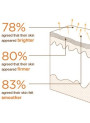

Zinc Oxide 200nm EasyDisperse™
Cosmetics
LipidSoft™ CC (Cetyl Ethylhexanoate)
Cosmetics
Coenzyme Q10 (98%, Powder, Oil-Soluble)
Cosmetics