Water-in-Oil Emulsion Stability and Mixing Issues
Question
I am using Water in Oil EZ and Water Capsule emulsifiers in my formulations. I initially experienced separation issues with both formulas.
For the Water in Oil EZ formula, I found that using a blender for about 8-10 minutes after combining the phases significantly improved the texture and stability, resolving the separation. The serum is now thicker and has remained stable for 4 days.
However, the Water Capsule formula is still separating, and I don't understand why. I believe I followed the instructions, but perhaps the mixing method is still the issue?
Could you please advise on the following:
- What is the likely cause of separation in my
Water Capsuleformula? - Could ingredient incompatibility be a factor? (My
Water in Oil EZformula had an oil phase of 14.30%.) - Are the example formulas provided by MySkinRecipes tested for stability?
Answer
Analysis of Formulation Separation Issues
Thank you for reaching out and providing details about your formulations. It's good to hear that you were able to resolve the separation issue with the Water-in-Oil EZ formula by using a blender, confirming the importance of proper mixing for water-in-oil emulsions.
Let's address the separation observed in your Water Capsule formula and your other questions:
Cause of Separation
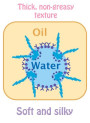
For water-in-oil (W/O) emulsions like those made with Water Capsule and Water-in-Oil EZ, the mixing method is crucial for achieving and maintaining stability. Hand stirring is often insufficient to create the fine dispersion needed for a stable emulsion. High shear mixing, typically achieved with a homogenizer or a high-speed blender, is usually required.
Based on the product descriptions:
- Water-in-Oil EZ: Requires adding the water phase gradually to the oil phase while blending or stirring continuously. Your success with a blender confirms that mechanical mixing was necessary.
- Water Capsule: The mixing steps recommend mixing the oil phase and water phase separately first. Then, add the entire oil phase to the water phase all at once, followed by slow stirring until combined, and then higher speed blending (1000-1500 rpm recommended) to achieve the desired thickness and stability. If the oil phase was added gradually or insufficient blending was performed after combining the phases, this could easily lead to separation.
Therefore, the most likely cause for separation in both your Water Capsule and initial Water-in-Oil EZ formulas was insufficient or incorrect mixing technique, specifically the lack of adequate high-shear blending.
Ingredient Incompatibility
Without knowing the full list and percentages of all ingredients in your specific formulas, it is difficult to definitively identify any incompatibilities. However, the product descriptions provide some guidance:
- Water-in-Oil EZ: Can handle electrolytes well but advises against using more than 5% each of Cyclomethicone, Dimethicone, Ethyl Alcohol, Propylene Glycol, Butylene Glycol, or Glycerin, as these can cause separation.
- Water Capsule: Is sensitive to electrolytes and has a lower oil/silicone load capacity (up to 20% oil) compared to Water-in-Oil EZ (up to 35% oil/silicone).
You mentioned increasing the oil phase in your Water-in-Oil EZ formula to 14.30%, which is well within the recommended range for both emulsifiers. If your formulas contain high levels of electrolytes or the specific solvents/silicones mentioned above, this could contribute to instability, especially with Water Capsule. However, given that proper blending resolved the Water-in-Oil EZ issue, the mixing method remains the primary suspect for the Water Capsule separation as well.
Stability Testing of Example Formulas
Yes, as confirmed by the staff response in the conversation, example formulas provided are tested for stability. The staff specifically tested your adjusted Water-in-Oil EZ formula and found it to be stable with proper mixing. They also indicated that based on their review, neither of your formulas should inherently have stability problems when prepared correctly.
Recommendations
- For the Water Capsule formula, carefully review and follow the specific mixing instructions provided in the product description, paying close attention to adding the oil phase to the water phase all at once and ensuring adequate high-speed blending time and speed.
- Ensure you are using a suitable blender or homogenizer that can provide sufficient shear for water-in-oil emulsions.
- If separation persists after ensuring correct mixing, review your full ingredient list for potential incompatibilities, particularly high levels of electrolytes or the specific solvents/silicones mentioned in the product descriptions.
By ensuring proper mixing technique, you should be able to achieve stable emulsions with both Water Capsule and Water-in-Oil EZ.
Related Products Mentioned