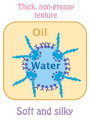
Water-in-Oil Formulation with Water Capsule: Ingredient Addition Challenges
Question
Regarding the formulation of a Water-in-Oil (W/O) cream/serum using Water Capsule:
It is understood that all water-soluble ingredients should be mixed into the water phase from the beginning. However, some ingredients (like water-soluble actives such as Argireline, or oil-soluble powders) are typically added in the final step to avoid heat or vigorous mixing.
When using Water Capsule for a W/O formulation where the oil phase requires heating (e.g., to dissolve waxes), how should ingredients that are heat-sensitive or require specific dispersion/dissolving conditions (like those mentioned above) be incorporated, given that the water phase is encapsulated and the oil phase needs heat?
Answer
Information Regarding Water-Capsule Usage
Based on the conversation, here is a summary of the points discussed regarding the use of Water-Capsule:
- Manual Mixing: Yes, manual mixing is possible, but it may take longer to achieve a consistent texture.
- Estimating Mixer Speed: For a 150W mixer with a maximum speed of 1500 RPM, you can estimate the speed by adjusting the dial proportionally. For example, half speed would be approximately 750 RPM.
- Mixing Propellers: Cross Propeller or Paddle Propeller are gentler and generally preferred. A Dissolver/Disperser can be used, but only at very low speeds, just enough to keep the mixture moving.
- Adding Ingredients After Cream Formation: Only oil-soluble ingredients can be added after the Water-in-Oil cream is formed, as the water phase is encapsulated. The total oil content in the formula should generally not exceed 20% to avoid separation.
- Adding Silicones and Oil-Soluble Powders Later: Silicones and oil-soluble liquids can be added later. However, oil-soluble powders that require significant force or heat to dissolve/disperse should ideally be added to the oil phase before emulsification, as vigorous mixing or heat applied after forming the W/O emulsion can cause instability.
- Achieving Thick Texture: Water-Capsule is designed for a light texture. To achieve a thicker, non-moving cream, you should increase the viscosity of the water phase by incorporating water-soluble thickeners like Light Cream Maker, Pro Polymer, Satin Mousse, or Xanthan Gum. A high water percentage (like 90%) is not suitable for a thick texture with Water-Capsule. Shea Butter provides some thickness but is not sufficient on its own.
- Using Cetyl Alcohol for Thickness: Yes, Cetyl Alcohol can be used by dissolving it in the oil phase with heat before emulsification. However, you might achieve sufficient thickness by increasing the Water-Capsule percentage and mixing at high speed (up to 3000 RPM after initial low speed mixing), which is simpler.
- Expected Thickness with Water-Capsule (3% with 70% Water, High Speed): Using Water-Capsule at 3% with 70% water and high-speed mixing (up to 3000 RPM) should result in a cream thick enough that it won't move when the container is tilted.
Regarding the specific question about adding ingredients that are typically added in the final step (to avoid heat) when using Water-Capsule, particularly water-soluble ingredients like Argireline or powders that require dissolving/dispersing in oil/lipid, and the conflict this presents when the oil phase requires heat for other ingredients (like waxes) while the water is encapsulated: This is a complex scenario, and the team is consulting with an expert (คุณ C7) to provide a precise answer. A separate response will be provided once this consultation is complete.
Thank you for your understanding.
Related Products Mentioned
Acetyl Hexapeptide-8 (eq Argireline)
Light Cream Maker™
Cetyl Alcohol

Satin Cream Maker™
AminoSilk™ (Lauroyl lysine)