Watery Essence Formula Review: Compatibility, Redundancy, and Mixing
Question
I would like to ask if the ingredients are compatible and if any active ingredients have overlapping functions. Thank you.
Watery Essence Formula:
- Repair Activator 5%
- Argireline 5%
- Matrixyl 3000 5%
- Ume Extract 2%
- Yeast Radiance 3%
- Yeast Resurface 3%
- Dmi 3%
- Quick Coll 2%
- Hyaluronic japan 1%
- Mild Preserved Eco 1%
- Remaining: Pitera
If mixing manually, how many minutes should I mix?
Thank you.
Answer
Analysis of Your Watery Essence Formula
Based on the ingredients you provided and information from the product descriptions, here is an analysis of your formula:
Ingredient Compatibility
Most of the ingredients in your formula are water-soluble and generally compatible in a watery essence formulation. To ensure optimal stability and effectiveness for ingredients like peptides and yeast ferments, the final pH of your formula should ideally be maintained within the range of 4.0 to 6.5.
Ingredients that are sensitive to heat, such as Repair Activator, Argireline, Matrixyl 3000, Yeast Radiance, and Pitera, should be added in the final step after the main base has cooled down to below 40°C. Mild Preserved Eco can tolerate some heat but is also best added in the cool-down phase. DMI is a solvent and can be added in earlier steps.
Please note that I could not find specific product information for Ume Extract, Yeast Resurface, and Quick Coll from the available database, so their compatibility could not be fully assessed.
Redundancy of Active Ingredients
Your formula contains several active ingredients targeting different skin concerns:
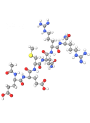
- Argireline and Matrixyl 3000 are both anti-wrinkle peptides but work differently. Argireline helps relax facial muscles to reduce expression lines, while Matrixyl 3000 stimulates collagen production. Using them together can provide comprehensive anti-aging benefits.
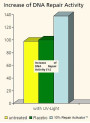
- Repair Activator (Bifida Ferment Lysate) and Pitera (Galactomyces Ferment Filtrate) are fermented ingredients. Repair Activator is known for supporting DNA repair, while Pitera provides broad revitalization, hydration, and smoothing effects. They offer complementary benefits.
- Yeast Radiance is specifically for skin brightening.
- Hyaluronic Acid provides essential hydration.
- DMI acts as a penetration enhancer, helping other active ingredients absorb better.
- Mild Preserved Eco is a preservative blend.
While some ingredients offer general anti-aging or revitalizing benefits, their specific mechanisms of action are distinct. Therefore, there is no significant redundancy among the primary functions of the ingredients for which information was available.
Manual Mixing
For manual mixing, ensure you have thoroughly dissolved or dispersed each ingredient before adding the next.
- Start with your water phase.
- If using Hyaluronic Acid powder, it requires sufficient time to hydrate. You can soak it in the water phase for several hours (e.g., overnight in the refrigerator) and stir occasionally until it forms a clear gel without clumps. Using a whisk or hand blender can significantly speed up this hydration process. If using a liquid Hyaluronic Acid, it will dissolve more easily.
- Add DMI and any other ingredients that can tolerate slightly higher temperatures if necessary, ensuring they are fully mixed.
- Once the base has cooled below 40°C, add the heat-sensitive ingredients: Repair Activator, Argireline, Matrixyl 3000, Yeast Radiance, Pitera, and Mild Preserved Eco.
- Stir gently but thoroughly after each addition until the ingredient is uniformly dispersed. Continue mixing until the entire formula is homogenous.
The time required for manual mixing depends on the batch size and how effectively you stir, especially for dissolving powders. Focus on achieving a uniform mixture rather than a specific time duration.
Related Products Mentioned
Acetyl Hexapeptide-8 (eq Argireline)
Pal-GHK, Pal-GQPR (eq Matrixyl 3000)
Mild Preserved Eco™ (Preservative-Free)

Yeast Radiance™