Whitening Ingredients (Deoxy Arbutin) and AHA Usage
Question
I would like to ask the admin about a whitening product I encountered. It primarily contains Niacinamide 4%, Lactic acid, Soybean, Licorice, and Tretrahydropyranyloxy Phenol. I am particularly interested in the claim that Tretrahydropyranyloxy Phenol is the most effective whitening agent, produced from arbutin using advanced technology, with efficacy 350 times higher than arbutin, 150 times higher than kojic acid, and 10 times higher than hydroquinone, and is highly safe. I have the following questions:
1. At present, is Tretrahydropyranyloxy Phenol considered the most effective type of arbutin?
2. Based on the ingredients mentioned above (Niacinamide 4%, Lactic acid, Soybean, Licorice, Tretrahydropyranyloxy Phenol), do you think this product is a very good whitening product? I am still unsure if it can make the skin as white as claimed. Could you please provide your opinion?
3. I also have another question. My friend found a foreign supplement website selling Niacin in capsule form for oral consumption. Can it be taken orally? Is it actually Vitamin B3? Is it safe? Because from what I've seen, it's usually an ingredient used topically on the face and body for brightening.
4. Is AHA 5% with a pH of 3 suitable for facial peeling? The instructions say it can be left on overnight. Is leaving it on all night not too harsh for the skin?
5. Could you please advise on the proper usage method for AHA for effective dead skin exfoliation? I think it should be used only once a week, or perhaps for 3 consecutive days per month. Which method is better, or do you have a better suggestion?
6. If AHA is used for a long time, will the skin become thin, weak, and very sensitive to sunlight and artificial light?
Answer
Information Regarding Whitening Ingredients and AHA Usage
Based on your questions and the previous response, here is the information:
Tretrahydropyranyloxy Phenol (Deoxy Arbutin)
Regarding Tretrahydropyranyloxy Phenol, also known as Deoxy Arbutin, the staff's response indicates that this substance has not been clearly proven or certified and it is recommended to avoid it. If it were truly highly effective and safe as claimed, it would likely have received approval and been listed in databases like EU Cosing.
Whitening Product Composition
The product you mentioned contains several ingredients commonly found in skincare, including Niacinamide, Lactic acid, Soybean, and Licorice. While these ingredients have various benefits for the skin, including improving skin tone and texture, reducing inflammation, and providing antioxidant properties, the staff's response raises concerns about the safety and efficacy claims specifically related to Tretrahydropyranyloxy Phenol.
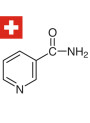
- Niacinamide (Vitamin B3): Known for reducing wrinkles, improving hyperpigmentation, strengthening the skin barrier, reducing redness, controlling oil, and potentially helping with dark circles. It is effective for achieving clearer skin.
- Lactic Acid (AHA): An alpha hydroxy acid used for exfoliation and moisturizing.
- Soybean Extract: Can help with skin elasticity and has antioxidant properties.
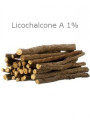
- Licorice Extract: Often used for its anti-inflammatory and soothing properties, and some forms can help with brightening, although the specific type mentioned (Licochalcone A) is noted as not for whitening.
Whether the product can make skin as white as claimed depends heavily on the effectiveness and safety of all ingredients combined, especially the Tretrahydropyranyloxy Phenol, which the staff advises caution against.
Oral Niacin (Vitamin B3)
Yes, Niacin is indeed Vitamin B3. It can be taken orally in capsule form. Vitamin B3 is a common vitamin and is safe for consumption when taken appropriately. Its uses vary depending on whether it's for oral intake (often for general health) or topical application (for skin benefits like those mentioned above).
AHA Usage for Peeling
- AHA 5% with pH 3: The staff response indicates that using AHA 5% at pH 3 is possible, but its suitability depends on individual skin sensitivity. A pH of 3.5-3.7 is suggested as a potentially less irritating starting point.
- Leaving AHA on overnight: Leaving AHA on overnight can be intense. The staff advises observing your skin's response carefully. If your skin peels continuously for more than 3-5 days, you should stop and adjust the concentration or frequency.
- Appropriate Usage Frequency: The staff emphasizes observing your skin's reaction. There isn't a single best frequency (like once a week or 3 consecutive days per month); it depends on how your skin responds. The goal is to achieve exfoliation without causing prolonged irritation or peeling.
- Skin Thinning: Long-term use of exfoliating acids like AHA can potentially make the skin more sensitive, especially to sunlight and light. It's crucial to use sun protection diligently when using AHA products.
Always pay close attention to how your skin reacts and adjust your usage accordingly.
Related Products Mentioned
Safe-B3™ (Vitamin B3, Niacinamide)