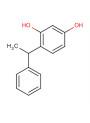
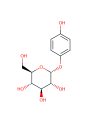
Whitening Ingredients: Pregnancy Safety and Stability in Clear Packaging
Question
Can Activated Resorcinol and Phenylethyl Resorcinol be used by pregnant women and claimed as safe? What are alternative whitening ingredients to Alpha-Arbutin that are stable in clear or frosted packaging?
Answer
Whitening Ingredients and Pregnancy Safety / Packaging Stability
1. Activated Resorcinol and Phenylethyl Resorcinol during Pregnancy
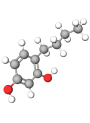
Information regarding the safety of Activated Resorcinol (4-Butyl Resorcinol) and Phenylethyl Resorcinol (SymWhite 377) for use by pregnant women is not available in the product descriptions. Therefore, based on the provided data, it cannot be confirmed if these ingredients are safe for pregnant women or if products containing them can be claimed as safe for use during pregnancy.
2. Alternatives to Alpha-Arbutin for Clear/Frosted Packaging
Alpha-Arbutin, Activated Resorcinol, and Phenylethyl Resorcinol are noted in their descriptions as being sensitive to light and/or requiring protection from light (such as using opaque bottles) to maintain stability and prevent discoloration.
For formulations intended for clear or frosted bottles, consider alternative whitening ingredients that offer better stability against light exposure:
- Safe-B3 (Niacinamide): This ingredient is described as stable and recommends avoiding direct sunlight and heat for long-term storage, but does not explicitly require opaque packaging in the same way as the resorcinol derivatives or Alpha-Arbutin. It is a versatile ingredient with multiple skin benefits, including reducing hyperpigmentation.
- Kojic Acid Dipalmitate: This derivative of Kojic Acid is noted for its high stability compared to regular Kojic Acid. Its description recommends storing away from sunlight and heat, but does not mandate opaque bottles, suggesting better light stability than Alpha-Arbutin.
Other stable Vitamin C derivatives like Ethyl Ascorbic Acid and Ascorbyl Glucoside are also effective whitening agents. Ethyl Ascorbic Acid is described as highly stable, although avoiding light for long-term storage is still recommended. Ascorbyl Glucoside is stable in water and heat up to 40°C but requires a specific pH range (6.5-6.8) for optimal stability and refrigeration for long-term storage, which might pose formulation challenges for stability in simple clear packaging compared to Niacinamide or Kojic Acid Dipalmitate.
Therefore, Safe-B3 (Niacinamide) and Kojic Acid Dipalmitate appear to be more suitable alternatives to Alpha-Arbutin for formulations packaged in clear or frosted bottles due to their indicated stability properties.
Related Products Mentioned
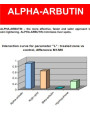
Alpha Arbutin (Switzerland)
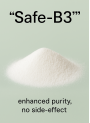
Safe-B3™ (Vitamin B3, Niacinamide)
Kojic Acid Dipalmitate