Why Commercial Whitening Creams Appear More Opaque than Homemade Ones
Asked by: sasikarn.str
On: April 27, 2026
Product Type:
Cosmetics
Answered
Question
Why do commercial whitening cream formulations look more opaque than the ones I make myself using water, oil, and general emulsifiers? What could be the possible causes?
Answer
The reason commercial whitening creams appear more opaque and "white" than simple homemade emulsions (water, oil, and basic emulsifier) is typically due to specific ingredients added for optical effects and structural density, rather than the whitening active ingredients themselves.
Here are the primary factors that contribute to that opaque appearance:
1. Use of Pigment-Grade Titanium Dioxide
The most significant factor is often Titanium Dioxide (TiO2).
- Pigment Grade: Commercial products often use pigment-grade TiO2 (particle size approx. 0.25–0.30 µm). This size is optimized to scatter visible light, providing high opacity, whiteness, and "hiding power."
- Tone-up Effect: Many "whitening" creams in the market are actually "Tone-up" creams. They provide an immediate optical brightening effect on the skin by leaving a thin white film of TiO2 or Zinc Oxide.
- Nano Grade vs. Pigment Grade: If you use nano-grade TiO2 (common in sunscreens), it is designed to be transparent. For a white, opaque cream, pigment-grade or water-dispersible versions are used.
2. Fatty Alcohols and Waxy Structuring Agents
Simple emulsions can look translucent or milky but thin. Commercial creams use "structuring agents" to create a dense, white appearance:
- Fatty Alcohols: Ingredients like Cetyl Alcohol, Stearyl Alcohol, or Cetearyl Alcohol form lamellar gel networks within the cream. These crystalline structures scatter light, making the cream look thick, white, and luxurious.
- Waxes: Adding small amounts of waxes (e.g., Beeswax or synthetic waxes) increases the internal interfaces that reflect light, enhancing opacity.
3. Specific Opacifying Agents
Manufacturers often add dedicated opacifiers to ensure the product looks consistently white and premium:
- Polymeric Opacifiers: Such as Styrene/Acrylates Copolymer, which are used to turn translucent formulas into opaque white ones.
- Pearlizing Agents: Ingredients like Glycol Distearate can add a pearlescent or dense white sheen.
4. Processing and Particle Size
The method of mixing (homogenization) plays a role. High-shear mixing breaks oil droplets and pigments into smaller, more uniform sizes. A more uniform and finely dispersed emulsion reflects light more effectively, appearing brighter and more "solid" white than a hand-stirred or low-shear mix.
Practical Formulation Tips to Achieve This Look:
- For Opacity in the Jar: Add 1–3% Cetearyl Alcohol or Cetyl Alcohol. This will "body" the cream and make it look whiter.
- For Instant Whitening (Tone-up): Add 0.5–2% of a pre-dispersed Titanium Dioxide (e.g., Water-dispersible or Oil-dispersible versions).
- For a Professional Finish: Use a high-speed homogenizer to ensure all pigments and waxes are perfectly dispersed.
Relevant References
Sources supporting the key technical claims in this answer
Rieger, M. “Introduction to Cosmetic Emulsions and Emulsification.” IFSCC Monograph, 1996.
Braun, J.H. “Titanium Dioxide: A Review.” Journal of Coatings Technology, 1997. DOI: 10.1007/BF02696278.
Related Categories
Whitening
Cosmetics > Whitening
Related Products Mentioned
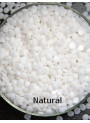
Cetyl Alcohol
Cosmetics
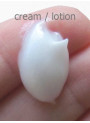
Cetearyl Alcohol (50/50, e.q. Lanette O)
Cosmetics
Styrene/Acrylates Opacifier (e.q. OP301)
Cosmetics
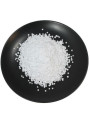
Stearyl Alcohol
Cosmetics