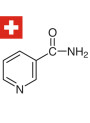
Why Niacinamide and L-Ascorbic Acid Are Not Typically Formulated Together in Serums
Question
Could you please explain why Niacinamide and L-ascorbic acid cannot be formulated together?
If a formula contains both of these ingredients combined in the same formula, what kind of reaction will occur to the serum?
What effects will it have on the facial skin if a formula contains both of the aforementioned ingredients mixed together?
Are there currently any serums that contain both Niacinamide and L-ascorbic acid combined in the same formula?
Answer
Why Niacinamide and L-Ascorbic Acid Are Not Typically Formulated Together
The primary reason Niacinamide (Vitamin B3) and L-Ascorbic Acid (Vitamin C) are generally not recommended to be formulated together in the same serum is due to their optimal pH requirements for stability and efficacy.
- L-Ascorbic Acid is most stable and effective in acidic environments, typically at a pH of 2.0-4.0.
- Niacinamide is more stable at a neutral pH, ideally between 4.0-7.0.
When Niacinamide is combined with L-Ascorbic Acid in a low pH environment (acidic), it can undergo a reaction called hydrolysis. This reaction converts Niacinamide into Nicotinic Acid.
Effects on the Serum and Skin
If a serum contains both ingredients and is formulated at an incompatible pH, the following can occur:
- Formation of Nicotinic Acid: The reaction between Niacinamide and L-Ascorbic Acid at low pH leads to the formation of Nicotinic Acid.
- Serum Instability: The reaction can potentially affect the stability and appearance of the serum over time.
- Skin Irritation: Nicotinic Acid is known to cause temporary skin flushing, redness, itching, and a warming sensation. While not harmful, this reaction can be uncomfortable and is often undesirable in cosmetic products.
To avoid these issues, it is generally advised to use products containing Niacinamide and L-Ascorbic Acid separately, perhaps at different times of the day.
Serums Containing Both Ingredients
While formulating pure L-Ascorbic Acid and Niacinamide together in a stable, water-based serum is challenging due to the pH conflict, some commercial products do contain both. These formulations often employ specific techniques to minimize the interaction and the formation of Nicotinic Acid, such as:
- Using stabilized Vitamin C derivatives (like Sodium Ascorbyl Phosphate or Ascorbyl Glucoside) which are stable at higher pH levels compatible with Niacinamide.
- Formulating anhydrous (water-free) products where the reaction is less likely to occur.
- Using encapsulation or other delivery systems to keep the ingredients separate until application.
However, combining pure L-Ascorbic Acid and Niacinamide in a simple water-based formula at their respective optimal pH levels is difficult to achieve without risking instability and skin irritation from Nicotinic Acid.
Related Products Mentioned

Safe-B3™ (Vitamin B3, Niacinamide)
Vitamin C (L-ascorbic acid) (Ultra-Fine)
Vitamin C (L-ascorbic acid) (Fine)